Why Lifted Trucks Are Cheaper on Facebook Marketplace (And What the Price Tag Doesn't Show)
6 min de lectura
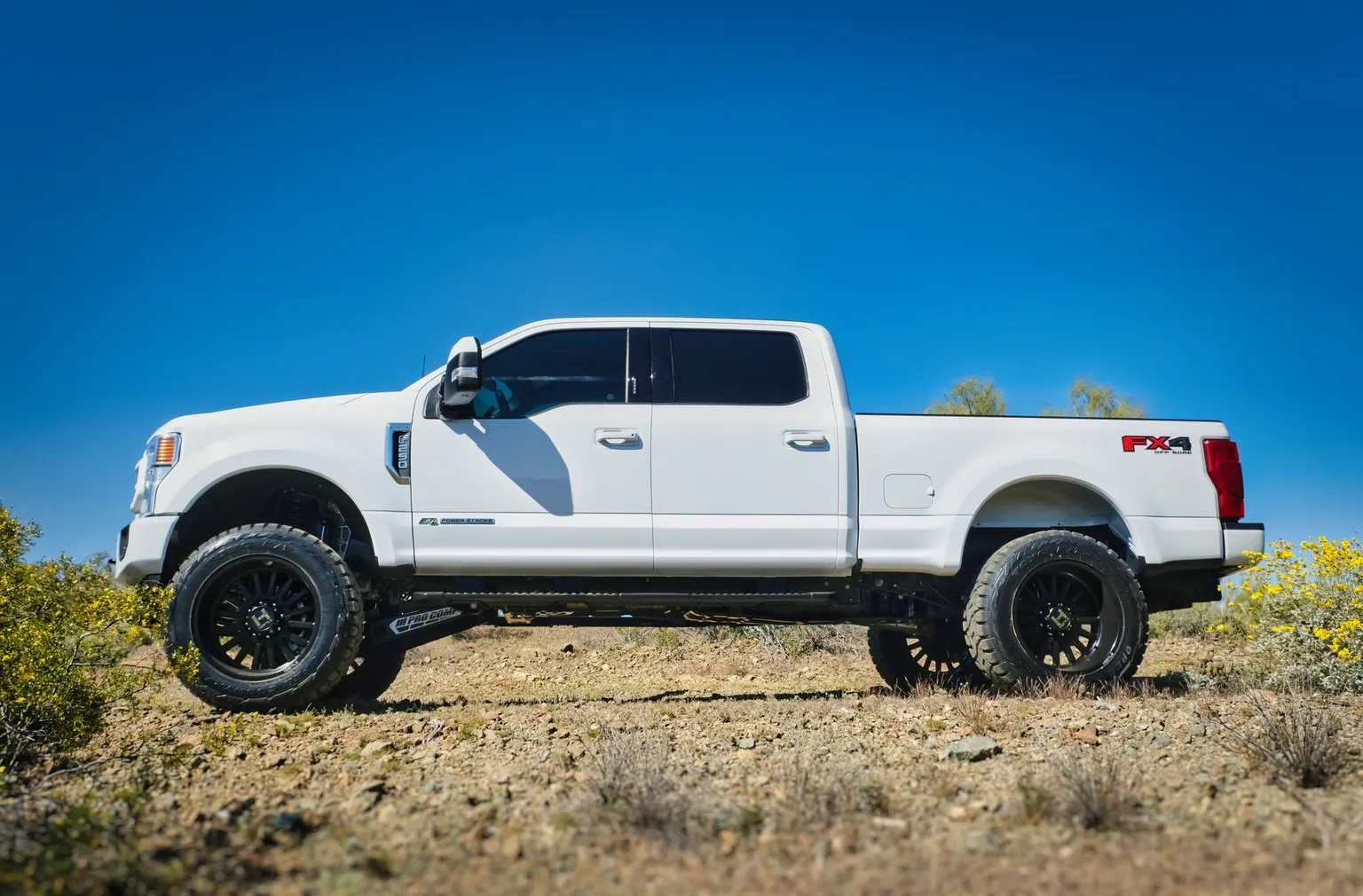
Scroll through Facebook Marketplace and you will find lifted trucks priced thousands below what a professionally built truck costs. The photos look great, the stance is aggressive, and the seller says everything is "like new." It is easy to see why buyers get excited. But in our experience, a lifted truck is rarely cheap because someone found a bargain. It is usually cheaper because certain costs were never paid in the first place: the planning, the professional labor, the quality parts, the inspection, and the protection that comes after the sale. Here is how to see those missing costs before you hand over a deposit.
En este artículo
Lifted Trucks on Facebook Marketplace Often Start Without a Verified Build Plan
A great lifted truck begins with a plan. The lift height, shock valving, control arms, wheel offset, tire diameter, gearing, and driveline angles all need to work together on that specific platform and trim. When a professional shop builds a truck, those decisions are made as a system, so the truck rides well, tracks straight, and wears evenly.
Most Marketplace builds do not start that way. A previous owner often adds parts over time, a lift in one year, wheels and tires the next, and a leveling spacer or two to fix whatever felt off. The result is a parts list that was never designed to work together. Components might not be compatible, or they might be compatible but far from optimal for the way the truck is actually driven. A setup that looks right in a photo can still produce a harsh ride, vibration, rubbing at full lock, or accelerated wear on ball joints, CV axles, and wheel bearings.
When you ask a Marketplace seller for the build plan, you will often get a list of brand names with no documentation of how the pieces were chosen. That is a pricing signal. The seller may have paid for parts, but nobody paid for engineering the whole truck, and you inherit that gap.
DIY and Multi-Vendor Builds Make Installation Quality a Guessing Game
Many lifted trucks on Marketplace were built in a driveway or split across several vendors: one shop for the lift, another for wheels and tires, a friend for the finishing touches. Some of those installers do excellent work. The problem is that you, as the buyer, cannot tell which ones did.
Installation is where a build succeeds or fails. Torque specifications on suspension hardware matter. Bushings in many control arms should be tightened with the truck at ride height so they are not preloaded in a way that causes premature failure. Components have a correct orientation and a correct installation sequence. After the lift, the truck needs a proper alignment, and in many cases driveline angles, brake line routing, and steering components need to be checked and adjusted. Depending on the truck, calibration of driver-assistance features may also be required after suspension changes.
Ask yourself what you actually know about a DIY or multi-vendor truck. Were the right tools used? Was a torque wrench used and were specs followed? Was the truck aligned after the install, and is there a printout to prove it? Where might corners have been cut to save time or money? A seller can answer "yes" to all of it and you still have nothing to verify. The lower price reflects that uncertainty, and it is yours to carry.
New Parts or Used Parts? On Marketplace, It Is Hard to Know
Even with a good installer, the parts themselves matter. A lift kit from a respected brand is only as good as its condition and history. Marketplace trucks frequently carry used suspension components, wheels, or tires that were bought secondhand to keep the project budget down. Used components can have unknown mileage, hidden wear, bent or cracked pieces, or missing hardware. Shocks lose damping over time, and bushings harden and crack.
Receipts help, but they are often missing. Even when a seller says the parts are new, there is rarely a way to confirm it. Some buyers assume that a recognizable brand name on the shock bodies means premium quality across the whole kit. Brand names on one part do not tell you about the control arms, the spacers, the hardware, or the tire age. A professional lifted truck dealer sources and documents its components; a private seller usually cannot.
What Issues Have Been Hidden or Covered Up?
Lifting a truck changes how it is used. People who modify trucks often drive them harder, take them off-road, tow with them, or run oversized tires that put more load on the drivetrain. That is not a criticism, because that is why people lift trucks. But it means a modified truck deserves a deeper inspection than a stock one, not a lighter one.
On Marketplace, you typically get a short window to look the truck over, in a parking lot, with no lift, no diagnostic scanner, and limited time. Fresh undercoating can hide leaks or rust. A recent detail can mask smoke, odors, or interior wear. Cleared codes can hide a check engine light for a short time. Uneven tire wear can point to alignment problems the seller never mentions. Frame damage, prior accident repairs, and drivetrain stress from oversized wheels and tires are difficult to spot without a thorough inspection on a lift.
If you do shop Marketplace, bring an independent inspection with you, and treat a seller who resists one as an answer.
Who Stands Behind the Build? On Marketplace, Usually No One
This is the most important question, and the answer is usually the simplest. When you buy a lifted truck from a private seller, the sale is typically as-is. If the steering starts wandering a week later, if a control arm bushing fails, or if you learn the lift was never aligned, there is nobody to call. The seller has no obligation and often no shop. The installer, if there was one, never knew you. Parts manufacturers generally warrant parts to the original purchaser, so a warranty may not even transfer.
That missing protection has a real dollar value. A single repair, such as replacing worn suspension components, re-doing an alignment, or correcting a poorly installed lift, can quickly erase the savings that made the truck attractive. A cheap price paid up front can become an expensive truck after the first few repair bills.
What You Are Really Paying For When You Buy a Professionally Built Lifted Truck
A professionally built lifted truck costs more because the cost of doing it right is built into the price. At Lifted Trucks, every truck goes through a comprehensive inspection and a professional upfit process. We hand-pick our inventory, and we install warranted premium components. We pay attention to the details that matter, like torque specifications, bushing preload, component orientation, and installation sequence. Each truck is aligned and ready to drive the day you pick it up, and our work is designed to meet or exceed OEM standards.
We also stand behind the work. Modifications installed by Lifted Trucks carry a lifetime labor warranty, and the parts carry their own manufacturer warranties, which are separate. That means if something goes wrong with our installation, you have a real business to call.
There is also a time advantage. A custom build from scratch can mean waiting weeks or months for parts and shop availability. A turnkey lifted truck gets you on the road now, built by people who do this every day. We believe in planning a build completely and doing it right once, rather than adding upgrades over time that create downtime, rework, and extra cost. That approach is also why a well-executed build tends to age well, not just look good on delivery day.
Is a Marketplace Lifted Truck Ever a Good Deal?
Sometimes, yes. A truck from a careful owner with complete receipts, documented professional installation, a fresh alignment record, and a clean independent inspection can be a good value. The point is not that every Marketplace truck is a problem. The point is that the lower price is paying for something you cannot see, and you should know exactly what that is before you buy.
Before you commit to any private-party lifted truck, run through these questions in your own mind. Can the seller show the complete parts list and receipts? Who installed the lift, and can that shop confirm the work? Were the parts new or used? Is there an alignment printout from after the install? Has an independent shop inspected the truck on a lift? And if something fails next month, who is responsible? If you cannot get confident answers, the price is not a discount. It is a transfer of risk from the seller to you.
Ready to Skip the Guesswork?
If you want a lifted truck or SUV that is inspected, professionally built, aligned, and backed by a team that stands behind its work, explore our lifted truck inventory. We offer nationwide shipping, so you can get a professionally built truck delivered wherever you are.