Which Truck Brand Is Easiest to Modify: Ford, Chevy/GMC, Ram or Toyota
7 min de lectura
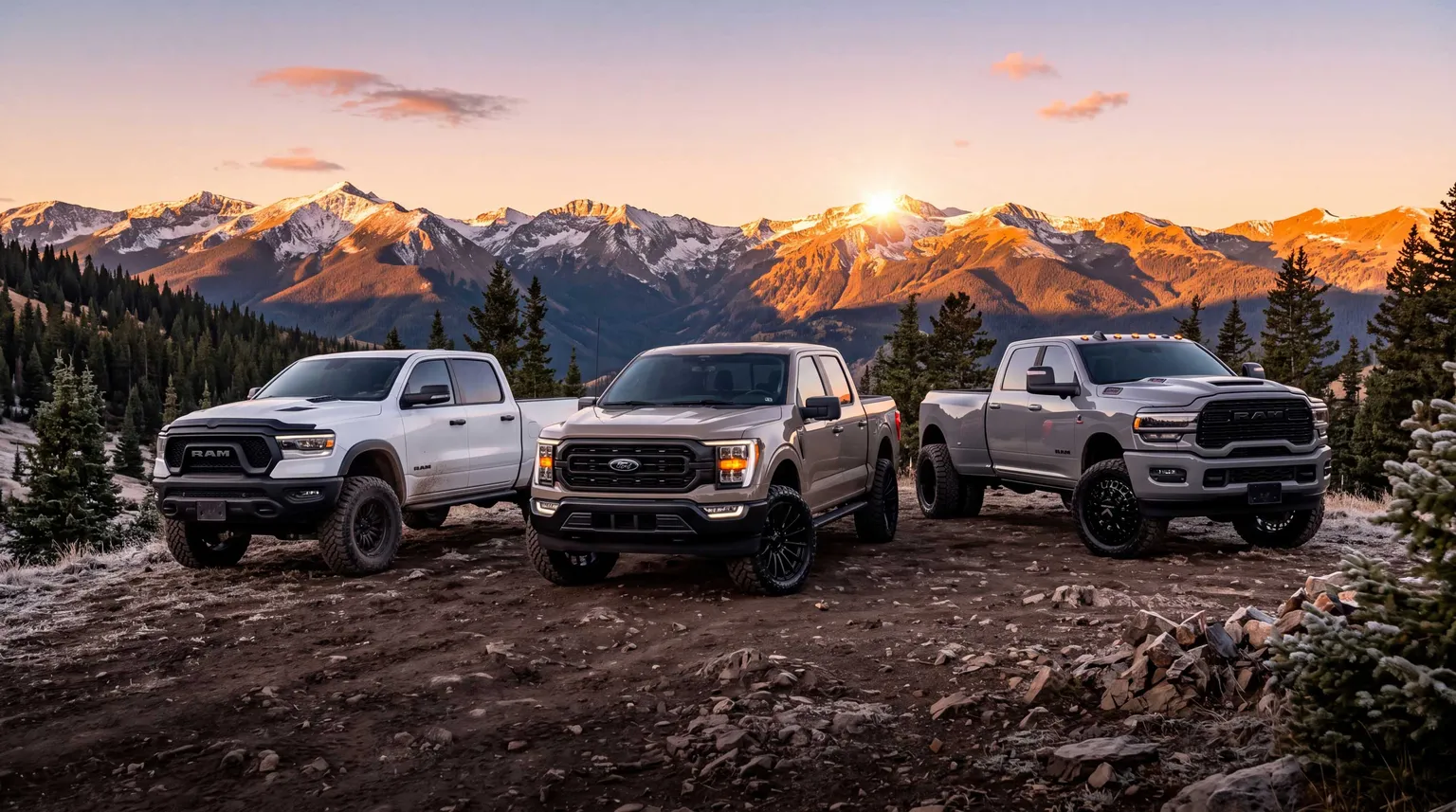
If you are planning a lift, a new wheel and tire package, or a full build, the brand on the tailgate matters more than most buyers expect. Some trucks accept a leveling kit in an afternoon with common tools. Others need sensors recalibrated, factory components worked around, or parts ordered from a smaller pool of suppliers. After years of building and shipping lifted trucks, we have a clear view of how Ford, Chevy/GMC, Ram and Toyota compare when the goal is easy, reliable modification.
The short answer: the Ford F-150 and the Chevy Silverado and GMC Sierra family are generally the easiest full-size trucks to modify, because of the depth of parts, kits and installer experience behind them. Toyota is the easiest choice when you want a proven off-road build on a smaller, highly supported platform. Ram is very modifiable and rewards the right kit choice, but its coil-spring ride and available air suspension call for a little more planning. The rest of this guide explains why, so you can match the truck to your build.
En este artículo
What "Easy to Modify" Actually Means
Ease of modification is not one thing. It is the combination of how many aftermarket parts exist for a truck, how simply those parts bolt on, how forgiving the factory suspension design is, and how many shops have already done the job a hundred times. A truck can have a great engine and still be a headache to lift if kit choices are limited or the electronics fight you.
We look at four factors. The first is aftermarket depth, meaning the number of lift kits, wheels, tires, bumpers, lighting and performance parts engineered specifically for the model. The second is suspension layout, since front and rear designs decide how much lift is possible with simple spacers versus a full control arm and shock kit. The third is electronics and driver assistance, because modern trucks use sensors and cameras that can be affected by ride height and tire size. The fourth is installer familiarity, which affects cost, turnaround and the odds that the job is done right the first time.
Ford F-150: The Deepest Aftermarket in the Full-Size Class
The F-150 has been America's best-selling truck for decades [VERIFY current sales ranking and source], and that volume shapes everything about modifying it. Suppliers build for the F-150 first because the customer base is the largest. Leveling kits, 2 to 3 inch lifts, larger lifts with new control arms and shocks, bumpers, running boards, wheels and tires are all widely available in many price tiers.
The F-150's front suspension is an independent coil-over design, and the rear uses leaf springs. That layout is familiar to nearly every suspension shop. A front leveling kit paired with a rear block or add-a-leaf, or a full lift kit from a major brand, is a routine job. Tire fitment is also well documented, so owners can usually find real-world reports of which wheel and tire combinations clear without rubbing.
The tradeoff is complexity on newer trucks. Recent generations pack in advanced driver assistance, an aluminum body, and in some trims, adaptive features that benefit from professional setup. Installation is still straightforward for a capable shop, but the do-it-yourself path is a little less casual than it was a decade ago. Powertrain upgrades such as tunes and intake or exhaust parts are also plentiful, which makes the F-150 a strong pick if you want performance and lift together. Verify any warranty implications of tunes and lifts with the manufacturer and your dealer before you modify.
Chevy Silverado and GMC Sierra: Easy Lifts and Shared Parts
The Chevrolet Silverado 1500 and GMC Sierra 1500 share a platform, which is a quiet advantage for modifiers. A part developed for one almost always fits the other, so the aftermarket effectively serves both trucks at once. That doubles the market for suppliers and widens your options on lift kits, wheels and accessories.
Leveling the front of a Silverado or Sierra is among the simplest lifts in the truck world. The front suspension is an independent design that responds well to spacer-style leveling kits, and many owners use them to gain clearance for larger tires without a major teardown. For bigger builds, complete lift systems with upgraded control arms and shocks are well developed. Factory off-road trims such as the Z71 and, on the Chevy side, the ZR2 offer a head start, since the truck already has more capable hardware to build on.
The main considerations are matching the kit to your exact model year and trim, because GM has changed the platform over time, and checking how a lift affects features such as air suspension or adaptive ride control on trims that have them. Heavy duty versions of these trucks have their own aftermarket, with many kits and parts that do not interchange with the 1500 line, so confirm the exact model before ordering anything.
Ram 1500: Comfortable Ride, More Planning Required
Ram earns real respect for ride quality, and that character carries into builds. The Ram 1500 uses a coil-spring rear suspension rather than leaf springs, which is a big reason it rides so smoothly. It also means lift kits and rear components are engineered differently than for Ford or GM trucks, and the best results come from kits designed specifically for the Ram rather than generic solutions.
The aftermarket for the Ram is strong, with lift kits, wheels, tires and bumpers from the major brands, though the selection is generally narrower than for the F-150 or the GM twins. Some trims offer factory air suspension, which adds adjustable ride height but also adds complexity if you want a lift. Owners with air suspension should choose kits intended for that setup and work with a shop that understands it.
Ram is an excellent choice if you value comfort and want a truck with distinct styling and a modified stance. It rewards a little homework. Check kit compatibility by model year, decide early whether you want to keep air suspension, and plan on a shop that has done Ram work before.
Toyota Tundra and Tacoma: Proven Off-Road Builds and Loyal Support
Toyota owners are famously devoted, and the aftermarket reflects it. The Tacoma in particular has one of the most active build communities in the midsize class, with a long list of suspension, armor, wheel and overland accessory options. For trail driving, camping and overlanding, the Tacoma is often the easiest platform to turn into a finished, proven build, because countless owners have already tested the combinations.
The Tundra has a smaller aftermarket than the big three domestic full-size trucks, but support has grown, especially around the latest generation. Toyota's reputation for long-term durability also appeals to buyers who plan to keep a modified truck for many years. The practical considerations are that the selection of full-size lift and accessory options is narrower than for Ford or GM, and that newer generations changed suspension and powertrain designs, so older kits will not always carry over.
If your priority is a capable, reliable off-road setup and you like a platform with an enthusiast following, Toyota is a very good answer. If you want the widest range of choices in a full-size truck at many price levels, the domestic brands have the edge.
Matching the Brand to the Build
For a first-time modifier who wants a simple leveling kit and larger tires, the F-150 and the Silverado or Sierra are the easiest places to start. Parts are everywhere, shops know them well, and a clean result is easy to achieve. For a buyer who wants maximum choice at every price point, the F-150 is difficult to beat. For someone who wants a shared-platform advantage and easy front leveling, the Chevy and GMC twins are hard to argue with.
If ride comfort matters as much as looks, Ram deserves a serious look, provided you plan the kit carefully. If you want a dependable off-road or overland build with a devoted community, choose Toyota. In every case, the best result comes from choosing a truck that already has the right trim, drivetrain and options so you spend your budget on the modifications that matter most to you.
What to Check Before You Modify Any Truck
Whatever brand you choose, a few habits prevent expensive surprises. Confirm the exact model year, cab, bed, drivetrain and trim before buying parts, because fitment can change between generations. Ask about how a lift or larger tire affects driver assistance features, speedometer accuracy, gearing and braking, and recalibrate where needed. Review the manufacturer's warranty terms and confirm what a modification could affect with a dealer, since we cannot make blanket warranty promises for any build. Finally, choose installers with real experience on your model, and keep records of parts and work for future resale.
Skip the Guesswork With a Professionally Built Truck
You do not have to take on the build yourself. Our team builds lifted trucks for durability and real-world performance, favoring balanced, timeless setups over short-lived trends. If you are deciding between Ford, Chevy/GMC, Ram and Toyota, we can help you compare options based on how you actually use your truck.
Explore our current lifted truck inventory and have your next build shipped to you, with nationwide shipping available.
Frequently Asked Questions
Which truck brand has the most aftermarket parts? Ford's F-150 generally has the broadest selection among full-size trucks, followed closely by the Chevy Silverado and GMC Sierra family.
What is the easiest lift to install? A front leveling kit is typically the simplest modification on many trucks, and it is especially common on Ford and GM models. Exact difficulty depends on the model year and trim.
Is Ram harder to lift than Ford or Chevy? Not necessarily harder, but its coil-spring rear and optional air suspension mean you should choose kits designed for the Ram and plan the install with an experienced shop.
Is a Toyota a good truck to modify? Yes, especially the Tacoma for off-road and overland builds. Selection for full-size Tundra kits is narrower than for the domestic brands.
Will modifying my truck void the warranty? It depends on the manufacturer, the modification and the specific claim. Confirm with your dealer and read your warranty documents before you modify.