Ram 1500 Reliability: How Long Do Ram 1500s Last?
14 min de lectura
The Ram 1500 is one of America's most popular full-size pickup trucks, but if you're considering buying one—especially a used Ram—there's an important question to answer:
En este artículo
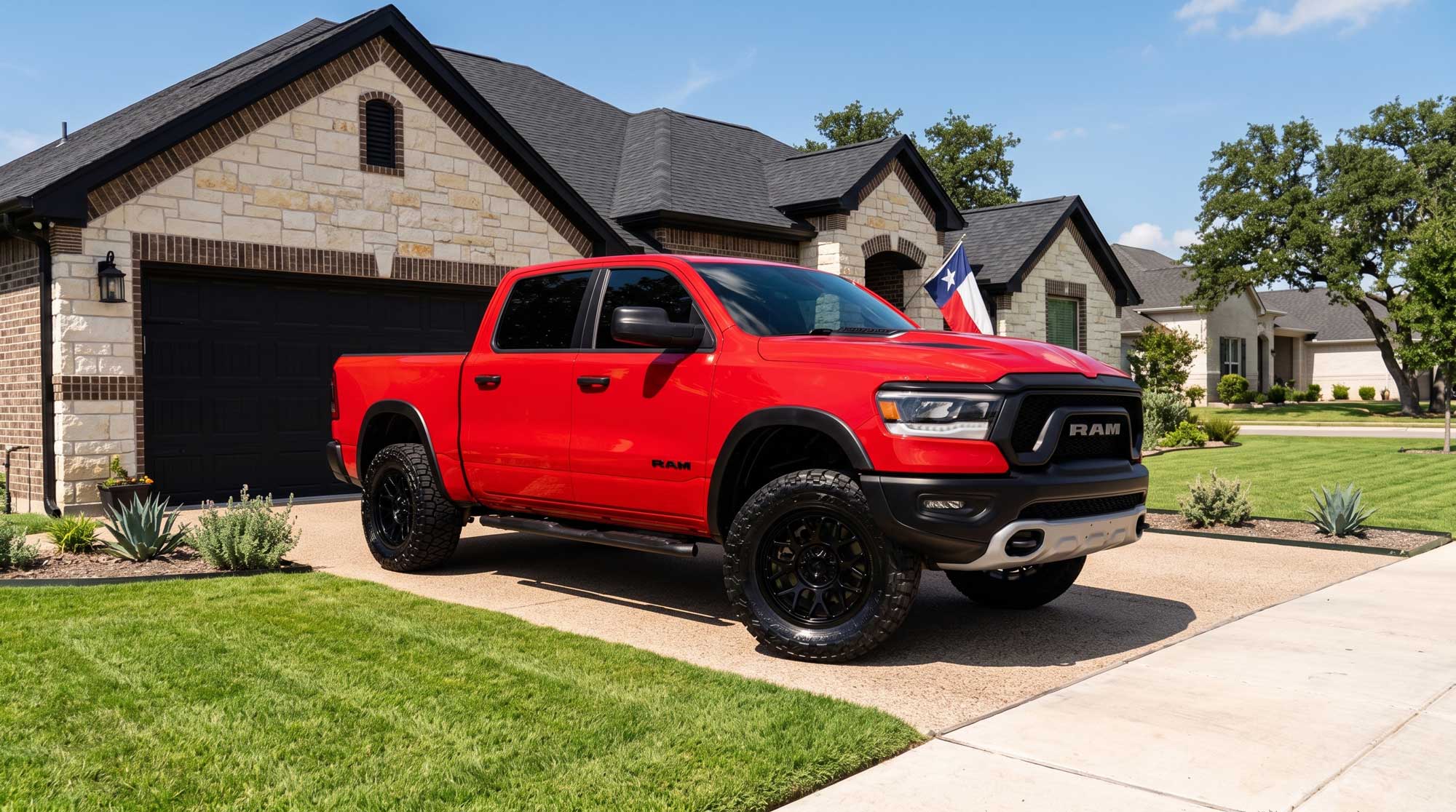
Are Ram 1500s reliable?
The short answer is that a well-maintained Ram 1500 can provide many years and well over 100,000 miles of service, and higher-mileage examples are certainly possible. But Ram 1500 reliability varies considerably depending on the model year, engine, maintenance history and how the truck has been used.
That's particularly important today because the Ram 1500 has undergone significant changes.
The familiar 5.7L HEMI V8 powered Ram trucks for years. Ram later introduced its 3.0L Hurricane twin-turbo inline-six, and for 2026 the HEMI V8 returned to the Ram 1500 lineup.
So whether you're shopping for a used HEMI Ram, considering a newer Hurricane-powered truck or simply wondering how long a Ram 1500 can last, here's what you should know.
Are Ram 1500s Reliable?
The Ram 1500 can be a reliable truck, but the answer depends heavily on the specific truck you're considering.
That's true of virtually every modern pickup.
A Ram 1500 with documented maintenance, reasonable mileage and a history of responsible use may be a much better purchase than another Ram of the same year that has been neglected, overloaded or poorly modified.
When evaluating Ram 1500 reliability, consider:
- Model year
- Engine
- Transmission
- Mileage
- Maintenance history
- Previous ownership
- Towing history
- Accident history
- Rust and corrosion
- Aftermarket modifications
- Outstanding recalls
The older the truck becomes, the more important its individual history becomes.
How Long Do Ram 1500s Last?
There isn't a mileage number at which a Ram 1500 suddenly reaches the end of its useful life.
A properly maintained truck can remain useful well beyond 100,000 miles, and 150,000, 200,000 or more miles is possible when the vehicle has been maintained appropriately and major components remain healthy.
But mileage alone doesn't determine condition.
A 140,000-mile highway-driven Ram with extensive service records could potentially be a better truck than an 80,000-mile example that spent its life making short trips, towing overloaded trailers and receiving inconsistent maintenance.
For used-truck shoppers, condition and maintenance history should carry at least as much weight as the odometer reading.
Can a Ram 1500 Last 200,000 Miles?
Yes, a Ram 1500 can reach 200,000 miles.
But reaching that mileage without ever replacing or repairing anything shouldn't be the expectation for any modern pickup.
By 200,000 miles, normal wear items and potentially larger components may have required service or replacement.
Depending on how the truck was used, those can include:
- Suspension components
- Wheel bearings
- Cooling-system components
- Alternator
- Starter
- Water pump
- Engine mounts
- Driveshaft components
- Differential or transfer-case components
- Sensors and electronics
- Exhaust components
The goal shouldn't necessarily be finding a truck that has never needed repairs.
A better indicator of a good high-mileage vehicle is one that has been properly repaired and consistently maintained when it needed attention.
Can a Ram 1500 Last 300,000 Miles?
It's possible, but 300,000 miles should be viewed differently than 100,000 miles.
At that mileage, the condition of the individual truck matters enormously.
Reaching 300,000 miles may involve replacing various mechanical components over the truck's lifetime. Climate, corrosion, maintenance practices, towing, idle time and driving conditions can also have major effects.
A 300,000-mile Ram isn't necessarily still operating because every component lasted 300,000 miles.
It's more likely still operating because the owner maintained and repaired the truck as necessary.
That's an important distinction whenever people discuss extremely high-mileage vehicles.
How Many Years Does a Ram 1500 Last?
Mileage is generally more useful than age alone, but a Ram 1500 can potentially remain on the road for well over a decade.
For example, someone driving approximately 12,000 miles per year would accumulate:
- 120,000 miles in 10 years
- 180,000 miles in 15 years
- 240,000 miles in 20 years
That doesn't mean every Ram will last 20 years. It simply demonstrates why maintenance and usage are more important than the model year printed on the title.
Age also introduces additional considerations, particularly in climates where road salt is used.
Rust can eventually become just as important as powertrain condition.
Is the 5.7L HEMI Reliable?
The 5.7L HEMI V8 is one of the best-known engines associated with the Ram 1500.
It has been produced in various forms for many years, meaning there is considerably more long-term ownership history available for the HEMI than for Ram's newer Hurricane engines.
The HEMI can provide excellent service life when maintained properly, but like virtually every mass-produced engine, it has known areas buyers should understand.
What Is the HEMI Tick?
One of the most commonly searched Ram topics is the so-called HEMI tick.
The problem with the term is that people use it to describe several different noises.
A ticking HEMI does not automatically mean the engine has experienced an internal failure.
Possible sources of ticking can include exhaust leaks and valvetrain-related issues.
Some HEMI-powered Ram owners have experienced exhaust manifold or manifold hardware problems that create a ticking noise, particularly when the engine is cold.
Other noises can originate from inside the engine.
That's why diagnosing a "HEMI tick" based solely on an internet description isn't a good idea.
If you're evaluating a used HEMI Ram and hear a pronounced tick, have the source professionally diagnosed.
Ram 1500 Exhaust Manifold Problems
Exhaust manifold issues are worth checking when inspecting some HEMI-powered Ram 1500s.
A leak can produce a ticking sound that may be particularly noticeable during a cold start.
This is also a good example of why a noise shouldn't immediately be interpreted as catastrophic engine failure.
An exhaust leak and an internal valvetrain issue are very different repairs despite potentially being described by an owner using the same phrase: "My HEMI is ticking."
When test-driving a used HEMI Ram, listen to the truck during a true cold start whenever possible.
Ram HEMI Lifter and Camshaft Problems
Potential lifter and camshaft wear is another issue frequently discussed in connection with some 5.7L HEMI engines.
These failures should be taken seriously, but they also shouldn't be interpreted to mean every HEMI will experience the problem.
Warning signs that deserve further diagnosis can include:
- Persistent abnormal valvetrain noise
- Misfires
- Check-engine lights
- Rough running
- Loss of power
If you're considering a used Ram and suspect a valvetrain problem, getting a professional inspection before purchasing is far less expensive than discovering a major engine issue afterward.
Is the 3.0L Hurricane Reliable?
The 3.0L Hurricane is fundamentally different from the 5.7L HEMI.
Rather than a naturally aspirated V8, the Hurricane is a twin-turbocharged inline-six.
In the Ram 1500, the standard-output Hurricane produces substantial horsepower and torque, while the High-Output version takes performance considerably further.
But there's an important limitation when discussing Hurricane reliability:
The Hurricane has not been in Ram 1500 service nearly as long as the HEMI.
That means there simply isn't the same volume of 10-, 15- and 20-year ownership data available.
Any claim that the Hurricane will definitively prove more reliable—or less reliable—than the HEMI over 200,000 miles would therefore be premature.
Hurricane vs. HEMI Reliability
If long-term historical data is your priority, the HEMI has an obvious advantage simply because it has existed much longer.
Its strengths and common trouble areas are relatively well understood.
The Hurricane provides newer engine technology, substantial torque and impressive performance, but its long-term Ram 1500 reliability record is still developing.
That doesn't mean the Hurricane is unreliable.
It means we don't yet have the same amount of long-term evidence.
For shoppers, the decision may come down to philosophy.
Someone who prefers a naturally aspirated V8 with years of ownership history may gravitate toward the HEMI.
Someone who prioritizes torque, horsepower and newer powertrain technology may prefer the Hurricane.
Fortunately for 2026 Ram shoppers, both approaches are represented in the lineup.
Is the Ram 1500 Transmission Reliable?
Modern Ram 1500s have extensively used eight-speed automatic transmissions.
Like engines, transmission longevity depends heavily on maintenance, operating conditions and how the truck is used.
Towing, heat and repeated heavy loading place additional demands on a transmission.
When evaluating a used Ram 1500, pay attention to:
- Delayed engagement
- Unusually harsh shifts
- Slipping
- Shuddering
- Warning lights
- Fluid leaks
- Unusual noises
A smooth test drive doesn't replace an inspection, but unusual transmission behavior should never be ignored.
Common Ram 1500 Problems
No single list applies equally to every Ram 1500 generation or powertrain.
However, depending on the model year and configuration, areas worth inspecting can include:
- Exhaust system: Some HEMI-powered trucks have experienced exhaust manifold-related issues.
- Electronics: Modern Ram trucks contain increasingly sophisticated electronic systems, infotainment, displays and control modules. Software and electrical issues can occur.
- Suspension and steering: Bushings, ball joints, wheel bearings, shocks and other components naturally wear as mileage increases, particularly on trucks used off-road or on rough roads.
- Cooling system: As trucks age, cooling-system components should be inspected for leaks and deterioration.
- Four-wheel-drive system: Transfer cases, differentials, driveshafts and related components should be inspected, particularly on trucks used heavily off-road.
- Water leaks: Cab and rear-window areas deserve inspection on used trucks, particularly if there are stains, odors or evidence of previous water intrusion.
Again, these should be treated as inspection points rather than guarantees that a particular Ram will develop a problem.
Are Newer Ram 1500s Reliable?
Newer vehicles present an interesting challenge when discussing reliability.
We can evaluate early owner experiences, warranty claims, recalls and known issues, but we cannot know with certainty how a new powertrain or electronic system will behave after 15 years and 200,000 miles.
The current generation Ram 1500 is also considerably more technologically complex than trucks built decades ago.
That complexity provides enormous benefits in performance, comfort, safety and capability.
It also means modern trucks contain more electronic systems and modules than older pickups.
For a new Ram buyer, warranty coverage and proper maintenance are therefore particularly valuable.
2026 Ram Powertrain Warranty
For 2026, Ram introduced significant additional powertrain warranty coverage for qualifying original owners of new Ram vehicles.
The program provides extended powertrain coverage to eligible original retail purchasers, while subsequent owners continue to receive the applicable transferable new-vehicle powertrain warranty coverage.
Warranty terms, exclusions and eligibility requirements matter, so buyers should verify the exact coverage applicable to their vehicle rather than assuming every Ram or every owner receives identical coverage.
For shoppers planning to keep a new Ram for many years, however, the expanded original-owner coverage adds an interesting consideration to the ownership equation.
Ram 1500 Recalls
Recalls are another area where context matters.
A vehicle having a recall does not automatically make it unreliable.
Recalls can involve everything from software updates to physical components, and manufacturers issue them specifically so identified safety defects can be corrected.
More importantly, recall history can differ substantially by model year and configuration.
For used Ram buyers, the best practice is simple:
Check the specific VIN for outstanding safety recalls.
The National Highway Traffic Safety Administration provides a VIN-based recall lookup that allows owners and shoppers to determine whether a particular vehicle has an unrepaired safety recall.
Are Used Ram 1500s Reliable?
A used Ram 1500 can be an excellent purchase, but the individual truck matters more as vehicles age.
A carefully maintained truck with service records can be preferable to a lower-mileage example with an unknown history.
When shopping for a used Ram 1500, we'd look closely at:
- Maintenance Records: Consistent oil changes and documented maintenance are strong positives.
- Cold-Start Behavior: Whenever possible, start the truck when the engine is completely cold. Listen for abnormal noises and watch for warning lights or unusual exhaust smoke.
- Transmission Operation: Drive the truck through multiple speeds and operating conditions and pay attention to shift quality.
- Four-Wheel Drive: If equipped, verify that the four-wheel-drive system operates correctly.
- Fluid Leaks: Inspect underneath the truck and around the engine, transmission, transfer case and differentials.
- Rust: Pay particular attention to trucks from areas where road salt is heavily used.
- Suspension: Listen for clunks and inspect steering and suspension components for wear.
- Tires: Uneven tire wear can indicate alignment or suspension problems.
- Modifications: Determine what has been modified and, importantly, how well the work was performed.
Are Lifted Ram 1500s Reliable?
A properly built lifted Ram 1500 can remain a dependable daily driver.
But modifications introduce variables that don't exist on a completely stock truck.
The quality of the components and installation matters enormously.
A suspension system changes more than ride height. Depending on the design, it can affect suspension geometry, driveline angles, steering characteristics and alignment.
Larger wheels and tires also increase rotating and unsprung mass and can alter effective gearing.
That doesn't mean lifted trucks are inherently unreliable.
It means a lifted truck should be treated as a complete vehicle system rather than a stock truck with taller suspension.
What Should You Check When Buying a Used Lifted Ram?
If you're considering a previously modified Ram 1500, inspect more than the lift kit itself.
Look at:
- Suspension component quality
- Installation quality
- Steering geometry
- Alignment
- Tire wear
- Wheel and tire fitment
- CV axle angles on applicable 4x4 configurations
- Driveshaft operation
- Brake condition
- Evidence of tire rubbing
- Loose hardware
- Differential condition
- Overall maintenance history
A professionally built truck using quality components is very different from a truck assembled with the cheapest parts available.
Does Towing Reduce Ram 1500 Life Expectancy?
Towing doesn't automatically make a Ram unreliable.
Pickup trucks are designed to tow.
But frequent heavy towing increases loads on the engine, transmission, brakes, cooling system, suspension, differential and other components.
That makes proper maintenance especially important.
A truck that has spent 100,000 miles commuting on the highway has lived a very different mechanical life than one that has spent 100,000 miles regularly towing near its maximum ratings.
When buying used, how the mileage accumulated matters.
Does Off-Roading Reduce Reliability?
Again, it depends on how the truck is used.
Occasional responsible trail driving is different from repeated high-speed impacts, deep mud, water crossings or aggressive rock crawling.
Off-road use can accelerate wear on:
- Shocks
- Bushings
- Ball joints
- Wheel bearings
- Steering components
- Skid plates
- Wheels and tires
- Underbody components
Owners who regularly use their trucks off-road should inspect them accordingly.
How Can You Make a Ram 1500 Last Longer?
The fundamentals aren't complicated.
- Change the Oil on Time: Oil is critical to engine lubrication, cooling and cleanliness. Follow the appropriate maintenance requirements for your engine and usage.
- Don't Ignore Warning Signs: A small leak, abnormal noise or warning light can become a much larger repair if ignored.
- Maintain the Transmission and Drivetrain: Follow applicable maintenance recommendations for the transmission, transfer case and differentials.
- Maintain the Cooling System: Heat is the enemy of mechanical components, especially in trucks that tow.
- Keep the Truck Aligned: Poor alignment accelerates tire and suspension wear.
- Use Properly Rated Tires: Especially when towing or carrying heavy loads.
- Stay Within Vehicle Ratings: Payload and towing ratings exist for a reason.
- Wash Away Road Salt: For trucks operating in winter climates, corrosion prevention can become increasingly important as the vehicle ages.
- Use Quality Parts: The cheapest repair or modification isn't necessarily the least expensive over the life of the truck.
What Is the Best Ram 1500 Engine for Longevity?
There isn't enough evidence to declare one current Ram engine the definitive longevity champion.
The 5.7L HEMI has the advantage of a much longer history and an enormous population of trucks on the road.
The Pentastar V6 is another established engine with years of use across Stellantis vehicles.
The Hurricane offers impressive performance but is newer, so its long-term record is still developing.
Rather than selecting an engine based solely on internet reputation, choose the powertrain that fits your intended use and maintain it appropriately.
What Are the Best Years for a Ram 1500?
It's tempting to create a simple list of "best Ram years," but that can be misleading.
Reliability can vary by engine, equipment and even individual build, while recalls and service campaigns can affect only specific production populations.
Instead of automatically buying a particular model year because an online list calls it "the best," evaluate:
Generation + engine + transmission + maintenance history + recalls + condition + mileage + price.
That combination provides a much more useful picture of the truck you're actually buying.
What Ram 1500 Years Should You Avoid?
We'd use the same caution with "years to avoid."
Certain model years may accumulate more complaints or recalls than others, particularly redesign years, but that doesn't mean every truck from that year is bad.
Likewise, a model year with a strong reputation doesn't guarantee that an individual used truck has been properly maintained.
Use model-year reliability information to identify what you should inspect, not as the sole reason to buy or reject a vehicle.
Ram 1500 Reliability FAQs
Are Ram 1500s reliable?
Ram 1500s can be reliable trucks when properly maintained. Reliability varies by model year, engine, maintenance history and how the vehicle has been used.
How many miles can a Ram 1500 last?
There is no fixed lifespan, but properly maintained Ram 1500s can remain in service well beyond 100,000 miles, and 200,000-plus miles is possible.
Is 100,000 miles a lot for a Ram 1500?
Not necessarily. At 100,000 miles, maintenance history and overall condition become particularly important. A properly maintained 100,000-mile truck can still have substantial useful life remaining.
Can a Ram 1500 last 200,000 miles?
Yes. A Ram 1500 can reach 200,000 miles, although normal repairs and component replacements should be expected as any vehicle accumulates substantial mileage.
Is the 5.7 HEMI reliable?
The 5.7L HEMI has a long history in Ram trucks and can provide substantial service life, but buyers should be aware of potential issues such as exhaust manifold leaks and possible valvetrain problems on some engines.
Is the 3.0 Hurricane reliable?
The Hurricane is considerably newer than the HEMI, so long-term high-mileage reliability data is still developing. It is too early to make definitive claims about how it compares with the HEMI after 10 or 15 years of use.
Is a lifted Ram 1500 reliable?
It can be. Component quality, engineering, installation, alignment, wheel-and-tire selection and maintenance all play important roles in the long-term reliability of a modified truck.
Should I buy a Ram 1500 with 100,000 miles?
Potentially. Service records, mechanical condition, rust, previous use, modifications and price matter more than mileage alone. A pre-purchase inspection can be particularly valuable when buying a higher-mileage truck.
Find Your Ram 1500 at Lifted Trucks
Reliability isn't just about the badge on the grille.
It's about finding the right truck, understanding its history and choosing a vehicle that's appropriate for the way you plan to use it.
At Lifted Trucks, we've spent more than 30 years around trucks and custom truck builds.
Whether you're looking for a Ram 1500 HEMI, a newer Hurricane-powered Ram, an aggressive lifted Ram or another professionally customized pickup, our goal is to help you find a truck that delivers the right combination of capability, performance, comfort and style.
Our inventory includes trucks from multiple manufacturers, allowing buyers to compare different platforms, engines, trims and builds rather than being limited to a single brand.
And you don't have to live near one of our dealerships to find your next truck.
Lifted Trucks offers nationwide vehicle shipping, allowing customers across the country to shop our selection of custom trucks.
Explore our custom RAM Trucks and find the build that's right for you.