Paint Match vs. Wrap vs. Plasti Dip for Bumpers and Fender Flares: Which Finish Is Worth It?
7 min de lectura
The Short Answer
You have three real options for finishing the bumpers and fender flares on a lifted truck or SUV: professional paint match, vinyl wrap, and Plasti Dip. Plasti Dip is the quickest and cheapest, but it tends to look like exactly that. A wrap can look excellent when quality film is installed by a skilled professional, and it can look terrible, or even damage paint, when the install is rushed. Paint match delivers the best look and the most lasting result. Its only real trade-off is the upfront cost.
If you want the full picture on how each option performs, keep reading. We will walk through the look, the durability, the cost, and the honest pros and cons of each so you can choose with confidence.
En este artículo
Why Color Matching Bumpers and Flares Makes Such a Difference
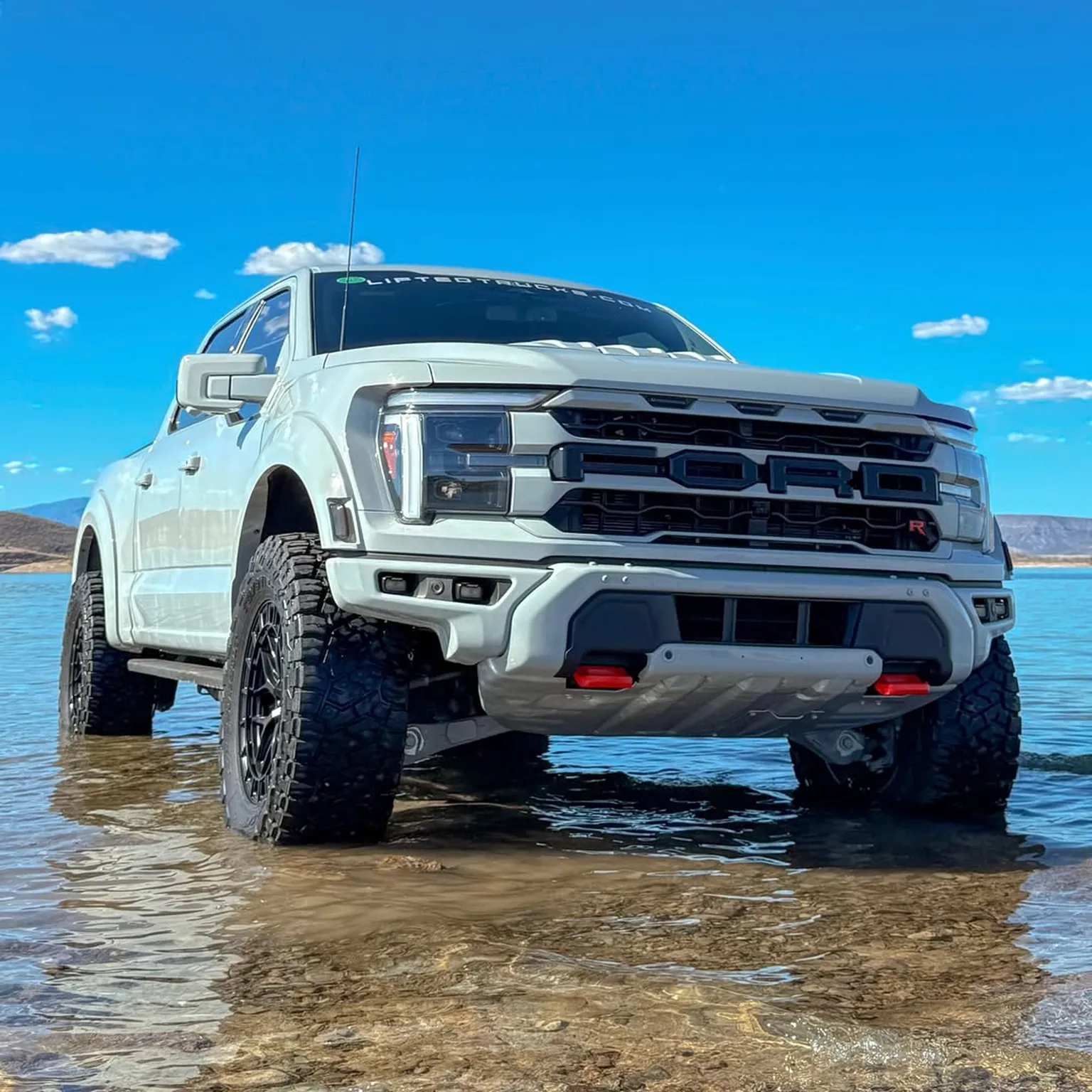
A lift, wheels, and tires change a truck's stance. The finish on the bumpers, grille, and fender flares changes how the whole build reads. Black or unfinished plastic flares next to a rich factory body color can make a build feel pieced together. When those same components are finished to match the body, the truck looks cohesive, intentional, and premium from every angle.
That is why color matching is one of the most popular finishing touches on custom trucks and SUVs. It is also why the method you choose matters. The three common approaches get you to a similar idea, but they deliver very different results over time.
Plasti Dip for Bumpers and Flares
Plasti Dip is a flexible rubber coating that is sprayed on in layers and can be peeled off later. It has earned its popularity for good reasons. It is inexpensive, a determined do-it-yourselfer can apply it in a weekend, and it is easy to undo when applied thickly enough.
Pros of Plasti Dip
The biggest advantage is cost. Of the three options, it is the cheapest by a wide margin, and the materials are easy to find. It is also quick. There is no shop appointment and no waiting on a booking. And because it is designed to peel away, it offers a low-commitment way to test a color or a blackout look on a truck you may not keep long.
Cons of Plasti Dip
The trade-off is that it looks quick, easy, and cheap. The finish is a coating, not paint, and it generally reads that way up close. Hand-sprayed application can show texture, uneven coverage, and edges that do not look factory.
Durability is the other concern. Bumpers and fender flares live in the toughest spots on a truck. They take rock chips, road debris, pressure washing, and fuel and chemical splashes. Plasti Dip is known to chip and tear at edges and impact zones. Many real-world accounts put its life on a daily-driven vehicle at roughly one to three years, and even the brand's own guidance ties longer life to correct application and careful hand washing. It also tends to wear unevenly, so one section can look worn while the rest still looks fine.
Removal is not always as easy as the videos suggest. A thick application tends to peel off cleanly. A thin one can come off in small pieces that take patience to clean up.
Who Plasti Dip Makes Sense For
Plasti Dip fits a short-term, low-budget change, or someone who wants to experiment before committing to a permanent finish. If you want the truck to look finished and stay that way, it is not the best long-term answer.
Vinyl Wrap for Bumpers and Flares
A vinyl wrap is a thin film applied to a panel with a pressure-activated adhesive. It comes in many colors and finishes, including gloss, satin, matte, and metallic. Done well, a wrap can look sharp and can protect the surface underneath from light wear.
Pros of Vinyl Wrap
Quality film from established manufacturers offers far more color and finish options than a coating. A good wrap installed by a professional can look clean, crisp, and consistent. Film life varies by product and climate, but manufacturers commonly rate quality cast films in the range of several years, with sun exposure shortening that life. A wrap can also be removed, which is appealing if you want the freedom to change the look later.
Cons of Vinyl Wrap
A wrap is only as good as the person installing it. Bumpers and fender flares are full of curves, edges, and recesses, which are the hardest areas to wrap cleanly. Improper installs can show lifted edges, visible seams, bubbles, and stretched film. The result can look terrible, and it often shows up quickly.
There is also a risk to the paint beneath. Film manufacturers state that improper application or removal can damage paintwork, and they recommend wrapping only fully cured, undamaged factory paint. If the surface was repainted, chipped, or has a weak clear coat, removal can pull paint with it. Leaving a wrap on well past its rated life makes removal harder and raises that risk.
Flares add a further wrinkle. If the flares are textured plastic, the surface preparation matters, and a wrap on a textured surface may not look as smooth as paint.
Who Vinyl Wrap Makes Sense For
A wrap is a good choice when you want a specific color or finish that is not offered from the factory, you want the option to reverse it, and you are willing to pay a professional wrap artist with a strong portfolio. If the quality of the installer is uncertain, the risk goes up fast.
Professional Paint Match for Bumpers and Flares
Paint match means a professional paint process matches the finish of the factory body color on parts like bumpers, grilles, and fender flares. At Lifted Trucks, our team at The Lift Shop offers color matching as real automotive paint, not vinyl or temporary styling.
Pros of Paint Match
Paint match looks the best. Because the components are painted to match the body, there is no film edge, no coating texture, and nothing that looks like an add-on. The truck looks like it was designed that way. That cohesive, factory-inspired look is what many buyers picture when they imagine a finished custom build.
Durability is the second advantage. Automotive paint is built to handle the conditions bumpers and flares face every day, including stone chips, UV, washing, and weather. It does not peel, curl at the edges, or need replacing on a schedule the way a coating or film can. A professionally finished truck also tends to present better and appeal to a wider range of shoppers when it is time to sell or trade. We encourage you to confirm the value impact of any modification with your own local market data.
The Trade-Off
The only real downside is cost. Professional paint costs more than a can of dip or a roll of film. Because the finish is permanent, it is worth choosing the colors and parts carefully before the work begins. In practice, that is a planning step, and our team can help you decide which components are worth matching so the build stays balanced.
Who Paint Match Makes Sense For
Paint match is the right call if you plan to keep the truck, if you want the best possible look, or if you want a finish that does not need to be redone. It is also the best fit if you simply want the truck to look finished.
Durability Compared
Over time, the gap between the options widens. Plasti Dip is the shortest-lived, especially on high-impact areas. A quality wrap lasts longer, though its life depends on climate, care, and the install. Paint is the longest-lasting of the three, since it is made for the same conditions the rest of the vehicle faces. Bumpers and flares take more abuse than almost any other part of the exterior, so durability matters more here than on a roof or hood.
Cost Compared
Upfront, the order is straightforward. Plasti Dip costs the least, a professional wrap costs more, and professional paint costs the most. The picture changes when you think about cost over time. A coating that needs to be redone and a wrap that needs to be replaced add up, while paint is a one-time investment. Exact pricing varies by truck, parts, color, and shop, so we recommend asking for a quote on your specific build instead of relying on a general range.
Which Option Should You Choose?
Choose Plasti Dip if you want a fast, inexpensive, temporary change and you accept that it will look like a coating. Choose a wrap if you want a specific finish, you want it to be reversible, and you can hire a skilled professional wrap installer. Choose paint match if you want the best look, the longest life, and a truck that looks finished.
For most owners building a truck they plan to keep, paint match is the strongest choice. It looks the best and lasts the longest, and the main consideration is budget.
Frequently Asked Questions
Is Plasti Dip good for bumpers and fender flares?
It can work for a short-term or budget change, but bumpers and flares take heavy wear. Expect a coating finish that can chip and wear unevenly, especially at edges.
How long does a vinyl wrap last on a truck bumper?
It depends on the film, the install, and the climate. Quality films are commonly rated for several years, and strong sun shortens that life. Edges and curves are usually where wraps fail first.
Can a vinyl wrap damage my paint?
It can if it is installed or removed improperly, or if the paint underneath was repainted, chipped, or in poor condition. Film manufacturers recommend applying film only to sound, fully cured factory paint.
Is paint matching worth it on a lifted truck?
If you want the cleanest look and a finish that lasts, yes. It is the most seamless and durable of the three options, and its main cost is the upfront price.
Can I color match a truck I already own?
Yes. The Lift Shop offers color matching for trucks and SUVs, and our team can help you decide which components to match.
See Color Matching in Person
The best way to understand the difference is to see finished builds. Our color-matched vehicles show how professionally painted bumpers, grilles, and fender flares transform a lifted truck. If you are also weighing hardware upgrades, our guide to aftermarket bumpers is a helpful companion read.
Ready to see it for yourself? Explore our color-matched inventory online. Nationwide shipping is available, so you can shop from anywhere.