Overlanding Truck and SUV Builds: The Accessories That Make a Rig Trip-Ready
5 min de lectura
The short answer
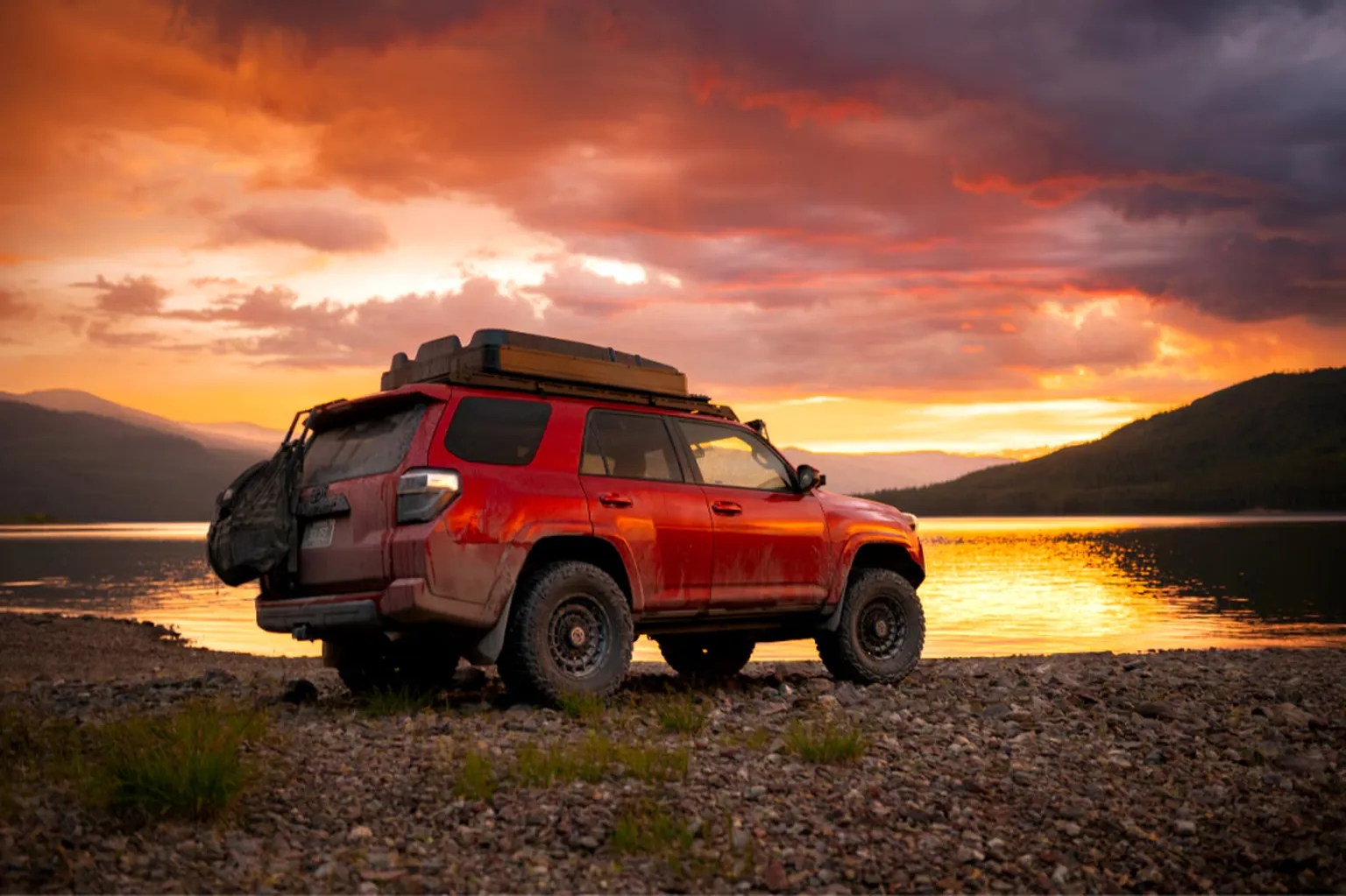
An overlanding build is a truck or SUV set up for self-reliant travel: long routes, remote camps and days between services. The best builds start with a capable base, then add accessories in layers: protection, recovery, power and lighting, shelter, storage and navigation. Keep the total weight inside your vehicle's payload, and choose gear you will actually use.
We skip wheels, lift and tires in this guide because most Lifted Trucks builds already include them. That gives you a head start, since suspension and tires are usually the first things an overland build needs. This article is part of our accessories guide.
En este artículo
What is overlanding?
Overlanding is vehicle-based travel where the journey matters as much as the destination. It is more about reaching remote places and camping comfortably than conquering extreme obstacles. Some trips are a weekend on forest roads. Others are weeks across several states. Your build should match the trips you really take.
Start with how you travel
Before buying anything, answer these questions.
- How long are your trips? Weekend runs need less gear than week-long expeditions.
- How many people ride along? Passengers add weight and need space and seating.
- Where do you go? Desert, mountains, forests and snow each call for different gear.
- How far from help will you be? The farther out, the more recovery and repair gear matters.
- Do you tow? A trailer changes the weight picture and may replace some of your storage.
Build in layers
Layer 1: Protection
Remote travel puts hard miles on the front end, sides and underbody. Protective accessories reduce the chance that a small mishap ends the trip.
- Bumpers and brush guards protect the front end and provide mounting points for lights and a winch.
- Rock sliders guard the rocker panels.
- Skid plates protect the engine, transfer case and fuel components.
Layer 2: Recovery
Getting stuck is part of the deal in remote country. A winch, rated recovery points, straps, shackles, traction boards and a shovel let you get yourself out. Our guide to [winches and recovery gear] covers what to buy and how to use it safely.
Layer 3: Lighting and power
- Auxiliary lighting such as light bars and ditch lights extends visibility on dark roads and trails.
- Camp lighting makes a campsite usable after sunset.
- Auxiliary power such as a second battery, a power station or a solar panel keeps phones, cameras, fridges and lights running.
Wiring matters most here. Poor connections and missing fuses are common causes of electrical trouble on builds.
Layer 4: Shelter
- Rooftop tents let you camp quickly and off the ground. They add weight up high, so check your rack's rating.
- Awnings provide shade and rain cover.
- Ground tents and trailers remain good choices if you want to keep weight down or leave the vehicle at camp.
Layer 5: Storage
Good storage keeps gear secure, dry and easy to reach.
- Bed covers protect cargo from weather and theft.
- Bed racks and chase racks carry gear above the bed. See our post on [chase racks].
- Toolboxes and drawer systems organize tools, recovery gear and kitchen supplies.
- Roof racks carry bulky items, but they raise the center of gravity.
Pack heavy items low and centered, and secure everything so it does not shift on rough roads.
Layer 6: Navigation and communication
Cell service often disappears off the pavement. Carry offline maps, a GPS unit and, for remote routes, a satellite messenger or two-way radio. A 360-degree camera system also helps on tight trails and in camp.
Layer 7: Comfort and daily use
- Floor liners keep mud and sand out of the cabin.
- Running boards or power-deploying steps make getting in and out easier, particularly on tall builds. See our guide to [running boards and side steps].
- A fridge or cooler setup extends how long you can stay out.
Weight, payload and balance
Every accessory adds weight, and weight is the main limit on an overland build. Check your vehicle's payload rating, then add up what you plan to carry: bumpers, winch, rack, tent, water, fuel, food, tools, passengers and gear.
- Stay under payload. Overloading hurts handling, braking and tire and suspension life.
- Mind the roof. Roof weight raises the center of gravity and the rack has its own rating.
- Balance front and rear. A heavy winch bumper up front and a loaded bed behind can change how the vehicle rides.
- Water is heavy. A few gallons add up quickly.
If your build is heavy, tell your installer. Suspension, tires and brakes should match the final weight.
Pick by trip, not by trend
Overlanding gear is popular, and it is easy to overbuy. A few practical rules help.
- Buy for the trips you take now. Add gear as your trips demand it.
- Choose fewer, better items. Reliable gear beats a pile of cheap accessories.
- Test before you travel. Set up your tent, run your lights and use your winch near home first.
- Think about daily driving. If the vehicle is also your commuter, favor accessories that do not hurt everyday use.
Sample overland setups
These are examples, not fixed packages.
- The Weekend Explorer: bed cover, floor liners, auxiliary lighting, recovery straps and traction boards, and a rooftop tent or ground tent.
- The Remote Traveler: winch bumper, rock sliders, skid plates, auxiliary power, rooftop tent with awning, and a drawer or storage system.
- The Family Overlander: running boards, bed cover, floor liners, 360 cameras, storage boxes, and an awning for shade.
- The Tow-and-Camp Setup: hitch and brake controller, bed cover, auxiliary lighting, and a recovery kit.
Why professional installation matters
Overland builds combine heavy parts, electrical systems and weight carried far from help. That is where installation quality counts. Bumpers and winches need correct mounting. Lights, cameras, auxiliary power and fridges need proper wiring and fusing. Racks and tents need to fit the vehicle and the load rating.
At The Lift Shop, our team installs these accessories as a complete system on lifted trucks and SUVs, so the parts fit, work together and are set up for the weight you carry.
Frequently asked questions
What is the best truck or SUV for overlanding?
The best choice is the one that fits your trips, passengers and budget. Capable trucks and SUVs with good payload and a strong aftermarket make good starting points.
What accessories should I add first?
Start with protection and recovery, then add lighting, storage and shelter as your trips require.
Is a rooftop tent worth it?
They set up quickly and keep you off the ground, but they add weight and can affect fuel economy. Many owners find them worth it for frequent camping.
How much weight can my truck carry?
Check the payload rating on the sticker inside the driver door jamb. Add up your accessories, passengers and gear to stay under it.
Do I need a winch for overlanding?
It is a strong safety tool for remote travel, but it is not required for every trip. See our [winch guide].
Will overland accessories affect fuel economy?
Added weight, roof gear and large bumpers can lower fuel economy. Keep the build lean and packed sensibly.
Can I use my overland build every day?
Yes. Many owners do. Favor accessories that do not hurt daily comfort, such as easy-entry steps and floor liners.
Do I need extra power for camping?
Only if you run a fridge, lights or devices for days. A power station or second battery is a common solution.
Can I get a build completed before my truck ships?
Lifted Trucks offers nationwide shipping, so your build can be completed and delivered to you.
Ready to plan your build?
Browse our inventory of trucks and SUVs, or talk to The Lift Shop about the accessories that make your rig trip-ready. We ship nationwide.