Off Road Bumpers for Lifted Trucks: Steel vs. Aluminum vs. Pre-Runner
8 min de lectura
The Short Answer
Choose a steel plate bumper if you want maximum protection and plan to run a winch. Choose aluminum if front axle weight and rust resistance matter more to you than maximum impact resistance. Choose a pre-runner style bumper if you drive fast on open desert or dirt roads and want the best approach angle with the least weight. Whichever you pick, match it to your exact year and trim, plan your suspension around its weight, and confirm how it handles your truck's sensors and radar.
Bumpers are one of the most visible upgrades on a lifted truck, and also one of the easiest to get wrong. This guide walks through each style, the trade-offs that matter, and the questions to ask before you buy.
En este artículo
What an Off Road Bumper Actually Does
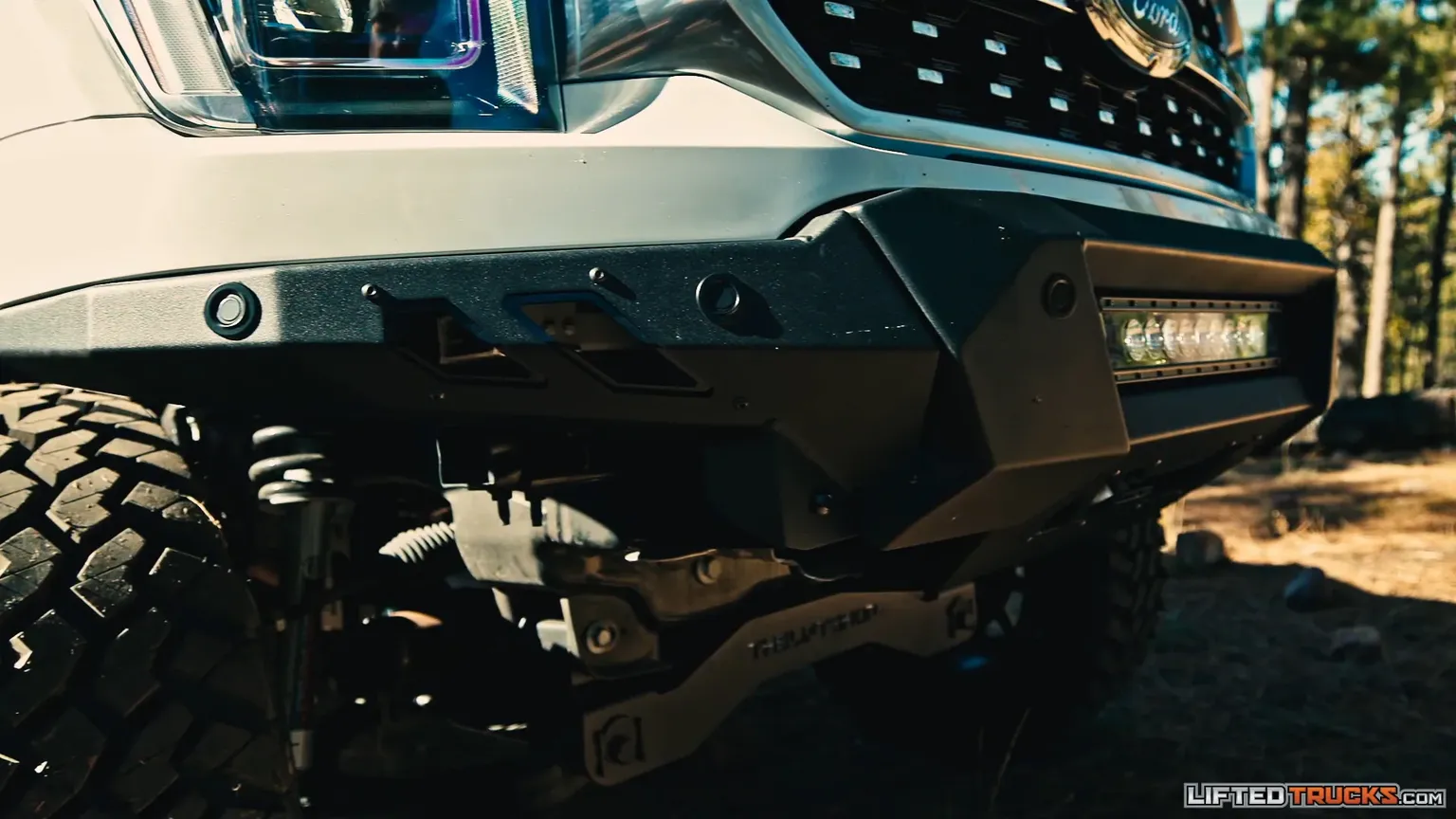
A factory bumper is designed mostly for low-speed impacts and styling. An off road bumper replaces it with a stronger structure, usually steel or aluminum, and adds capabilities the factory piece does not have. Depending on the design, that can include a winch mount, rated recovery points for D-ring shackles, mounts for auxiliary lights, a skid plate, and improved approach angle.
Not every feature belongs on every truck. A daily driver that sees gravel roads and the occasional trail has different needs than a ranch truck, an overland rig, or a desert runner. Start with how you actually use the truck, then choose the style.
Steel Bumpers
Steel is the traditional choice, and it is still the default for serious recovery and trail use.
Pros of Steel
Steel offers the highest impact protection and a very rigid platform for a winch. It is also easier to repair. A bent steel bumper can often be straightened or welded at a typical fabrication shop. Steel bumpers are generally less expensive than comparable aluminum designs, and heavy-duty plate designs usually include recovery points and skid plate options.
Cons of Steel
Weight is the main drawback. Manufacturers and shops commonly describe full steel front bumpers in the range of roughly 80 to 150 pounds or more, and full-guard heavy-duty versions can run well over that. That weight sits ahead of the front axle, where it acts on the front springs with extra leverage. Steel also needs a protective finish, such as powder coat, and chips need to be touched up so rust does not start.
Who Steel Makes Sense For
Steel fits owners who run a winch, tow or recover other vehicles, work in rough country, or simply want the most protection. If your truck lives on ranch roads, job sites, or rocky trails, steel is usually the right answer.
Aluminum Bumpers
Aluminum has become a popular alternative as designs and manufacturing have improved.
Pros of Aluminum
The biggest advantage is weight. Aluminum bumpers are commonly described as saving a substantial amount of weight compared with a similar steel design, which means less load on the front suspension and less effect on handling and braking. Aluminum also resists corrosion naturally, which helps in humid, coastal, and road-salt environments.
Cons of Aluminum
Aluminum behaves differently in an impact. Where steel tends to bend, aluminum is more likely to crack or tear, and repairs usually require specialized welding that not every shop offers. Aluminum bumpers also tend to cost more than comparable steel. Winch mounting is possible on many designs, but the mounting provisions need to be properly engineered, so confirm the winch rating with the manufacturer.
Who Aluminum Makes Sense For
Aluminum suits trucks where weight matters, such as lighter-duty platforms, daily drivers that also see trail time, and owners in rust-prone areas. It is a smart choice if you want a stronger bumper without adding as much load up front.
Pre-Runner Bumpers
A pre-runner bumper is a minimalist design, typically built from steel tubing with a steep-angled skid plate. It is named for the pre-running trucks used to scout desert race courses.
Pros of Pre-Runner Bumpers
Pre-runner bumpers take up as little space as possible, which maximizes approach angle and helps the truck clear whoops, dips, and dunes. They are generally lighter than a full plate bumper and have a distinctive, sporty look. Many include mounts for lights.
Cons of Pre-Runner Bumpers
The open design gives less body and grille protection and offers less room for a winch or heavy accessories. It is built to protect the undercarriage and keep the front clear at speed, not to take on rock crawling or heavy recovery. Hybrid designs, which combine a plate center section with tube ends, aim to split the difference.
Who Pre-Runner Bumpers Make Sense For
Pre-runner bumpers fit drivers who value speed, clearance, and a lighter front end, such as desert and open-terrain runners, and owners who want a rugged look without the weight of full plate. If you expect to run a winch, look at a hybrid or plate design instead.
Winch Bumpers: Plan Ahead
If there is any chance you will add a winch, buy a bumper designed for one now. Retrofitting a winch mount into a bumper that was not built for it is rarely a good idea. A winch bumper has a reinforced mounting plate, a fairlead opening for the cable, and recovery points rated for the load.
A winch also needs wiring: a proper battery connection, correct fusing, and a solenoid location that stays dry. That work should be done by an installer who understands the full system. Remember that the winch itself adds more weight to the front end, on top of the bumper.
Weight, Ride Height, and Your Suspension
A heavy front bumper does more than add pounds. Because it hangs ahead of the front axle, it can pull a leveled or lifted front end back down. Shops that work with lifted trucks commonly recommend planning the bumper and the suspension together, so the springs or coilovers account for the final front weight.
Before you buy, add up the weight of everything you plan to carry up front: the bumper, a winch, lights, and any guard. Compare the total with your truck's payload and front axle ratings, which you can find on the door jamb label and in the owner's manual. If you already have a leveling kit or lift, tell your installer before ordering. A heavier bumper can mean a spring change.
Sensors, Cameras, and Driver-Assist Systems
Many modern trucks carry hardware behind the front bumper, including parking sensors, a forward camera, and radar for adaptive cruise control and collision mitigation. An aftermarket bumper that is not designed for your truck can interfere with those systems and trigger warnings or reduce a safety feature.
Industry guidance from the Specialty Equipment Market Association notes that front-end modifications such as aftermarket bumpers can degrade forward-facing sensors if they are improperly engineered or installed. Radar locations vary by manufacturer, and some trucks place the sensor low and off to one side. Good bumpers include provisions or relocation brackets for these systems.
The takeaway is simple. Choose a bumper made for your exact year, make, and trim, not just your body style, and ask the manufacturer and your installer how it handles radar and sensors. After installation, confirm the systems work and, where the manufacturer requires it, have them recalibrated.
Rear Bumpers and Recovery Points
Rear off road bumpers protect the back of the truck, add recovery points, and sometimes include a hitch receiver, step pads, or a tire carrier. If you tow, make sure the bumper's hitch provisions suit your trailer and that any changes work with your truck's towing ratings. Heavy rear bumpers add weight behind the axle, so consider them in the same weight plan as the front.
Finish and Color Matching
Most aftermarket bumpers ship with a black powder coat, which protects steel and gives a rugged look. If you want the bumper to blend with the body, our team at The Lift Shop offers color matching with real automotive paint. Plan the finish before installation so the bumper, flares, and grille feel like one design. For a closer look at finishes, see our comparison of paint match, wrap, and Plasti Dip for bumpers and flares.
How to Choose: A Simple Decision Path
Start with your use. If you recover vehicles, run a winch, or drive rough terrain, choose steel plate. If you care most about front-end weight or live where road salt and humidity are a problem, look at aluminum. If you drive fast on open ground and want maximum clearance, consider a pre-runner or hybrid bumper. Then confirm four things: it fits your exact year and trim, it works with your sensors and radar, your suspension is planned for the weight, and a professional will install it.
Why Professional Installation Matters
A bumper carries real loads, and recovery points and winch mounts are safety components. A professional installer makes sure the bumper mounts to the frame correctly, clears airbag and sensor systems, routes and fuses winch wiring properly, and adjusts the suspension for the final weight. On a lifted truck, ride height and weight change the fit, so experience with lifted builds counts.
Frequently Asked Questions
Is a steel or aluminum bumper better for a lifted truck?
It depends on your priorities. Steel offers the most impact protection and a rigid winch platform, while aluminum saves weight and resists corrosion. Choose steel for heavy recovery and rough terrain, and aluminum when front axle weight is the priority.
How much does an off road bumper weigh?
It varies widely by design and material. Steel front bumpers are commonly cited at roughly 80 to 150 pounds or more, and heavy full-guard models can weigh well over 200 pounds. Aluminum designs are typically much lighter. Always check the manufacturer's listed weight for your exact bumper.
Will a heavy bumper affect my leveling kit or lift?
It can. Weight ahead of the front axle can settle the front end and reduce your stance. Plan the bumper and suspension together and tell your installer about any winch or accessories.
Can I add a winch to any bumper?
No. Use a bumper designed to carry a winch, with a reinforced mount and rated recovery points.
Will an aftermarket bumper affect my parking sensors or adaptive cruise control?
It can if the bumper is not designed for your truck. Choose a bumper made for your exact year and trim, and confirm with the manufacturer how it handles sensors and radar.
What is a pre-runner bumper?
A lightweight, minimalist bumper, usually built from steel tubing, designed for maximum approach angle and speed over open terrain. It gives less grille and body protection than a full plate bumper.
Can I color match my bumper?
Yes. The Lift Shop offers color matching for trucks and SUVs.
Explore Lifted Trucks Builds
Seeing a finished build is the easiest way to picture the right bumper for your truck. For more on protection upgrades, read our guide to front-end and body protection for lifted trucks and our overview of aftermarket bumpers, and see how a winch fits in with our winches and recovery gear guide.
Ready to find your build? Explore our lifted truck and SUV inventory online. Nationwide shipping is available, so you can shop from anywhere.