Buying a Lifted Truck from Carvana or CarMax? What to Know Before You Sign
5 min de lectura
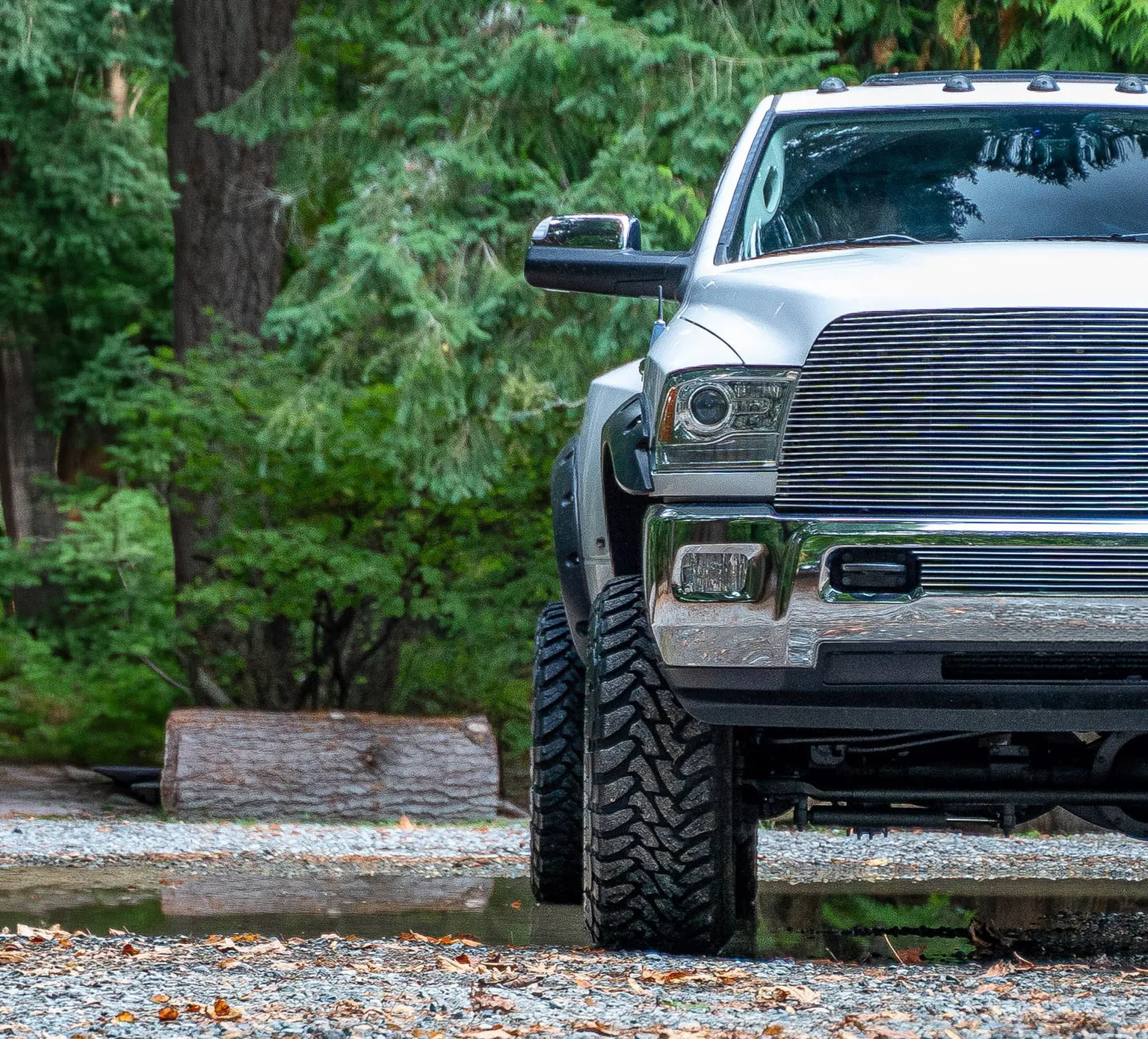
Large online and national used-vehicle retailers make car shopping feel easy. You search, you filter, you click, and a truck shows up. For a stock half-ton, that model works well. For a lifted truck, it deserves a closer look.
If you have ever searched for a lifted truck on Carvana or CarMax, you probably noticed that the listings are thin and the details are thinner. That is not an accident. Modified trucks are a specialty, and the way a lifted truck ends up on a general-market lot tells you a lot about what you may be buying. This guide explains how those trucks get there, what can go wrong, and how to protect yourself.
En este artículo
How a Lifted Truck Ends Up on a General-Market Lot
Most lifted trucks start the same way. An owner buys a stock truck and decides to make it their own. A lift kit goes on first, then wheels and tires, then maybe a bumper, lighting, or a tune. Sometimes a reputable shop handles all of it. Just as often, the work is spread across several vendors: one for the suspension, another for the wheels, a third for the electronics, and a weekend of DIY labor to tie it together.
Then life changes. The payment feels heavy, the truck rides rougher than expected, or something starts to wear out early. The owner decides to move on and takes the truck to the easiest place to get an offer, which is often a national retailer.
Those retailers publish how their appraisals work. CarMax, for example, states that its appraisal is a separate transaction from buying a car, and that aftermarket enhancements sometimes will not increase a trade-in's value. In plain terms, the market that buys these trucks at the counter is generally not pricing in the quality of the build. That is the root of the problem for buyers. A truck can pass through a trade-in lane without anyone who truly understands lift geometry, part quality, or installation workmanship ever evaluating it in depth.
We cannot see inside any retailer's sourcing. But if you are shopping a modified truck from a vendor that does not specialize in them, it is reasonable to ask a simple question: who looked at this build, and what did they know about it?
Why DIY and Multi-Vendor Builds Carry Extra Risk
A well-built lifted truck is a system. The lift, the shocks, the alignment, the wheel offset, the tire size, and the gearing all affect one another. When one vendor designs and installs that system, the parts are chosen to work together. When five sources contribute pieces over two years, nobody owns the result.
Here are the issues that tend to show up in builds assembled piecemeal.
Alignment and geometry. A lift changes suspension angles. If the alignment was never corrected properly, you may see uneven tire wear, wandering steering, or a truck that feels nervous at highway speed.
Mismatched components. Wheels and tires that rub, shocks that do not suit the lift height, or a leveling kit paired with oversized tires can all create ride quality and wear problems.
Installation quality. Torque specifications, hardware, and driveline angles matter. A lift installed in a driveway is not the same as one installed by a team that does it every day.
Unknown history. Receipts, part brands, and install dates are often missing. Without them, you cannot tell what was installed, when, or by whom.
Warranty gaps. Aftermarket parts often carry their own warranties from the manufacturer. Installation labor may or may not be covered. Always ask, and get the terms in writing, because a retailer's coverage for a stock vehicle may not address aftermarket components. Check the specific terms before you assume anything.
None of this means every lifted truck from a general retailer is a problem. It means the burden of proof shifts to you, because the seller may not be set up to answer detailed questions about the build.
What General Retailers Do Well, and Where the Gap Is
Fairness matters here. Carvana and CarMax are built for scale and convenience. CarMax, for instance, describes a 125-plus point inspection on its certified vehicles, a limited warranty, a return window, and a nationwide inventory it publishes. Those are real strengths for mainstream used vehicles, and many buyers are well served by them.
The gap is specialization. A general inspection checklist is designed around factory-built vehicles. It is not designed to evaluate whether a 6-inch lift was paired with the right control arms, whether the wheel offset is putting stress on bearings, or whether the aftermarket parts are premium components or bargain-bin copies. Those are judgment calls that come from experience with modified trucks.
Questions to Ask Before You Buy a Modified Truck
Whether you are shopping a national retailer, a private seller, or a small lot, put these questions on your list.
Ask for a complete list of every aftermarket part on the truck, including brand, model, and install date. If the seller cannot provide it, treat that as information.
Ask who installed the modifications and whether receipts exist. A single professional shop is easier to evaluate than a patchwork of vendors.
Ask whether the truck has been aligned since the lift and tire changes, and request proof.
Ask what warranty applies to the aftermarket components, and what applies to the installation labor. Get the answer in writing.
Ask whether the seller's inspection covers the modifications themselves or only the factory systems.
Take a long test drive on the highway and on rough pavement. Listen for rubbing, clunks, and vibration, and feel for wandering or an unusually harsh ride.
Finally, have an independent shop that works on lifted vehicles inspect the truck before you commit. A pre-purchase inspection costs far less than fixing a mismatched suspension.
Why a Specialist Changes the Equation
A dealer that specializes in modified vehicles starts from a different place. Lifted Trucks, for example, focuses on customizing, buying, and selling aftermarket trucks and SUVs. Because that is the entire business, the team evaluates part quality, installation quality, fitment, ride quality, and reliability when it appraises a trade-in, rather than treating the modifications as an afterthought.
That expertise shows up on the buying side as well. Lifted Trucks inventory is professionally upfit, inspected, and properly aligned, so a buyer is not left to sort out the build after purchase. Public listings, such as the Tacoma vehicle page, describe an 82-point inspection. Modifications installed by Lifted Trucks carry a lifetime labor warranty, while manufacturer parts warranties are separate, so it is wise to review the full terms for any specific vehicle.
The point is not that you can never buy a lifted truck elsewhere. The point is that the person selling a modified truck should be able to explain it, document it, and stand behind it. When the seller works on these trucks every day, those answers come easily.
Quick Takeaways for Buyers
DIY and multi-vendor builds are common, and they frequently change hands through trade-ins, which means the quality of the build is not always evaluated along the way.
General retailers offer real convenience and published protections, but their processes are designed around factory vehicles, so you should verify the modifications yourself.
Documentation, alignment proof, and a clear warranty picture are the three things that separate a confident purchase from a gamble.
A specialist who builds, buys, and sells modified trucks can answer detailed questions about the work, which lowers your risk.
Ready to See a Professionally Built Truck?
If you want a lifted truck that has been built, inspected, and aligned by people who do this every day, start with our current selection. Explore our lifted truck inventory and take advantage of nationwide shipping to bring your next build home.