Which Lifted Trucks Handle Sand Dunes the Best?
6 min de lectura
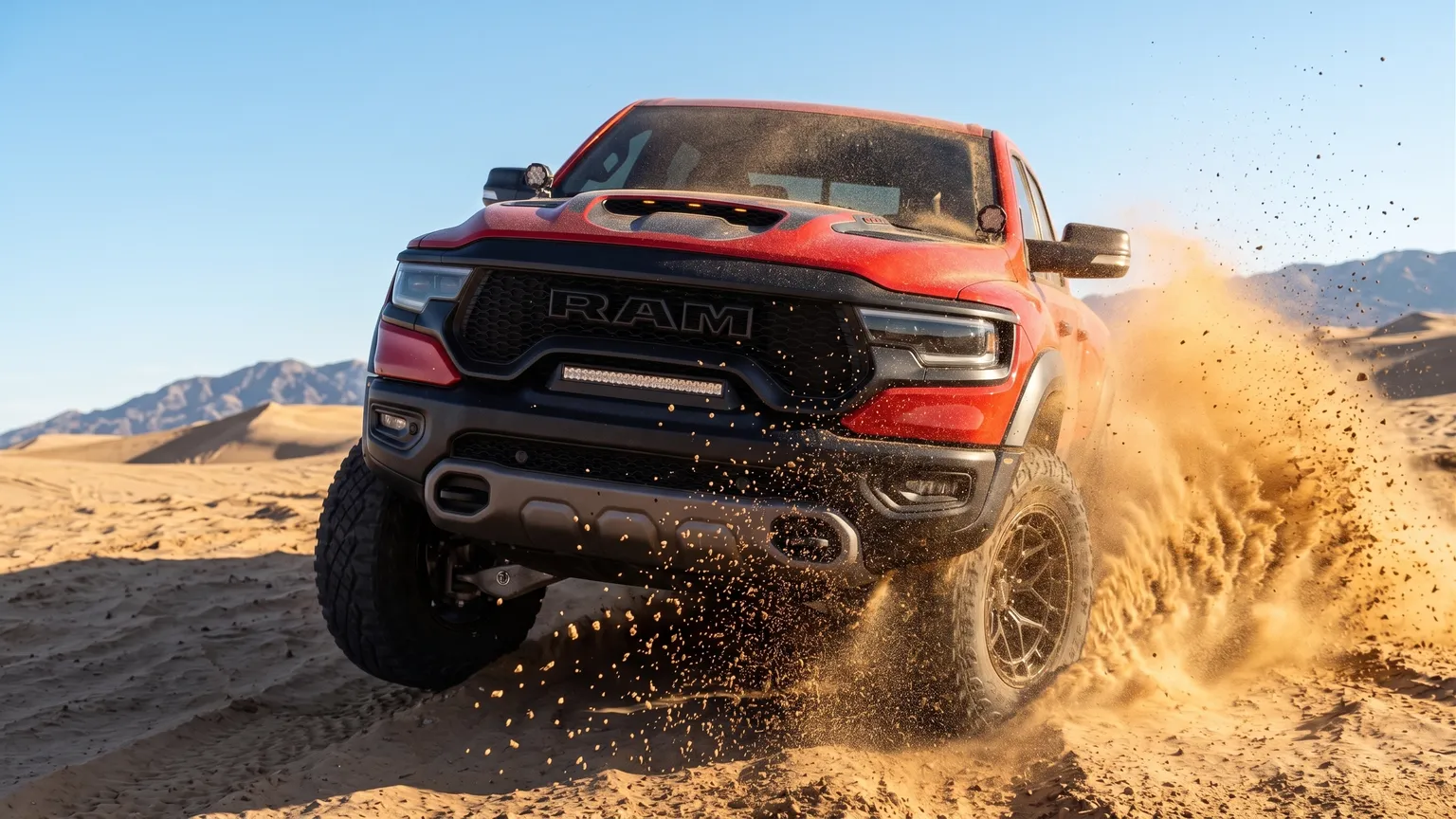
The best lifted trucks for sand dunes combine real power, a stable and well-controlled suspension, a wide stance, and tires that float on top of soft sand. Factory performance trucks like the Ford F-150 Raptor family, the Ram 1500 TRX, and a properly equipped Toyota Tundra TRD Pro lead the conversation, and a thoughtfully built lifted half-ton can follow right behind them. Height alone does not win in the dunes. Balance does.
En este artículo
If you have ever watched a truck crest a dune at Glamis or cruise a beach at Pismo, you know the difference between a truck that floats and a truck that digs. This guide walks through what matters on sand, which trucks fit the job, and how to set up a lifted truck so it is just as comfortable on the drive home as it is on the dune face.
What Makes a Lifted Truck Good on Sand Dunes
Sand rewards momentum, flotation, and smooth power delivery. A truck does not need to be the tallest or have the biggest tires. It needs enough torque to keep moving when the surface gives way, a drivetrain that sends power to all four wheels, and suspension that keeps the tires in contact with uneven sand without bouncing the truck off line.
Flotation comes from the tire's footprint, and the footprint is controlled mostly by air pressure. A guide from Four Wheel Drive Talk puts typical sand pressure at 15 to 18 PSI for most vehicles and 12 to 15 PSI in soft desert dunes, and says airing down can grow the tire's footprint by 30 to 50 percent. The Glamis Duner FAQ suggests roughly 15 to 20 PSI for a truck on dunes. These are enthusiast figures, so treat them as starting points and adjust for your tires, wheels, and sand conditions. Very low pressures raise the risk of unseating a tire bead, which is why beadlock wheels are common among serious dune drivers.
Stance matters too. A wide, stable truck is more predictable on a slope, and a massive lift on a narrow platform raises the center of gravity right where you do not want it. That is why Lifted Trucks favors balanced setups over extreme lift height, tire size, or stance. A build that operates comfortably within its mechanical limits protects reliability, ride quality, and your confidence behind the wheel.
Ford F-150 Raptor and Raptor R for Sand Dunes
For many drivers, the Raptor is the answer before the question is finished. Ford describes the F-150 Raptor as equipped with Fox Racing Shocks with Live Valve technology, a 5-link rear suspension with a Panhard rod, an electronic-locking rear differential, and selectable drive modes that include Baja and Slippery alongside Normal, Sport, Tow/Haul, Off-Road, and Rock Crawl. Ford also lists available 37-inch all-terrain tires on the Raptor and Raptor R.
Power is the other half of the story. According to Ford, the 2026 F-150 Raptor's 3.5L High-Output EcoBoost V6 makes 450 horsepower and 510 lb-ft of torque, while the Raptor R's supercharged 5.2L V8 makes 720 horsepower and 640 lb-ft of torque. On sand, that reserve lets you hold speed up a dune face without constantly shifting, which is exactly where momentum gets lost. The Raptor R is the most powerful truck in this guide, and the standard Raptor is still more than enough for most dune days.
The tradeoff is cost, and the fact that a factory Raptor is already tuned. If you want Raptor-style attitude from a different platform, a thoughtfully lifted F-150 with correctly matched shocks and springs can deliver much of the same usability for less money, though it will not replicate the Raptor's factory long-travel suspension.
Ram 1500 TRX for Fast, Open Dune Running
The Ram 1500 TRX is built for high-speed desert and sand running. Its supercharged 6.2L HEMI V8 is listed at 702 horsepower on Ram dealer materials, a figure to confirm against the current Ram specification sheet before you rely on it. Dealer materials also describe Bilstein shocks, multiple selectable drive modes, and an off-road cruise control that holds a low set speed over rough terrain.
The TRX is heavy and powerful, which suits long open dunes where you can build speed. In tighter or steeper terrain, the weight rewards careful tire pressure and smooth throttle. If you are shopping for one, make sure the tires, wheels, and any added accessories match the way you intend to drive it.
Toyota Tundra TRD Pro for Dune Days and Daily Driving
The Tundra earns its place for drivers who want capability along with long-term ownership confidence. Toyota rates the 2026 i-FORCE MAX hybrid powertrain at 437 horsepower and 583 lb-ft of torque, and says the electric motor delivers torque without lag. The Tundra also offers Multi-Terrain Select with a dedicated Sand mode that adjusts throttle and traction control in 4x4, along with an electronically controlled locking rear differential.
The TRD Pro adds FOX shocks, a 1.1-inch front lift, and Falken Wildpeak all-terrain tires on 18-inch forged wheels. That is a modest factory lift, and it makes a useful point: sand performance does not require a dramatic lift. Lifted Trucks prioritizes platforms with predictable behavior when lifted and strong long-term support, which makes the Tundra a natural candidate if you plan to tow to the dunes and use the truck as a daily driver in between.
Lifted Half-Ton and Heavy-Duty Trucks on Sand
Not every dune driver wants a factory performance truck. A lifted Chevrolet Silverado 1500, GMC Sierra 1500, Ford F-150, or Ram 1500 can all become a capable sand truck when the lift is done correctly. The key is a true suspension lift with shocks and springs matched to the truck's weight, corrected geometry, and tires sized to keep the truck stable and comfortable. Lifted Trucks prefers true suspension lifts because they preserve ride control and are the safer, higher-value approach compared with a simple height-only gain.
Heavy-duty diesel trucks are a different story. They bring tremendous torque, but their weight and front-end mass make flotation harder, and they are rarely the first choice for steep, soft dunes. They shine at hauling a trailer or toy hauler to the dunes and serving as basecamp, which is a perfectly good job to have.
How to Set Up a Lifted Truck for Sand Dune Driving
Start with tires. A tire with a taller sidewall and a footprint that grows when aired down gives you more flotation than a stiff, narrow tire. Pair it with wheels that can handle low pressure, and bring a reliable compressor so you can air back up before returning to pavement. Driving at highway speed on soft, low-pressure tires is a common mistake and a safety risk.
Next, think about suspension. Quality shocks that control rebound keep the tires planted on rolling sand and reduce chatter. Motor Trend notes that the hopping and chattering that comes with tires digging in can be violent enough to damage driveline parts, which is another reason smooth throttle and correct tire pressure matter.
Then think about technique. Build speed on firm ground before entering soft sand, apply throttle progressively, and avoid stopping on an incline in deep sand. If you must stop, point the wheels straight so you do not have to push a wall of sand when you start again. Shift as little as you can on a climb and let the truck's torque carry you.
Finally, stay within your truck's limits. A balanced lift, a sensible tire size, and good suspension tuning make a sand day more fun and protect your investment. Always consult your owner's manual, know your terrain, and follow the rules of the riding area you visit.
So, Which Lifted Truck Is Best for Sand Dunes?
If your priority is maximum dune capability, the Ford F-150 Raptor R is the strongest overall performer in this guide thanks to its power, suspension, and tire options. The standard F-150 Raptor is the balanced pick, with plenty of power and a dune-friendly drive mode lineup. The Ram 1500 TRX is the choice for drivers who want the biggest horsepower figure and plan to run long open stretches. The Toyota Tundra TRD Pro suits drivers who put daily usability and long-term support first, and a properly built lifted half-ton gives you a budget-friendlier route to a very capable sand truck.
Whichever platform you choose, the best dune truck is the one built for how you actually drive it, with balanced lift height, matched suspension, and tires that float.
Explore Dune-Ready Lifted Trucks With Nationwide Shipping
Explore our massive lifted truck inventory and find a build that fits your terrain, your budget, and your driving style. We offer nationwide shipping, so wherever the dunes are calling you, your next truck can get there.