Winches and Recovery Gear for Trucks and SUVs: What to Buy and How to Set It Up
6 min read
The short answer
A winch pulls your truck or SUV out of trouble using its own power, and it is one of the most useful pieces of recovery equipment you can carry. Choose a winch rated well above your vehicle's weight, mount it on a bumper built to carry it, and pair it with the right recovery gear: straps, shackles, gloves and traction boards. Have it installed correctly, because a winch is only as good as its wiring and mounting.
Winches matter most for off-roaders, overlanders, ranch and rural drivers, and anyone who travels roads where help is a long way off. This guide is part of our accessories guide, and we skip wheels, lift and tires here since most Lifted Trucks builds already include them.
In this article
Who actually needs a winch?
- Off-roaders who hit mud, sand, snow or rocks, where getting stuck is a real possibility.
- Overlanders and campers who travel remote routes, often alone or in small groups.
- Ranch, farm and rural owners who drive unimproved roads and fields.
- Work crews who haul equipment onto soft or uneven job sites.
If you mostly drive paved roads, a winch is optional. Quality recovery straps and a plan may be all you need.
Winch types: how they work
Electric winches
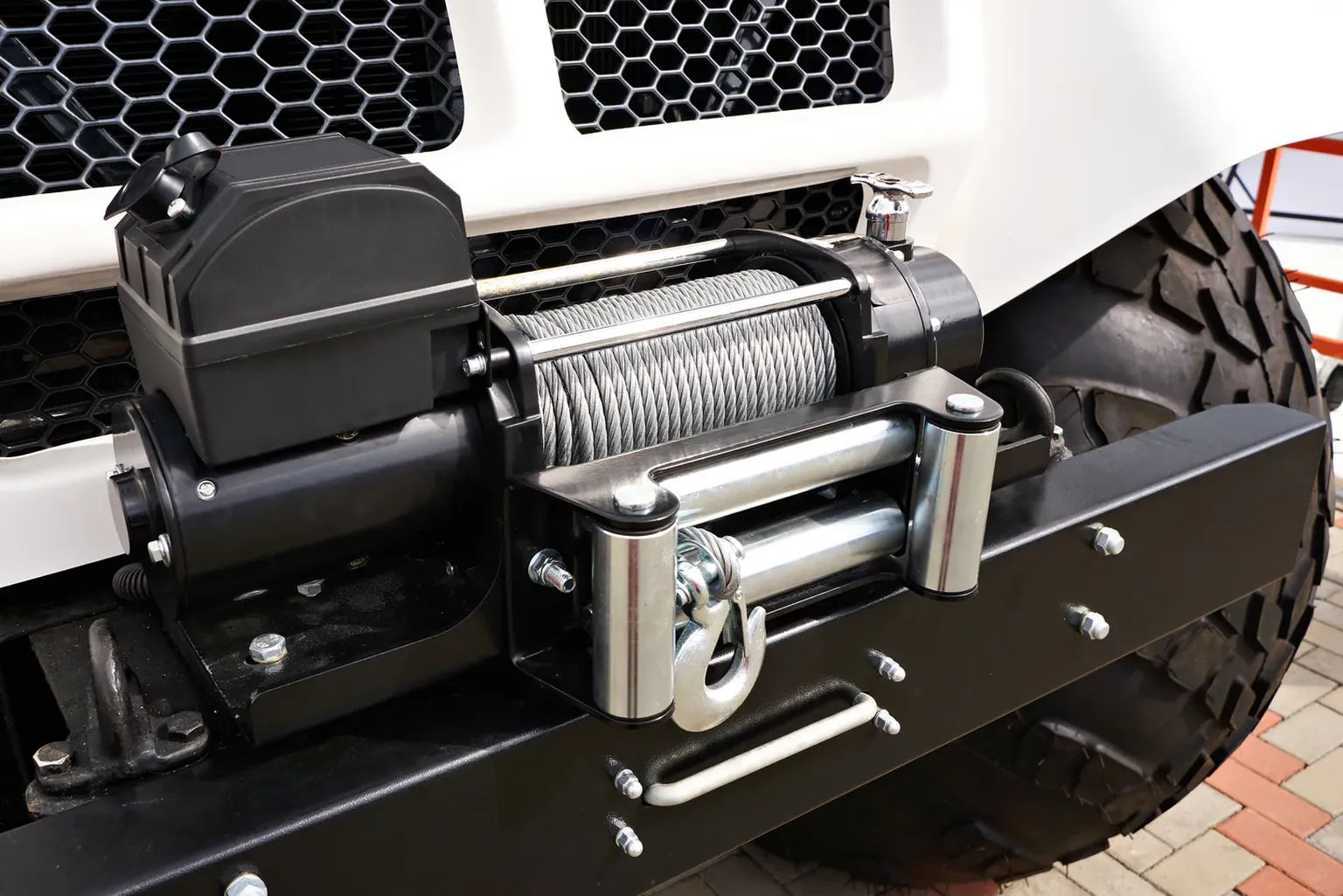
Electric winches run off your vehicle's battery and electrical system. They are the most common choice for trucks and SUVs because they are compact, affordable and easy to mount on a front bumper. They need a healthy battery and proper wiring, and they can heat up under long, heavy pulls.
Hydraulic winches
Hydraulic winches run off the power steering pump or a dedicated hydraulic system. They handle long, continuous pulls well and are less prone to overheating, but they are more complex to install and less common on everyday trucks.
Steel cable versus synthetic rope
- Steel cable is tough and abrasion resistant, but it is heavy, can fray into sharp strands and stores a lot of energy if it fails.
- Synthetic rope is lighter, easier to handle and safer if it snaps because it stores less energy. It needs protection from abrasion, heat and UV, so keep it clean and covered when not in use.
Many owners choose synthetic rope for its handling and safety. Steel remains a fit for harsh, abrasive conditions.
Choosing the right winch rating
Winch ratings are listed in pounds of pulling capacity. The usual rule of thumb is to choose a winch rated at roughly 1.5 times your vehicle's loaded weight. That safety margin covers the extra effort of pulling through mud, sand or a steep slope, where the force needed can exceed the vehicle's weight.
Remember that your build's weight is not the factory weight. Lifts, larger tires, bumpers, racks, rooftop tents and gear all add pounds. Weigh up the whole setup, not the brochure number, before you pick a rating.
Pick a winch that meets the rating comfortably instead of one that only just clears it. A winch working at its limit runs hot, wears faster and leaves you with no margin when conditions are worse than expected.
Mounting: why the bumper matters
A winch pulls with thousands of pounds of force, and all of it goes through the mounting point. That is why bumper choice matters as much as the winch itself.
- Winch-ready bumpers are built with a mounting plate and reinforcement designed to carry a winch. Many also provide fairlead space, recovery points and light mounts.
- Factory bumpers are generally not designed to carry a winch, so they are not a safe place to mount one.
- Winch plates and hidden mounts can work on some vehicles but need to suit the frame and the winch.
If you are choosing both a bumper and a winch, pick them together. See our post on [aftermarket bumpers] for what to look for, and our guide to [brush guards] for added front-end protection.
Recovery gear beyond the winch
A winch is one tool, and it is not always the right one. A complete recovery kit covers the situations a winch cannot.
- Recovery straps and tow straps for pulling from another vehicle. Use straps designed for recovery, not ratchet straps or chains.
- Soft shackles and D-ring shackles to connect to rated recovery points.
- Recovery points mounted to the frame. Never use a tow ball or a suspension component as an anchor.
- Traction boards to get tires moving again in sand, mud or snow.
- Gloves to protect your hands from rope, cable and hardware.
- Tree saver straps to anchor a winch line around a tree without damaging it.
- Snatch block to double the pulling power of a winch line or change its direction.
- Shovel and tire deflation gear for the simplest fixes that often work first.
Safe use basics
Recovery involves large forces, so a few habits matter every time.
- Check your gear first. Inspect rope, cable, hooks and straps for damage before each trip.
- Use rated recovery points. Anchor only to points designed for the load.
- Keep people clear. Bystanders should stand well back from the line and the vehicles.
- Use a line damper. A blanket or jacket over the middle of the line helps absorb energy if something fails.
- Spool correctly. Wind the line evenly and under tension so it does not bind or pinch.
- Know your limits. If a recovery looks beyond your gear, stop and call for help.
For hands-on training, consider a local off-road or recovery course.
Why professional installation matters
A winch draws a lot of current. The wiring, fusing, battery connections and switch placement all affect how well it works and how safely. A poor connection can overheat a cable. A weak mount can fail under load. On a lifted build, routing and mounting also have to account for ride height and the extra weight up front.
At The Lift Shop, our team installs winches, bumpers and recovery points as a matched system, so everything is rated, wired and mounted correctly. Read more in our post on [why professional installation beats DIY], then talk to the team about the setup that fits your truck and how you drive.
Frequently asked questions
Do I need a winch on my truck or SUV?
If you drive off-road or on remote roads, a winch is one of the best recovery tools you can carry. For mostly paved driving, good recovery straps and a plan may be enough.
What winch capacity do I need?
A common guideline is about 1.5 times your vehicle's loaded weight. Remember to include lifts, larger tires, bumpers and gear in that weight.
Is synthetic rope better than steel cable?
Synthetic rope is lighter, easier to handle and safer if it breaks. Steel is more abrasion resistant. Many owners prefer synthetic for everyday use.
Can I mount a winch on a stock bumper?
Generally no. Factory bumpers are not designed for winch loads. Use a bumper built to carry a winch.
Will a winch affect my truck's weight and handling?
Yes. A winch and a winch bumper add weight at the front of the vehicle, which can affect ride height and handling. Tell your installer about your build up front.
Can a winch drain my battery?
Heavy winching draws a lot of power. Keep the engine running during use and make sure your battery and charging system are in good shape.
What is the difference between recovery straps and tow straps?
Recovery straps stretch to absorb energy and help pull a stuck vehicle free. Tow straps do not stretch and are meant for towing a rolling vehicle. Use the right one for the job.
Can I winch myself out without another vehicle?
Yes, with a secure anchor point such as a tree, rock or another solid object, and the right straps and shackles.
Can I get a winch installed before my truck ships?
Lifted Trucks offers nationwide shipping, so your build can be completed and delivered to you.
Ready to get recovery-ready?
Browse our inventory of trucks and SUVs, or talk to The Lift Shop about the winch, bumper and recovery setup that suits how you drive. We ship nationwide!