Toyota 4Runner TRD Pro vs. TRD Off-Road: Which Should You Buy?
13 min read
If you're shopping for an off-road-focused Toyota 4Runner, two trims are likely to end up near the top of your list: the TRD Off-Road and TRD Pro.
In this article
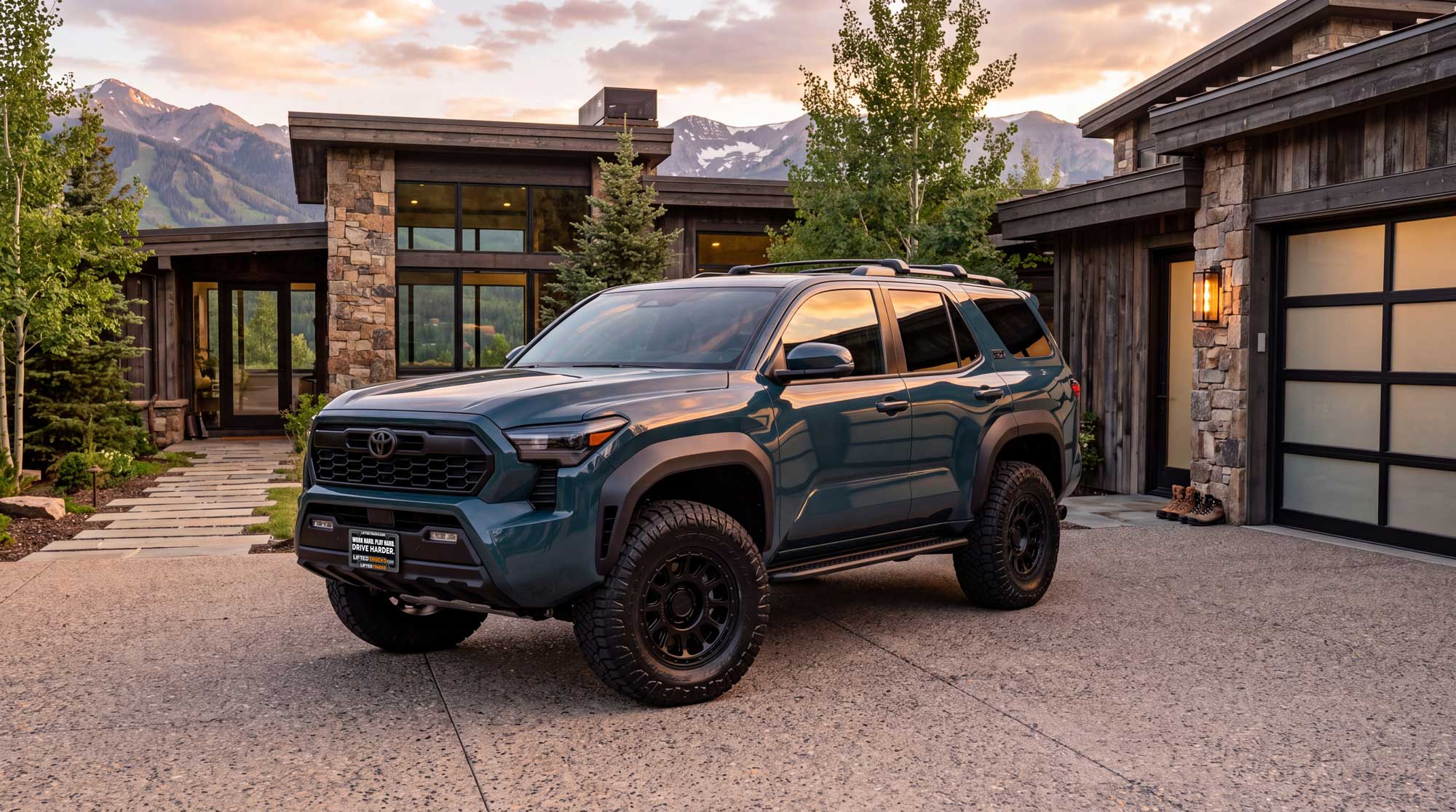
Both are designed to leave the pavement.
Both offer legitimate off-road hardware.
Both provide the rugged body-on-frame construction and four-wheel-drive capability that have helped make the 4Runner an off-road icon.
But they're not the same SUV.
The TRD Off-Road is positioned as a highly capable off-road model that leaves buyers considerable room to customize.
The TRD Pro is the more specialized factory performance package, adding premium suspension hardware, aggressive styling and additional equipment straight from Toyota.
So is the TRD Pro worth the extra money?
Or is the TRD Off-Road actually the smarter 4Runner to buy?
Let's compare the Toyota 4Runner TRD Pro vs. TRD Off-Road in detail.
4Runner TRD Pro vs. TRD Off-Road at a Glance
The easiest way to understand these two 4Runners is to look at their missions.
TRD Off-Road: Serious off-road capability with an emphasis on value and versatility.
TRD Pro: More specialized factory off-road performance with premium suspension hardware and exclusive TRD equipment.
The TRD Pro gives you more from the factory.
The TRD Off-Road gives you more freedom to decide where your money goes.
That distinction becomes particularly important if you're planning to lift or otherwise modify your 4Runner.
Toyota 4Runner TRD Off-Road
The TRD Off-Road sits at an important point in the modern 4Runner lineup.
It's not simply an appearance package.
Toyota equips the TRD Off-Road with hardware specifically intended for driving beyond pavement, including features such as:
- Bilstein monotube shocks with remote reservoirs
- 33-inch all-terrain tires
- Multi-Terrain Select
- Crawl Control
- Underbody protection
- Four-wheel drive
The result is an SUV capable of serious recreational off-road use without requiring buyers to step all the way up to TRD Pro.
That's a big part of its appeal.
For many 4Runner enthusiasts, the TRD Off-Road gives you the important hardware while leaving money available for the modifications you actually want.
Toyota 4Runner TRD Pro
The TRD Pro takes the 4Runner's off-road mission considerably further.
Instead of simply providing trail-focused equipment, Toyota equips the TRD Pro with more specialized hardware designed for demanding off-road driving.
Key equipment includes:
- FOX 2.5-inch Internal Bypass QS3 shocks
- Rear piggyback remote reservoirs
- Stabilizer Disconnect Mechanism
- 33-inch Toyo all-terrain tires
- 18-inch matte-black TRD wheels
- TRD performance air intake
- TRD performance exhaust
- Integrated LED light bar
- RIGID Industries LED fog lamps
The TRD Pro is essentially Toyota's flagship performance-oriented interpretation of the 4Runner.
It's designed for someone who wants substantial factory off-road capability without immediately turning to the aftermarket.
TRD Pro vs. TRD Off-Road Suspension
This is one of the biggest differences between the two models.
The TRD Off-Road uses Bilstein monotube shocks with remote reservoirs.
That's already a meaningful upgrade for drivers who intend to use their 4Runner off pavement.
The TRD Pro moves to a more sophisticated FOX 2.5-inch Internal Bypass QS3 suspension system with rear piggyback remote reservoirs.
The FOX setup is designed to provide more specialized damping characteristics under demanding conditions.
The TRD Pro also adds Toyota's Stabilizer Disconnect Mechanism, which can increase suspension articulation when additional wheel travel is needed off-road.
For a stock vehicle, the advantage goes to:
TRD Pro.
But there's an important catch.
If you're planning to replace the factory suspension with a custom lift anyway, the TRD Pro's advantage becomes less important.
You may be paying a substantial premium for premium suspension components you're eventually going to remove.
That's one reason the TRD Off-Road can be such a compelling platform for a custom build.
TRD Pro vs. TRD Off-Road Tires
Both models come from the factory with approximately 33-inch all-terrain tires.
That's significant because Toyota has already designed these off-road-oriented versions of the sixth-generation 4Runner around substantially larger tires than many conventional SUVs.
For buyers leaving the vehicle mostly stock, 33s provide a strong combination of:
- Ground clearance
- Off-road traction
- Ride quality
- Highway usability
- Fuel economy
- Reasonable weight
For many owners, there's no immediate need to change them.
But Lifted Trucks customers often aren't interested in leaving things stock.
That's where 35-inch tires become especially interesting.
TRD Pro vs. TRD Off-Road on 35s
Moving from factory 33s to 35-inch tires can dramatically change the stance of the new 4Runner.
You gain additional tire height, more ground clearance beneath axle-related components, and a noticeably more aggressive appearance.
However, proper fitment involves more than simply choosing a tire with "35" printed on the sidewall.
You need to consider:
- Wheel width
- Wheel offset
- Actual tire dimensions
- Suspension height
- Suspension travel
- Fender clearance
- Inner liner clearance
- Steering clearance
- Alignment
- The intended type of off-road driving
And this is where the TRD Off-Road becomes particularly interesting.
If your plan already involves a professionally selected suspension lift, wheels and 35-inch tires, replacing the factory Bilstein setup may be easier to justify financially than replacing the more expensive FOX hardware that helps define the TRD Pro.
Which Is Better for a Lifted 4Runner?
For a heavily customized vehicle, we'd generally favor the TRD Off-Road.
That's not because it's more capable than TRD Pro in factory form.
It isn't.
It's because it can be the more logical starting point.
Suppose your plan includes:
- Aftermarket suspension
- Larger wheels
- 35-inch tires
- Additional lighting
- Exterior accessories
- Recovery equipment
- Underbody protection
- Other off-road modifications
Many of the components separating TRD Pro from TRD Off-Road may eventually be replaced or supplemented.
In that scenario, putting the price difference toward the actual custom build can make more sense.
Advantage for custom builds: TRD Off-Road
For a mostly stock vehicle, however, the equation changes.
Advantage for factory capability: TRD Pro
TRD Pro vs. TRD Off-Road Engine
The sixth-generation 4Runner introduces an important powertrain consideration that didn't exist in the same way on the previous generation.
Toyota offers its turbocharged 2.4L i-FORCE engine as well as the more powerful i-FORCE MAX hybrid powertrain across the broader lineup.
The standard i-FORCE produces:
- 278 horsepower
- 317 lb-ft of torque
The i-FORCE MAX produces up to:
- 326 net combined horsepower
- 465 lb-ft of torque
The additional torque from i-FORCE MAX is especially relevant for an off-road SUV.
Low-end torque can be extremely useful when climbing, crawling, towing or turning larger tires.
It also helps offset some of the performance effects associated with heavier custom wheel-and-tire packages.
The TRD Pro is built around Toyota's more powerful i-FORCE MAX powertrain, which reinforces its position near the top of the performance-oriented 4Runner lineup.
Is i-FORCE MAX Good for a Lifted 4Runner?
On paper, it makes a lot of sense.
Moving to larger tires effectively changes the vehicle's gearing and often increases rotating mass.
Having 465 lb-ft of torque available gives the new 4Runner a substantial advantage over the outgoing naturally aspirated V6 when dealing with that additional load.
That doesn't mean larger tires suddenly have no effect.
Thirty-five-inch tires can still influence:
- Acceleration
- Fuel economy
- Braking
- Steering feel
- Transmission behavior
- Ride quality
- Overall responsiveness
Tire and wheel weight remain important.
But the additional torque of i-FORCE MAX gives builders an excellent foundation.
TRD Pro vs. TRD Off-Road Off-Road Capability
In factory configuration, TRD Pro wins.
Its specialized FOX suspension and Stabilizer Disconnect Mechanism give it hardware specifically designed to increase capability in demanding terrain.
But the difference between the two isn't the same as comparing a street-oriented SUV with an off-roader.
The TRD Off-Road is already a legitimately capable vehicle.
It gives drivers equipment such as Multi-Terrain Select and Crawl Control along with its Bilstein suspension and all-terrain tires.
For typical recreational off-roading—forest roads, trails, camping access, snow, mud and moderate technical terrain—the TRD Off-Road already provides substantial capability.
TRD Pro takes that foundation further.
Crawl Control and Multi-Terrain Select
Both technologies deserve some explanation.
Multi-Terrain Select allows the driver to select modes designed around different surface conditions. The vehicle can then adjust traction-control strategies to help manage wheelspin and available grip.
Crawl Control acts somewhat like low-speed off-road cruise control.
Instead of simultaneously managing throttle and brake inputs while navigating difficult terrain, the driver can focus more attention on steering and vehicle placement while the system manages vehicle speed.
These systems help demonstrate why the TRD Off-Road shouldn't be thought of as a "budget TRD Pro."
It has serious off-road technology of its own.
Stabilizer Disconnect Mechanism
The TRD Pro's Stabilizer Disconnect Mechanism is another important differentiator.
A stabilizer bar helps control body roll on pavement by connecting the suspension movement on opposite sides of the vehicle.
That's beneficial during normal driving.
But off-road, greater independent wheel movement can be valuable.
Disconnecting the stabilizer system can allow increased suspension articulation, helping the tires remain in contact with uneven terrain.
That gives TRD Pro an additional advantage when tackling more technical obstacles.
TRD Pro vs. TRD Off-Road Ground Clearance
Ground clearance is critical off-road, but don't evaluate an SUV based on one published number alone.
Different parts underneath the vehicle sit at different heights.
Tire diameter, suspension design, skid plates, approach angle, departure angle and breakover angle all influence real-world capability.
Larger tires can be particularly valuable because they raise the wheel centerline.
Going from an approximately 33-inch tire to a 35-inch tire theoretically raises the axle centerline by roughly one inch.
That can provide useful additional clearance at low points that a suspension lift alone may not address in exactly the same way.
The best off-road setup therefore combines appropriate suspension height with appropriate tire diameter.
TRD Pro vs. TRD Off-Road Styling
This is subjective, but TRD Pro clearly receives more visual differentiation.
Its matte-black TRD wheels, lighting, aggressive exterior details and other TRD-specific elements immediately identify it as one of Toyota's flagship off-road models.
There's also something appealing about owning the factory halo version.
TRD Off-Road takes a more understated approach.
For some buyers, that's actually an advantage.
A TRD Off-Road can serve as a blanker canvas for creating a custom appearance rather than beginning with Toyota's finished vision of what the ultimate performance 4Runner should look like.
TRD Pro vs. TRD Off-Road Interior
The exact equipment depends on model year and configuration, but both can be equipped with modern comfort and technology that make the sixth-generation 4Runner dramatically different from its predecessor.
Buyers who like the TRD Off-Road but want additional interior amenities should also consider the TRD Off-Road Premium.
That model essentially occupies the middle ground between straightforward off-road capability and a more upscale everyday experience.
It can be a particularly attractive choice for someone who wants to customize the exterior and suspension while retaining a premium cabin.
TRD Off-Road vs. TRD Off-Road Premium
Don't overlook this comparison while shopping.
TRD Off-Road Premium maintains the fundamental off-road personality of the TRD Off-Road while adding comfort and technology features such as heated and ventilated SofTex-trimmed front seats and a larger multimedia display.
For a weekend-only adventure vehicle, those additions may not matter much.
For a daily-driven 4Runner that also sees trails, they can matter considerably.
In fact, for some buyers planning a custom build, TRD Off-Road Premium may be the real sweet spot of the lineup.
You get the off-road foundation you want, a more comfortable interior, and you're not paying primarily for TRD Pro suspension components that may eventually be replaced.
Which Is Better for Daily Driving?
For normal daily use, this comparison becomes more subjective.
TRD Pro gives you premium off-road equipment, but you don't necessarily benefit from all of it while commuting to work.
TRD Off-Road already provides plenty of capability while potentially allowing you to spend less.
And TRD Off-Road Premium adds another dimension by improving interior comfort.
If your 4Runner will spend 90% of its life on pavement, we'd think carefully about whether you actually need TRD Pro.
Wanting TRD Pro is perfectly valid.
It's the halo vehicle.
But needing it is a different question.
Which Is Better for Overlanding?
This one has an interesting answer:
Possibly neither.
Toyota now offers the 4Runner Trailhunter specifically for buyers interested in overlanding and long-distance adventure travel.
Trailhunter includes specialized equipment such as Old Man Emu suspension components, ARB equipment, an onboard air compressor and a high-mount air intake.
So we'd separate the missions this way:
- TRD Off-Road: versatile recreational off-roader.
- TRD Pro: performance-oriented off-roader.
- Trailhunter: expedition and overlanding specialist.
If you're buying specifically to build an overlanding vehicle, Trailhunter deserves to be part of the conversation.
Which Is Better for Towing?
Towing shouldn't be determined by trim name alone.
The actual tow rating depends on the specific vehicle configuration and equipment.
Payload is equally important.
Larger tires, suspension changes, accessories and additional cargo can all affect how a modified vehicle behaves while towing.
If towing is a major part of how you'll use your 4Runner, we'd prioritize the complete configuration over simply choosing whichever trim has the most off-road equipment.
A properly configured TRD Off-Road may be a better fit than a more specialized TRD Pro depending on your needs.
Is the 4Runner TRD Pro Worth It?
Yes—for the right buyer.
The TRD Pro makes the most sense if you value:
- Premium factory off-road suspension
- Maximum factory trail capability
- Exclusive TRD equipment
- Aggressive factory styling
- The i-FORCE MAX powertrain
- The appeal of owning Toyota's flagship performance-oriented 4Runner
And perhaps most importantly:
You intend to keep much of that factory equipment.
If you're buying a TRD Pro and immediately removing its suspension, wheels, tires, intake, exhaust and other specialized equipment, the value proposition becomes harder to justify.
You're effectively paying Toyota for upgrades and then paying again to replace them.
Is the 4Runner TRD Off-Road Worth It?
For many enthusiasts, absolutely.
In fact, we think it's one of the strongest values in the entire 4Runner lineup.
It gives you genuine off-road equipment without forcing you to pay for every component included with TRD Pro.
That makes it capable in stock form and highly appealing as a modification platform.
You can enjoy it as Toyota built it.
Or you can use the money saved compared with TRD Pro to create a 4Runner tailored specifically to you.
Should You Buy TRD Pro or TRD Off-Road Used?
The equation becomes more interesting on the used market.
Depreciation, mileage, modifications, vehicle history and local supply can dramatically change the price difference between the trims.
TRD Pro models may also command stronger enthusiast demand because of their flagship status.
When shopping used, don't evaluate the badge in isolation.
Look closely at:
- Maintenance history
- Accident history
- Previous off-road use
- Suspension condition
- Tire wear
- Underbody damage
- Existing modifications
- Quality of those modifications
- Alignment
- Drivetrain operation
- Overall condition
A carefully maintained TRD Off-Road with high-quality modifications can be a much better purchase than an abused TRD Pro.
Condition matters more than bragging rights.
Which 4Runner Is the Better Value?
For most buyers:
TRD Off-Road.
You're getting the core off-road hardware that makes these vehicles desirable without paying the full premium associated with Toyota's halo model.
For someone planning to customize the vehicle, the argument becomes even stronger.
But value isn't the only reason people buy enthusiast vehicles.
TRD Pro offers something the TRD Off-Road doesn't:
The complete factory flagship experience.
For buyers who want that—and want to retain it—the premium can be worthwhile.
TRD Pro vs. TRD Off-Road: Which Should You Buy?
Our recommendation comes down to what you're going to do after you buy it.
Buy the 4Runner TRD Off-Road if:
- You want serious off-road capability.
- You care about value.
- You plan to lift or customize the vehicle.
- You want to choose your own suspension.
- You plan to install different wheels and tires.
- You don't need the TRD Pro badge or specialized factory hardware.
- You want an excellent foundation for a custom 4Runner.
Buy the 4Runner TRD Pro if:
- You want Toyota's flagship performance-oriented 4Runner.
- You want FOX suspension from the factory.
- You value increased articulation capability.
- You want exclusive TRD equipment.
- You want the i-FORCE MAX powertrain.
- You plan to keep most of the factory off-road hardware.
- You want a highly capable turnkey off-road SUV.
Our Pick: TRD Off-Road for Building, TRD Pro for Keeping
That's the distinction we'd use.
If we were buying a 4Runner with the intention of substantially customizing it, we'd strongly consider the TRD Off-Road.
It provides an excellent mechanical foundation without investing as heavily in premium factory components we're planning to replace.
That leaves more budget for:
- A properly engineered suspension lift
- Premium wheels
- 35-inch tires
- Lighting
- Armor
- Recovery equipment
- Exterior accessories
- And whatever else fits the intended mission.
If we wanted to buy a 4Runner, leave the fundamental suspension architecture intact, and immediately have one of Toyota's most capable factory off-road SUVs?
We'd choose the TRD Pro.
Neither answer is universally correct.
The better 4Runner is the one that matches what you're actually going to do with it.
Find a Lifted Toyota 4Runner at Lifted Trucks
Whether you prefer the value and customization potential of a TRD Off-Road or the specialized factory equipment of a TRD Pro, the Toyota 4Runner provides an outstanding foundation for an adventure-focused SUV.
At Lifted Trucks, we specialize in professionally customized trucks and SUVs designed to stand apart from factory-stock vehicles.
Our inventory can include Toyota 4Runners equipped with carefully selected suspension, wheel and tire packages that deliver the stance and capability enthusiasts are looking for without treating modifications as an afterthought.
Whether you're searching for a TRD Off-Road on 35s, a customized TRD Pro, or another lifted 4Runner configuration, our team can help you find the right vehicle for your lifestyle.
And you aren't limited to what's available in your immediate area.
Lifted Trucks serves customers around the country, with nationwide shipping available to help get the custom Toyota 4Runner you want closer to home.
Explore our current selection of lifted and custom Toyota 4Runners and find the build that's right for you.