Running Boards and Side Steps: How to Choose the Right Setup for Your Truck or SUV
7 min read
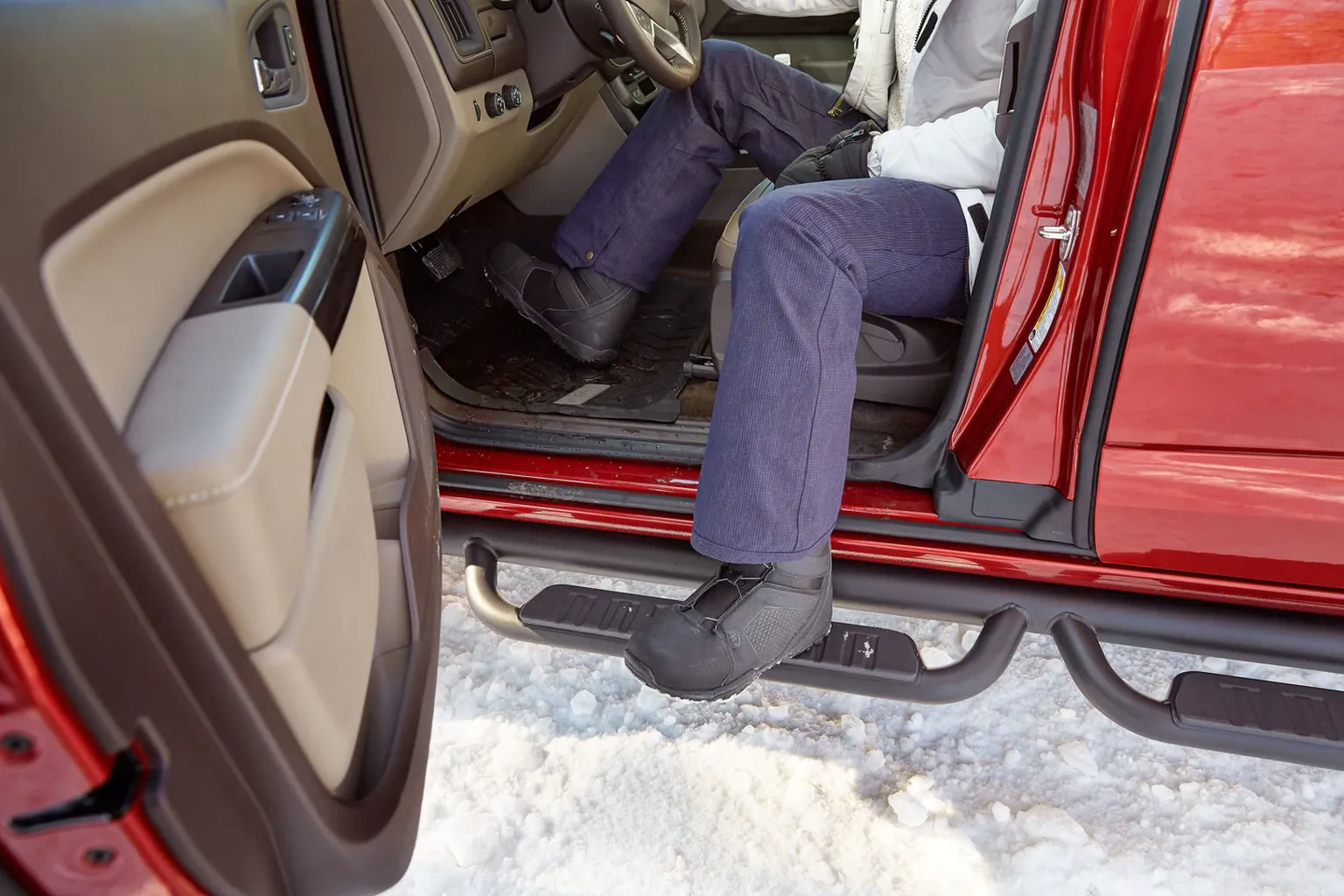
The short answer
Running boards and side steps make it easier to get into a truck or SUV, and the right style depends on three things: how tall your vehicle sits, who climbs in and out, and how you use it. Fixed running boards suit most daily drivers. Nerf bars and tube steps suit trucks that need a rugged look and grip. Power-deploying steps stay tucked flush against the vehicle and lower when you open the door, which suits tall builds and owners who want a clean look. Taller lifts usually call for a purpose-chosen step, not a stock-style board.
At Lifted Trucks, we install all varieties of running boards and side steps, including the electronic power-deploying kind, so you can pick by need rather than by what happens to be available. This guide is part of our accessories guide and covers wheels, lift and tires only where they affect fitment.
In this article
Running boards vs. side steps vs. nerf bars: what's the difference?
The terms overlap in everyday conversation, so here is how we use them.
- Running boards are long, flat boards that run along the rocker panel from the front door to the rear door. They give a wide, continuous place to stand.
- Side steps is the broad term for any step mounted to the side of the vehicle. It includes running boards, nerf bars and individual steps.
- Nerf bars are round or oval tubes that run along the side. They have a more rugged look and usually include step pads at the doors.
- Power-deploying steps (also called electronic running boards) sit flush against the vehicle and extend automatically when a door opens. They retract when the door closes.
The main styles, and who each one suits
Fixed running boards
A fixed board is the classic choice. It offers a wide, stable surface that is easy for kids, older passengers and anyone carrying something. It is also a straightforward install.
Best for: Families, daily drivers, and anyone who wants the simplest step with the broadest surface.
Trade-offs: The board stays at one height and sits lower than the rocker panel on some designs, which matters on trails.
Nerf bars and tube steps
Nerf bars give a sportier, tougher look and are often paired with grippy step pads. Because the tube is narrower than a board, the step surface is smaller, so shoes and footing matter more.
Best for: Owners who want a rugged look and moderate step support without a wide board.
Trade-offs: Less standing surface than a full running board.
Drop steps and hoop steps
Drop steps hang lower than the rocker and put a step pad closer to the ground. They shorten the first climb on a tall vehicle. Hoop steps are a rounded variation that usually includes a pad at each door.
Best for: Trucks with a taller stance where the first step needs to be lower.
Trade-offs: Lower hardware can be exposed on trails and uneven ground.
Power-deploying (electronic) running boards
These are the steps that stay flush against the vehicle and drop down when you open the door. They keep the clean lines of the truck and the full ground clearance when closed, and deliver a lower, wider step when you need one.
Best for: Tall builds, owners who want a factory-clean look, and drivers who value ground clearance for trails.
Trade-offs: More components, wiring and a motor, so installation quality matters. Cost is typically higher than fixed steps.
Side steps for SUVs
SUVs often have a shorter, narrower step area than a crew-cab truck, and some have a more limited mounting area. Fixed boards, nerf bars and power-deploying steps are all available for many SUVs. Rear door access and cargo loading are worth considering too.
Step styles at a glance
- Fixed running board: Wide standing surface; classic, finished look; reduced ground clearance when closed; best for families and daily use.
- Nerf bar / tube step: Narrow surface with step pads; sporty, rugged look; moderate ground clearance when closed; best for owners who want a rugged look with moderate step support.
- Drop / hoop step: Step pad at each door; utility look; reduced ground clearance when closed; best for trucks with a tall stance where a lower first step is needed.
- Power-deploying: Wide surface when extended; clean, flush look; full ground clearance when retracted; best for tall builds, trail use, and owners who want a clean look.
How lift height changes the step you need
Step height is the biggest fitment variable on a lifted truck. Every inch of lift raises the door sill, and a step that works at stock height can leave the climb awkward or put the step in the wrong place. The ranges below are general guidance. Every build is different, so confirm fitment for your specific vehicle before you buy.
Why this matters beyond comfort: a step that is too high or too far from the door is harder to use and less safe for children and older passengers. The goal is a step that brings the first climb to a comfortable height.
Leveled trucks and 2 to 3 inch lifts
At this height, many standard-style running boards and nerf bars still fit, sometimes with bracket adjustments. Entry height has changed only slightly, so a fixed board is usually comfortable. Power-deploying steps are a good upgrade for owners who want a clean look. [VERIFY fitment with The Lift Shop]
4 to 6 inch lifts
This is the most common lifted range, and it is where entry height starts to be noticeable. Many owners move to taller brackets, drop-style steps or power-deploying steps so that passengers have a comfortable first step. If you carry kids or older passengers, step choice matters more here. [VERIFY fitment with The Lift Shop]
7 to 9 inch lifts
At this height, the sill is high enough that a stock-style board often leaves a big gap. Purpose-chosen steps, higher-mount hardware or power-deploying steps that extend lower tend to make the biggest difference. [VERIFY fitment with The Lift Shop]
10 to 12+ inch lifts
On very tall builds, a step is nearly a necessity. Expect specialty or custom-fit solutions, and consider how the step extends and retracts, how much ground clearance you want to keep, and how the step affects approach and departure angles on the trail. A power-deploying step can keep clearance when retracted and give a lower step when needed. [VERIFY fitment with The Lift Shop]
Not sure how your lift height affects other parts of the build? See our guides on [types of lift kits] and the [difference between a 4-inch and 6-inch lift].
What to consider before you buy
- Who climbs in? Kids, older passengers and pets need a wider, lower step. Solo drivers can choose more freely.
- Weight rating. Make sure the step supports the heaviest person who will use it.
- Cab style. Regular, extended and crew cabs have different mounting lengths. SUVs differ again.
- Ground clearance and trail use. Steps that hang low are more exposed on trails. Power-deploying steps keep clearance when retracted.
- Weather and grip. Look for textured pads, drainage and corrosion-resistant materials if you drive in mud, snow or road salt.
- Existing accessories. Rock sliders and some bumpers or body protection can affect step mounting. Plan these together.
- Wiring. Power-deploying steps need proper electrical work, so use a qualified installer.
Why professional installation matters
Steps carry real weight, and they are used every day. Mounting points, bracket selection and torque all affect safety and durability. Power-deploying steps add wiring and sensors that need to be fused, routed and set up correctly so the steps extend and retract on cue.
At The Lift Shop, we install every variety of side step and running board, including power-deploying kits, so the step is matched to your truck and your lift height rather than forced to fit. See our post on [why professional installation beats DIY] and talk to the team about your build. [VERIFY any warranty, labor or install-time statement before adding one.]
Frequently asked questions
Do running boards work on a lifted truck?
Yes, but the style matters. On taller builds, standard boards often leave a large gap, so taller brackets, drop steps or power-deploying steps are better choices.
What are the electronic running boards that come down when you open the door?
They are power-deploying steps. They stay flush against the vehicle and extend automatically when a door opens, then retract when it closes.
Are power-deploying steps worth it?
They are a strong fit for tall builds and for owners who want a clean look and full ground clearance when closed. They cost more and involve more components than a fixed step.
Running boards or nerf bars?
Running boards give a wider standing surface. Nerf bars give a sportier, more rugged look with a narrower step.
Will steps affect off-road capability?
Low-hanging fixed steps can reduce clearance and may be exposed on trails. Power-deploying steps keep clearance when retracted.
Can I add steps to a truck I am financing?
Often yes. Ask your finance team how accessories are handled in your loan.
Do I need steps if I have a leveling kit?
Not always. A small lift changes entry height only slightly, but many owners add steps for comfort and appearance.
Can you install steps on an SUV?
Yes. We install side steps and running boards on trucks and SUVs.
Can steps be installed before my truck ships?
Lifted Trucks offers nationwide shipping, so your build can be completed and delivered to you.
Ready to choose your steps?
Explore our inventory of trucks and SUVs, or talk to The Lift Shop about the running boards or power-deploying steps that fit your lift height and how you drive. We ship nationwide!