How Do I Choose Between a Locker and a Limited Slip for a Lifted Truck?
5 min read
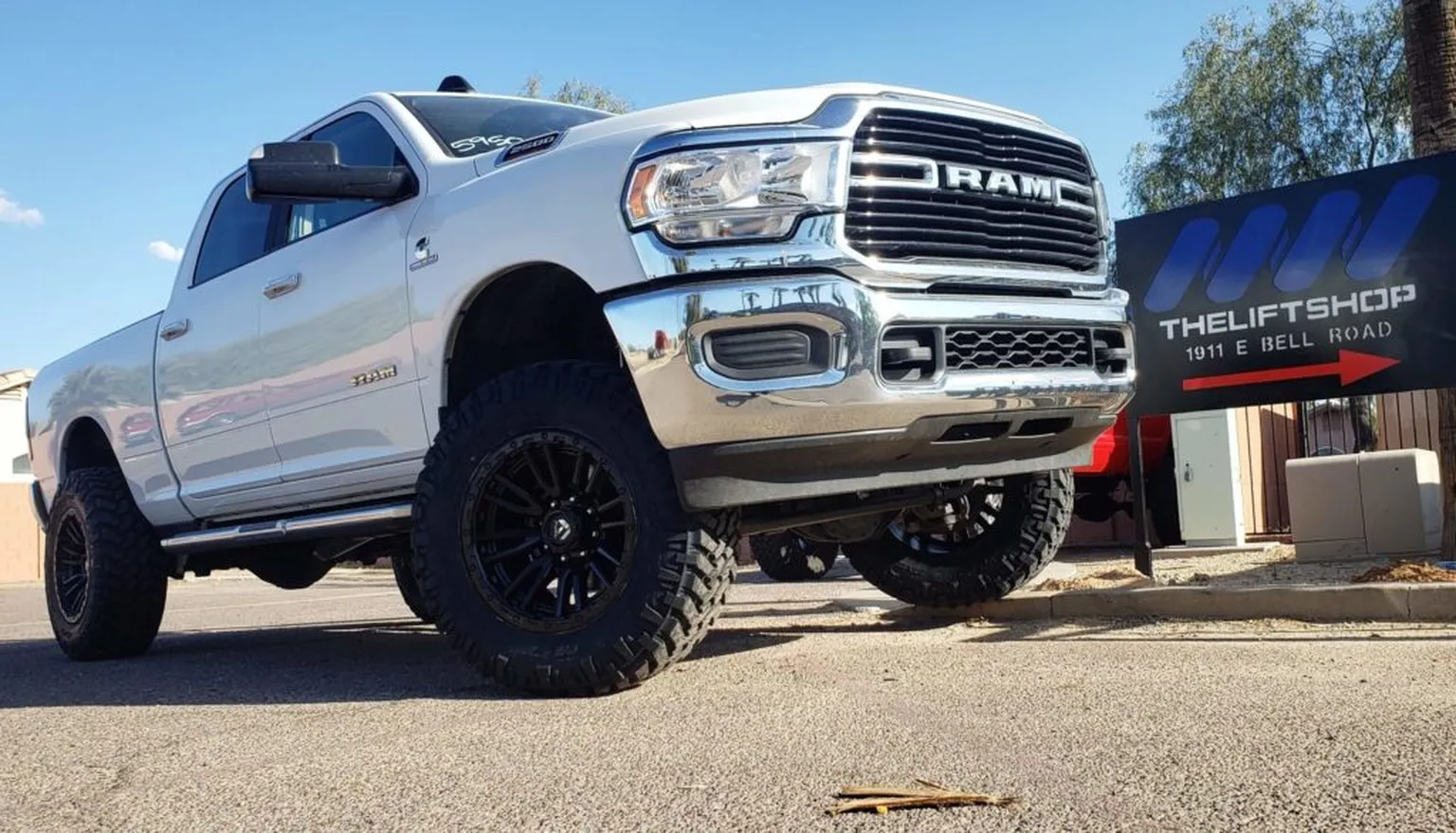
Choose a limited slip if your lifted truck spends most of its life on pavement, in bad weather, and at the end of a trailer hitch. Choose a locker if you regularly drive where a tire can leave the ground or sit on ice, mud, or loose rock, and you want both wheels on an axle to turn together on demand. Most lifted trucks that see a mix of both worlds are best served by a selectable locker in the rear, or by a factory limited slip when the truck is a street-first build. The rest of this guide explains why, so you can match the differential to the way you actually drive.
In this article
What a limited slip differential does on a lifted truck
An open differential sends power to whichever wheel has the least traction. That is the reason a stock truck can spin one tire on a wet boat ramp while the other sits still. A limited slip differential, often called an LSD or posi, resists that behavior by transferring some torque to the wheel that still has grip. Clutch-type units use friction plates and springs, while gear-type units, such as helical designs, use gear geometry to bias torque. Both operate automatically, with no switch and no driver input.
The real strength of a limited slip is that it stays civil. It does not bang through tight parking lot turns, it does not chirp tires on dry corners, and it behaves predictably on wet highways. After a lift and larger tires, that predictability matters, because a taller, heavier truck already asks more of the driver in an emergency maneuver. The tradeoff is that a limited slip is a bias, not a lock. When one tire is fully off the ground or on slick ice, it can only shift so much torque, and the truck may still stall.
What a locker does on a lifted truck
A locker mechanically ties the two wheels on an axle together so they turn at the same speed, no matter which one has traction. Two main styles exist. Selectable lockers, which can be electronic or air actuated, behave like an open differential until you press a button, then lock solid. Automatic lockers stay engaged under power and release only when needed, such as in turns. Many OEM off-road packages offer a factory rear locker, and aftermarket units are common in lifted builds.
When engaged, a locker gives the most traction available from that axle. That is a major advantage for climbing ledges, pulling out of ruts, and crossing articulated terrain, which lifted trucks with longer travel can reach more easily. The cost is that a locked axle fights you in turns on high traction surfaces. Tires hop, steering can push, and drivetrain parts take more shock. Selectable units reduce most of that drawback because you only lock when you need it, but they cost more and add a switch and wiring or an air line.
Use case examples for a limited slip
Consider a daily commuter with a leveled or mildly lifted half-ton who drives forty miles each way, deals with rain and the occasional snowy morning, and tows a small utility trailer on weekends. A limited slip gives better launch traction on wet pavement and slick boat ramps without any change in everyday manners. There is nothing to engage, nothing to forget, and no added noise.
A second example is a work and towing build, such as a lifted three-quarter-ton diesel pulling a loaded gooseneck up a gravel jobsite road. The truck needs steady traction under heavy load, and the driver does not want a hard-locking axle in a tight turn with thousands of pounds behind it. A limited slip helps the driven wheels share the load while keeping the truck stable.
A third example is a street-first show truck with larger wheels and tires that sees light dirt roads and car meets. The owner wants better grip on throttle without compromising smooth highway driving, and a limited slip delivers exactly that.
Use case examples for a locker
Picture an off-road enthusiast who takes a lifted Tacoma, Bronco, or Jeep Gladiator to rocky trails every month. Crossing a section where the rear tire hangs in the air is the classic moment an open or limited slip axle runs out of ideas, while a locked axle keeps driving. A selectable rear locker lets that driver cruise to the trailhead with normal manners and lock only for obstacles.
Next, think of a rancher or hunter with a lifted Super Duty or Silverado HD who drives muddy pasture roads and wet creek crossings. Mud and wet grass are exactly where one tire spins freely while the other has grip. A locker makes the difference between getting through and calling for a tow, and the driver can unlock again as soon as the truck reaches pavement.
Finally, consider an overlander who loads a lifted truck with gear and camps far from help. A reliable locker, ideally selectable, adds a recovery margin when sand, snow, or washouts appear. In that scenario, the locker functions as insurance more than performance.
How lift height and tire size change the decision
A lift on its own does not demand one differential over the other, but the tires that usually come with it do. Larger, heavier tires raise stress on axle shafts, carriers, and the differential itself, and they effectively change gear ratio, which can leave the truck sluggish unless it is re-geared. If you plan to go to a much larger tire, think about the whole axle as a system, including shafts and gears, rather than only the traction device. Lifted Trucks favors balanced setups over extreme height or tire size, and that same philosophy applies here: a modest lift with sensible tires, paired with the right differential, usually delivers a truck that works on the highway, in town, while towing, and off-road.
Daily driving, towing, and weather: the practical tradeoffs
On dry pavement, a limited slip is nearly invisible, while an engaged locker can scrub tires and make tight turns feel awkward. On snow and ice, a limited slip helps noticeably, and a locked rear axle can improve forward traction but may reduce stability in a corner, so use caution. For towing, a limited slip helps with steady starts on slick ramps, while a locker is best saved for low-speed recovery situations. When in doubt, remember that a selectable locker gives you both behaviors in one axle, at the price of added cost and complexity.
So which one should you choose?
If your truck is mostly a street, towing, and weather machine, start with a limited slip. If you drive trails, mud, and deep ruts on a regular basis, a selectable locker is the better answer. If you do all of it, a selectable rear locker backed by sensible tires and gearing is the most flexible path. Whatever you choose, have a trained installer confirm that the unit matches your axle, gear ratio, and lift.
Ready to build a truck that fits how you drive?
Explore our lifted truck inventory and talk with our team about a balanced setup, with nationwide shipping available.