GMC Sierra Tire Size Guide: 33s vs. 35s vs. 37s
16 min read
Choosing the right tire size is one of the most important decisions you can make when customizing a GMC Sierra 1500.
In this article
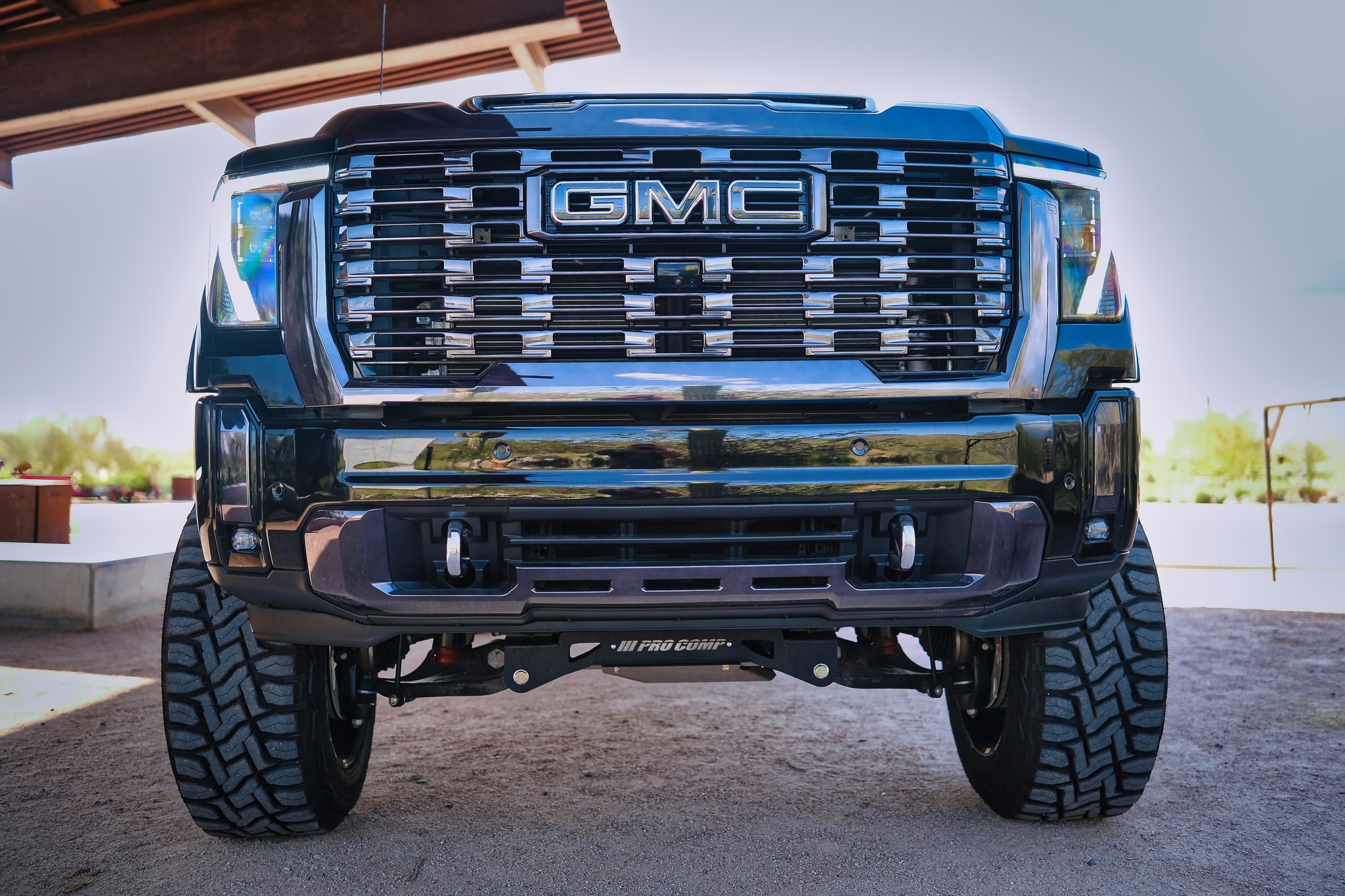
Tires dramatically affect the way a Sierra looks, but appearance is only part of the equation. Moving from a stock-size tire to 33s, 35s, or 37s can also change ground clearance, acceleration, braking, steering feel, fuel economy, towing performance, suspension clearance, and overall drivability.
And bigger isn't automatically better.
A Sierra 1500 on properly fitted 35-inch tires may be a much better truck for one driver than a Sierra on 37s. Likewise, someone who drives substantial highway mileage may be happier with 33s than either larger option.
The right setup depends on the truck, suspension, wheel specifications, powertrain, and—most importantly—how you actually plan to use it.
So what's the best tire size for a GMC Sierra 1500?
Let's compare 33-inch, 35-inch, and 37-inch tires and determine which setup makes the most sense for your Sierra.
What Tire Size Comes Stock on a GMC Sierra 1500?
Factory tire size varies considerably depending on the Sierra's model year, trim, wheel size, and equipment package.
That's important because "stock Sierra" can describe everything from a work-oriented Pro to an Elevation, Denali, factory-lifted AT4, or highly capable AT4X.
Those trucks don't necessarily start with the same suspension height, wheel dimensions, or tire package.
For example, off-road-oriented Sierra AT4 and AT4X models already provide additional factory clearance compared with many conventional Sierra configurations.
That gives them an advantage when moving to larger tires.
But tire diameter alone doesn't determine whether a tire will fit.
You also need to consider:
- Tire width
- Wheel diameter
- Wheel width
- Wheel offset
- Backspacing
- Suspension height
- Suspension geometry
- Fender and liner clearance
- How much suspension travel the truck needs
Two Sierras running nominally identical 35-inch tires can have completely different clearance characteristics because they're using different wheels.
That's why proper tire fitment should always be considered as part of a complete wheel-and-suspension package.
Understanding 33s, 35s and 37s
When truck enthusiasts talk about "33s," "35s," or "37s," they're referring to the tire's approximate overall diameter.
Common examples include sizes such as:
- 33x12.50
- 35x12.50
- 37x12.50
However, the number printed on the tire doesn't always represent its exact mounted diameter.
Actual dimensions vary by tire manufacturer, tread design, wheel width, inflation pressure, and load.
A metric tire size can also produce an overall diameter similar to one of these traditional flotation sizes.
That's why actual manufacturer specifications matter when you're working with tight clearances.
Still, 33, 35, and 37 inches provide useful categories for understanding how tire size changes a Sierra.
33-Inch Tires on a GMC Sierra 1500
For many Sierra owners, 33-inch tires represent the mildest step toward a more aggressive truck.
They add visual presence without dramatically changing the vehicle's personality.
Depending on the specific Sierra configuration and wheel setup, 33s may require relatively little suspension modification compared with larger tires.
That's especially appealing for owners who want their Sierra to retain close-to-factory driving characteristics.
Advantages of 33s on a Sierra
A properly selected 33-inch setup can provide:
- More aggressive appearance
- Improved ground clearance
- Relatively minor effect on acceleration
- Less additional rotating mass than larger tires
- Better fuel economy than comparable 35- or 37-inch setups
- Easier fitment
- Less suspension modification
- Excellent highway manners
- Lower tire replacement costs compared with larger sizes
For a Sierra that spends most of its life commuting, traveling, towing, or driving around town, 33s can make a lot of sense.
Who Should Run 33s?
We'd consider 33-inch tires for someone who wants a Sierra that looks more aggressive than stock without dramatically changing how it drives.
They're particularly well suited for:
- Daily drivers
- Highway commuters
- Tow vehicles
- Mild off-road use
- Owners concerned about fuel economy
- Drivers who don't want a tall lift
- Owners who regularly use parking garages or other height-restricted spaces
The trade-off is visual impact.
On a substantially lifted Sierra, 33s can begin to look undersized relative to the additional suspension height.
That's where 35s enter the picture.
35-Inch Tires on a GMC Sierra 1500
For many customized Sierra 1500s, 35-inch tires are the sweet spot.
They create the unmistakable appearance of a lifted truck without introducing all of the compromises associated with moving to 37s.
A properly built Sierra on 35s looks significantly more aggressive than stock while remaining practical enough to serve as a daily driver.
That's a major reason 35s are so popular.
Advantages of 35s on a Sierra
Compared with 33s, 35-inch tires provide:
- More aggressive stance
- Greater ground clearance
- Improved off-road capability
- More sidewall depending on wheel size
- Better obstacle clearance
- A more proportional appearance with moderate suspension lifts
They also open the door to a huge selection of all-terrain and mud-terrain tire options.
For many Sierra owners, 35s deliver the point where appearance, capability, and practicality intersect.
How Much Lift Does a GMC Sierra Need for 35s?
There's no universal answer.
Lift requirements depend heavily on the Sierra's generation, trim, suspension configuration, wheel width, wheel offset, actual tire dimensions, and how much clearance you expect at full steering lock and suspension travel.
A factory-lifted Sierra AT4, for example, starts from a different position than a conventional Sierra Elevation or Denali.
But simply making a tire physically fit while the truck is parked isn't enough.
A properly engineered setup should consider clearance when:
- Turning
- Reversing while turning
- Driving over uneven terrain
- Compressing the suspension
- Articulating off-road
- Carrying additional weight
- Towing
That's why wheel offset becomes so important.
An incorrectly selected wheel can make a tire rub even when the truck has enough vertical clearance.
The goal isn't simply to say, "We got 35s under it."
The goal is for the entire combination to work correctly.
35s on a GMC Sierra AT4
The Sierra AT4 is an especially appealing platform for 35-inch tires because it already features a factory-raised suspension and off-road-oriented hardware.
That gives builders additional flexibility compared with starting from many standard Sierra trims.
A properly configured AT4 on 35s can provide an excellent combination of:
- Aggressive appearance
- Useful ground clearance
- Off-road capability
- Highway drivability
- Towing capability
- Everyday comfort
It's one of the reasons the AT4 has become such a popular foundation for custom Sierra builds.
And because the truck already carries aggressive factory styling, the larger tire package tends to look particularly natural.
35s on a GMC Sierra AT4X
The AT4X is an even more specialized off-road platform.
Because it already incorporates sophisticated suspension and traction equipment, tire changes should be considered carefully.
The objective shouldn't simply be fitting the largest tire possible.
Preserving suspension travel and allowing the truck's factory off-road hardware to function correctly matters.
A poorly selected wheel-and-tire package can reduce the benefit of an otherwise excellent suspension system.
When properly configured, though, an AT4X on larger tires can combine serious factory off-road engineering with an even more aggressive stance.
35s on a GMC Sierra Elevation
The Sierra Elevation is another excellent candidate for 35s, but for a different reason.
Instead of beginning with the AT4's factory off-road equipment, the Elevation provides a relatively clean canvas for customization.
Its monochromatic styling and dark exterior accents already lend themselves well to an aggressive wheel-and-tire package.
Combine an Elevation with a properly selected suspension lift, wheels, and 35-inch tires and you can dramatically change the truck's personality.
For buyers who know they're going to modify the suspension anyway, starting with an Elevation can make a lot of sense.
35s on a GMC Sierra Denali
There's something particularly distinctive about a lifted Sierra Denali.
The Denali starts from a luxury-oriented foundation rather than an off-road one.
Adding the right lift and 35-inch wheel-and-tire package creates a truck that combines upscale interior appointments with a much more aggressive exterior presence.
However, the objective should still be refinement.
A heavy, extremely aggressive mud-terrain tire may not be the ideal choice for someone who bought a Denali primarily because they value quiet highway driving and luxury.
A high-quality all-terrain tire may better preserve the character of the truck while still delivering the desired stance.
Build the tire package around the vehicle's mission.
37-Inch Tires on a GMC Sierra 1500
Moving from 35s to 37-inch tires is a significant step.
Visually, the difference can be dramatic.
A properly proportioned Sierra on 37s has serious presence. The tires fill the wheel wells, increase ground clearance, and give the truck a substantially more purpose-built appearance.
Off-road, the additional diameter can also provide meaningful advantages.
But 37s come with greater compromises.
Advantages of 37s
A Sierra on 37-inch tires can benefit from:
- Maximum visual impact
- Additional ground clearance
- Improved obstacle clearance
- Greater off-road capability
- More aggressive proportions with larger suspension lifts
- A more purpose-built appearance
For the right build, they look incredible.
But getting the truck to sit on 37s is only part of the equation.
What Changes When You Put 37s on a Sierra?
Moving to 37s increases the importance of virtually every other component involved in the build.
Larger tires typically mean additional rotating mass.
That affects:
- Acceleration
- Braking
- Steering
- Fuel economy
- Effective gearing
- Transmission behavior
- Wheel-bearing loads
- Suspension loads
- Towing feel
- Overall responsiveness
The exact impact depends greatly on the tire.
Not every 37 weighs the same.
Not every wheel weighs the same.
A carefully selected wheel-and-tire combination can behave very differently from an extremely heavy setup even though both trucks technically run "37s."
This is why component selection matters as much as the advertised tire diameter.
How Much Lift Does a GMC Sierra Need for 37s?
Generally, moving to 37s requires a more substantial approach than fitting 33s or 35s.
The exact lift height depends on the truck and wheel-and-tire combination, but additional suspension clearance is only part of the solution.
Builders may also need to consider:
- Wheel offset
- Backspacing
- Fender clearance
- Inner fender clearance
- Suspension clearance
- Steering clearance
- Trimming
- Alignment
- Suspension geometry
- The intended amount of off-road articulation
A setup that doesn't rub during normal street driving might still contact at full steering lock or when the suspension compresses.
That's why we don't recommend choosing lift height and tire size independently.
They should be engineered together.
33s vs. 35s on a GMC Sierra
For most Sierra buyers choosing between these two sizes, the decision comes down to practicality versus presence.
Choose 33s if:
- You want close-to-stock drivability.
- You drive substantial highway mileage.
- Fuel economy matters.
- You tow frequently.
- You want minimal suspension modification.
- You prefer a more understated truck.
Choose 35s if:
- You want the unmistakable lifted-truck look.
- You want additional ground clearance.
- You regularly drive off-road.
- You're comfortable with some reduction in fuel economy.
- You're installing a moderate suspension lift.
- You want a strong balance between appearance and everyday usability.
For the average custom Sierra buyer, we'd lean toward 35s.
They simply offer an excellent combination of capability and visual impact without pushing the truck too far toward the compromises associated with 37s.
35s vs. 37s on a GMC Sierra
This is the harder decision.
A Sierra on 35s can already look extremely aggressive.
Moving to 37s takes that appearance another step.
But you're also moving further away from factory vehicle dynamics.
35s generally offer:
- Better acceleration
- Better fuel economy
- Less rotating mass
- Easier fitment
- Less suspension modification
- Less likelihood of rubbing
- Better towing manners
- Lower replacement cost
- Excellent everyday drivability
37s generally offer:
- Greater ground clearance
- More obstacle clearance
- More aggressive appearance
- Better capability in demanding terrain
- Better proportions with taller suspension lifts
- Maximum road presence
For a daily-driven Sierra, 35s are usually the more balanced choice.
For someone prioritizing maximum stance, off-road clearance, or a more extreme custom build, 37s may be worth the additional compromises.
How Tire Size Affects GMC Sierra Ground Clearance
One benefit of larger tires is often misunderstood.
A suspension lift raises the body and portions of the chassis, but it doesn't necessarily raise every component underneath the truck.
Your differentials remain tied to the axle and wheel centerline.
Larger tires physically raise that centerline.
Moving from a 33-inch tire to a 35-inch tire theoretically increases axle-centerline height by approximately one inch.
Moving from a 35 to a 37 adds approximately another inch.
That may not sound enormous, but an additional inch of clearance underneath a low point can matter significantly off-road.
This is one reason tire diameter and suspension lift work together rather than accomplishing exactly the same thing.
How Larger Tires Affect Sierra Acceleration
Increasing tire diameter effectively makes the truck's final gearing taller.
Imagine giving the drivetrain a longer lever to turn.
As tire diameter increases, the engine and transmission must work against that additional leverage and, often, additional rotating mass.
The result can be slower acceleration.
The effect becomes more noticeable as you move from 33s to 35s and especially from 35s to heavy 37s.
Engine choice matters here.
A 3.0L Duramax, 5.3L V8, and 6.2L V8 won't necessarily respond identically to larger tires.
The 3.0L Duramax's strong low-rpm torque can make it an appealing choice for a lifted Sierra.
The 6.2L V8's additional horsepower also helps when accelerating a heavier wheel-and-tire combination.
Regardless of engine, keeping wheel and tire weight reasonable can help preserve responsiveness.
How Larger Tires Affect Sierra Fuel Economy
Expect larger tires to affect fuel economy.
There are several reasons.
A larger tire may be heavier.
Aggressive tread increases rolling resistance.
A suspension lift can expose more of the vehicle to airflow and increase aerodynamic drag.
Wider tires can create additional resistance.
Added wheel weight compounds the effect.
And taller effective gearing can change how frequently the transmission shifts.
Going from stock tires to a lightweight 33-inch all-terrain setup will generally have less impact than moving to heavy 37-inch mud terrains on oversized wheels.
The entire package matters.
How Larger Tires Affect Towing
If your Sierra regularly tows, tire size deserves additional consideration.
Larger tires effectively alter gearing and add rotating mass, which can affect acceleration while pulling a trailer.
They can also influence braking performance.
A suspension lift changes hitch height, meaning the correct drop hitch or towing setup may be necessary to keep the trailer level.
This doesn't mean you can't tow with a lifted Sierra on 35s or 37s.
Many people do.
It means towing requirements should be considered before selecting the suspension and tire package rather than afterward.
A Sierra built primarily to tow may benefit from a different setup than one built primarily for off-road recreation.
Do You Need to Regear a Sierra for 35s?
Not necessarily.
Many modern Sierra 1500s can operate successfully on 35-inch tires without changing axle gearing.
Whether regearing makes sense depends on factors including:
- Factory axle ratio
- Engine
- Transmission
- Tire weight
- Actual tire diameter
- Driving environment
- Towing frequency
- Desired performance
Someone driving a 6.2L Sierra around town may have very different expectations from someone towing regularly through mountainous terrain.
Don't assume a gear change is automatically required simply because you've installed larger tires.
Evaluate how the complete vehicle performs.
Do You Need to Regear a Sierra for 37s?
With 37s, gearing becomes a more important consideration.
Again, that doesn't mean every Sierra on 37s automatically requires different axle gears.
Modern engines and multi-speed transmissions provide considerable flexibility.
But the additional diameter and weight of 37-inch tires can make the effects of taller effective gearing much more noticeable.
For drivers who tow, drive in mountainous terrain, or demand strong acceleration, gearing deserves serious consideration when planning a 37-inch build.
Wheel Offset Matters Just as Much as Tire Size
This is one of the most important points in the entire guide.
A tire can have enough vertical clearance and still rub because of the wheel.
Wheel offset determines where the wheel and tire sit relative to the hub and suspension.
Push the wheel too far inward and the tire may contact suspension components.
Push it too far outward and you may create clearance issues with the fender or liner while also increasing how far the tire protrudes from the body.
Offset also dramatically affects appearance.
The same Sierra on the same 35-inch tires can look completely different depending on wheel width and offset.
This is why a properly designed custom truck should treat:
Lift height + wheel width + wheel offset + tire dimensions
as one package.
Not four separate decisions.
What Wheel Size Is Best With 35s?
This largely comes down to the desired appearance and ride characteristics.
A smaller-diameter wheel leaves more tire sidewall.
That can provide a more traditional off-road look and additional sidewall compliance.
A larger wheel creates a more wheel-forward appearance that's extremely popular on modern custom trucks.
For example, two trucks can both run 35-inch tires while one uses an 18-inch wheel and another uses a 22- or 24-inch wheel.
They will have completely different personalities.
Neither is automatically correct.
The right combination depends on whether you prioritize off-road function, ride quality, street presence, or a particular custom style.
What Wheel Size Is Best With 37s?
The same principle applies to 37s.
A 37 on a smaller wheel provides substantial sidewall and an unmistakably off-road-oriented appearance.
A 37 on a larger custom wheel creates a dramatically different show-truck or street-truck aesthetic.
The key is maintaining enough tire for the intended use.
If you're genuinely driving technical terrain, additional sidewall can be valuable.
If the truck primarily lives on pavement and visual presence is the priority, your preferences may be different.
Build for the way the truck will actually be driven.
Are 33s, 35s or 37s Best for a Sierra 3.0 Duramax?
The 3.0L Duramax is an excellent engine for a customized Sierra because of its strong low-end torque.
For drivers prioritizing highway efficiency and towing, 33s provide the least compromise.
For a combination of appearance, torque, capability, and daily drivability, 35s are particularly compelling.
For a maximum-impact build, 37s can work extremely well, but expect a greater effect on the efficiency and drivability advantages that attracted you to the Duramax in the first place.
For most lifted Sierra Duramax owners, we'd consider 35s the sweet spot.
Are 33s, 35s or 37s Best for a Sierra 6.2L?
The 6.2L V8's 420 horsepower makes it an excellent engine for larger-tire builds.
Thirty-threes will preserve more of the truck's factory acceleration.
Thirty-fives provide an excellent balance between performance and appearance.
Thirty-sevens create substantially greater presence but will make the effects of additional tire diameter and rotating mass more noticeable.
Again, we'd choose 35s for the majority of drivers.
But if you're building a Sierra primarily for maximum visual impact and are willing to support the rest of the build accordingly, the 6.2L and 37-inch combination can be extremely appealing.
Which Tire Size Looks Best on a GMC Sierra?
Appearance is subjective, but proportions matter.
- 33s provide a clean, mildly modified appearance.
- 35s provide the classic modern lifted-truck stance.
- 37s create the most aggressive appearance of the three.
Lift height also matters.
A tire that looks perfectly proportional with one suspension setup may look undersized or oversized with another.
That's why the best-looking builds tend to be cohesive.
The suspension, wheels, tires, offset, and body style all work together.
What's the Best Tire Size for a GMC Sierra 1500?
For most customized Sierra 1500 owners, our answer is:
35-inch tires.
Thirty-fives provide enough size to dramatically transform the truck without requiring the same level of compromise as 37s.
They work exceptionally well on appropriately modified Sierra Elevation, AT4, AT4X, SLT, and Denali trucks.
They're large enough to provide meaningful additional ground clearance.
They're available in an enormous selection of tread patterns.
And when the suspension and wheel specifications are correct, they can still provide excellent everyday drivability.
That doesn't mean they're right for everyone.
Choose 33s if practicality, towing, highway mileage, and near-stock driving characteristics matter most.
Choose 35s if you want the best overall combination of stance, capability, and drivability.
Choose 37s if maximum appearance and off-road clearance justify the additional cost and compromise.
33s vs. 35s vs. 37s: The Bottom Line
There's no universally perfect tire size for every GMC Sierra.
The right choice depends on what you expect from the truck.
A Sierra on 33s can be an outstanding daily driver.
A Sierra on 35s can provide an exceptional balance of aggressive styling and everyday usability.
A Sierra on 37s can deliver enormous presence and serious off-road capability.
The mistake is choosing based exclusively on diameter.
A great build isn't defined by having the biggest tires.
It's defined by how well all of the components work together.
- Suspension height matters.
- Wheel offset matters.
- Tire weight matters.
- Powertrain matters.
- Alignment matters.
- And intended use matters.
When those pieces are properly matched, a lifted GMC Sierra can look dramatically different from stock while still driving like a truck you actually want to use every day.
Find a GMC Sierra on 33s, 35s or 37s at Lifted Trucks
At Lifted Trucks, properly matching suspension, wheels, and tires is part of what we do.
We've spent decades building custom trucks, and that experience matters when determining what combination looks right, fits correctly, and delivers the driving characteristics our customers expect.
Our inventory regularly includes professionally customized GMC Sierra 1500 trucks with carefully selected lift kits, wheels, all-terrain and mud-terrain tires, and other premium modifications.
Whether you're looking for a clean Sierra Elevation on 35s, an aggressive AT4, a luxury-focused lifted Denali, a Duramax-powered custom truck, or a Sierra on 37s with maximum presence, our team can help you find the right setup.
And you don't have to settle for whatever happens to be available locally.
Lifted Trucks serves customers around the country, with nationwide shipping available to help get the custom truck you want closer to home.
Explore our current selection of lifted and custom GMC Sierra trucks and find the wheel-and-tire setup that's right for you.