Do 35-Inch Tires Hurt Your Transmission? What Bigger Tires Really Do to Your Drivetrain
11 min read
Thirty-five-inch tires have become one of the most popular upgrades for modern trucks. They deliver the aggressive stance many owners want, improve ground clearance, and can add meaningful off-road capability without going as extreme as 37s or 40s.
In this article
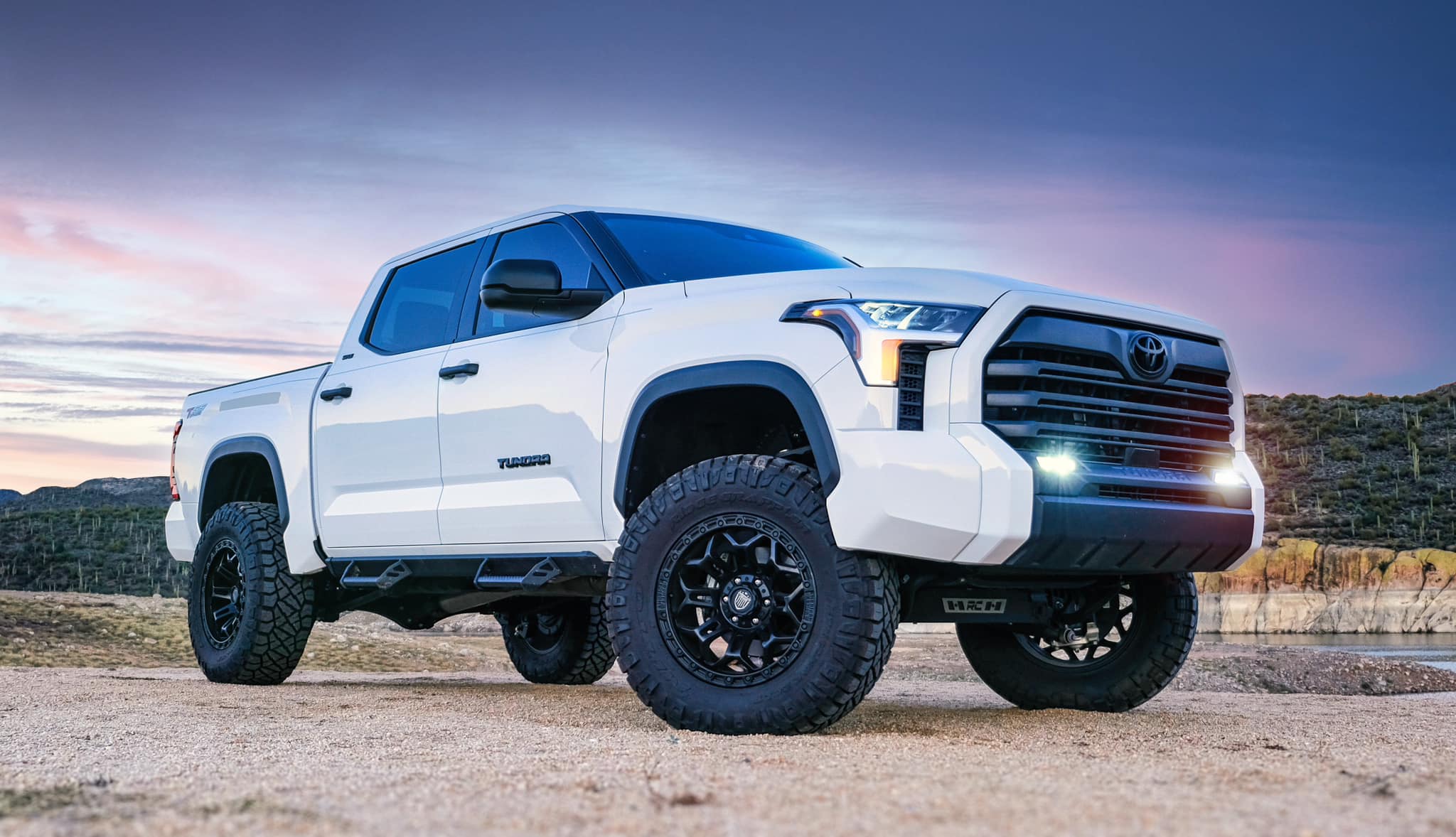
But there's an important mechanical question that often gets overlooked:
Do 35-inch tires hurt your transmission?
The short answer is not necessarily.
A properly configured truck can run 35-inch tires reliably. However, larger and heavier tires change the mechanical load placed on the drivetrain. Depending on the truck's factory tire size, axle gearing, transmission, engine output, wheel-and-tire weight, towing demands, and driving habits, 35s can make the transmission work harder than it did in stock form.
The key isn't simply whether you're running 35s.
It's whether the rest of the truck is properly matched to them.
Why Bigger Tires Affect the Transmission
Your transmission doesn't directly turn the tires.
Power travels from the engine through the transmission, driveshaft, differential, axle shafts, and finally to the wheels.
Changing tire diameter changes the final part of that system.
A larger-diameter tire travels farther with each revolution. That effectively makes the truck's overall gearing taller.
Think about riding a bicycle.
Starting from a stop in a high gear requires more effort than starting in a low gear. A truck experiences a similar mechanical disadvantage when significantly larger tires are installed without changing the axle ratio.
The engine and transmission now have to work against a taller effective gear.
That can affect acceleration, shift behavior, towing performance, and transmission temperature.
Do 35-Inch Tires Automatically Damage a Transmission?
No.
Millions of trucks operate successfully with larger-than-stock tires, and 35s are a relatively moderate upgrade on many modern full-size and heavy-duty platforms.
What matters is the difference between the factory tire diameter and the new tire diameter, along with the complete vehicle configuration.
A truck originally equipped with approximately 33-inch tires experiences a relatively modest change when moving to 35s.
A truck originally equipped with much smaller tires experiences a larger percentage change.
The transmission doesn't recognize the number "35" as inherently dangerous.
It responds to load.
How 35s Change Effective Gear Ratio
This is one of the most important concepts to understand.
Suppose a truck has a 3.73 axle ratio.
When you increase tire diameter without changing the axle gears, the truck effectively behaves as though it has a numerically lower axle ratio.
That means less mechanical advantage at the tire.
The basic relationship can be estimated as:
New Effective Ratio = Original Axle Ratio × Original Tire Diameter ÷ New Tire Diameter
For example, imagine a truck moving from a 32-inch tire to a 35-inch tire while retaining 3.73 gears.
3.73 × 32 ÷ 35 = approximately 3.41
The truck still physically has 3.73 gears in the differential, but from a mechanical-leverage standpoint, the larger tires make the drivetrain behave more like it has approximately a 3.41 effective ratio.
That difference can be felt.
Acceleration may become softer, the transmission may downshift more frequently, and maintaining speed under load can require additional throttle.
Why Tire Weight Matters Just as Much as Tire Diameter
Diameter gets most of the attention, but weight is another major factor.
A larger all-terrain or mud-terrain tire can weigh substantially more than the factory tire it replaces.
Then consider the wheel.
A 35-inch tire mounted on a relatively lightweight wheel creates a very different drivetrain load than the same-size tire mounted on a heavy oversized wheel.
This matters because wheels and tires are rotating mass.
The drivetrain has to accelerate that mass every time the truck speeds up.
The brakes have to decelerate it every time the truck slows down.
That's why two trucks running "35s" can behave very differently.
Tire diameter alone doesn't tell you how demanding the wheel-and-tire package is on the vehicle.
Why 35s Can Cause More Transmission Shifting
Modern automatic transmissions constantly choose gears based on factors such as vehicle speed, throttle position, engine load, terrain, and calibration.
Larger tires change that equation.
If the effective gearing becomes too tall, the engine may operate outside its ideal power range more often.
The transmission compensates by downshifting.
On relatively flat roads with a powerful engine, you may barely notice.
Add a trailer, headwind, steep grade, or significant payload and the transmission may begin hunting between gears more frequently.
Occasional downshifting is completely normal.
Constant unnecessary shifting under heavy load is less desirable because each shift generates heat and clutch activity.
Heat Is the Real Enemy of Automatic Transmissions
If you're concerned about transmission longevity, temperature deserves more attention than tire diameter alone.
Automatic transmissions generate heat while transferring power.
Heavy loads, towing, steep grades, repeated acceleration, torque-converter activity, and excessive shifting can increase that heat.
Larger tires can contribute indirectly by increasing drivetrain load.
This doesn't mean 35s automatically create dangerous transmission temperatures.
It means a poorly matched combination of large heavy tires + tall gearing + heavy towing + high ambient temperatures can make the transmission work considerably harder.
That is very different from a properly geared truck cruising down the highway on lightweight 35s.
Does Engine Power Make a Difference?
Absolutely.
Modern trucks can produce dramatically different amounts of torque.
A high-output turbocharged gasoline engine or heavy-duty diesel may barely notice a moderate increase in tire diameter during normal driving.
A lower-output naturally aspirated engine with tall factory gearing may feel the same tire change much more significantly.
But additional engine torque doesn't completely eliminate the mechanical effects of larger tires.
Even a powerful engine still has to accelerate the added rotating mass.
This is why looking at the entire drivetrain matters more than simply asking whether the engine has enough horsepower.
Do You Need to Regear for 35-Inch Tires?
Not always.
Many modern trucks can run 35s comfortably on factory axle gearing, particularly if they already have relatively favorable axle ratios, strong engine torque, and factory tire sizes that aren't dramatically smaller.
Regearing becomes more attractive when:
-
The truck feels noticeably sluggish
-
The transmission constantly searches for gears
-
Towing performance has deteriorated
-
The truck spends significant time in mountainous terrain
-
The factory axle ratio is relatively tall
-
The original tires were substantially smaller
-
The wheel-and-tire combination is particularly heavy
-
Fuel economy and drivability have deteriorated significantly
Regearing to a numerically higher axle ratio restores some of the mechanical advantage lost when tire diameter increased.
For some trucks, that's transformative.
For others, it isn't necessary.
How Do You Know If Your Truck Is Geared Too Tall for 35s?
Pay attention to how the truck behaves.
Possible signs that the overall setup isn't well matched include:
-
Sluggish acceleration
-
Excessive downshifting
-
Frequent gear hunting
-
Difficulty holding higher gears on modest grades
-
Noticeably worse towing performance
-
Elevated transmission temperatures
-
Poor throttle response
-
Greater-than-expected fuel economy loss
None of these symptoms automatically means the transmission is failing.
They may simply indicate that the drivetrain is working harder because the effective gearing has changed.
Do 35s Affect Transmission Temperature?
They can.
If larger tires cause the transmission to shift more frequently or require additional torque-converter activity to maintain speed, transmission temperature may increase under demanding conditions.
This is most relevant during:
-
Heavy towing
-
Mountain driving
-
Extreme heat
-
Off-road driving
-
Deep sand or mud
-
Long grades
-
Heavy payload operation
A truck that spends its life commuting unloaded across flat terrain may see little meaningful temperature difference.
This is another reason blanket statements about 35-inch tires "destroying transmissions" aren't useful.
Usage matters.
Are 35s Harder on the Torque Converter?
They can increase the load the torque converter experiences, particularly during acceleration or when the drivetrain is operating below its ideal gearing range.
The torque converter helps multiply and transfer engine torque through the automatic transmission.
If larger tires effectively make the gearing taller, the converter may need to work harder during certain operating conditions.
Again, the effect depends heavily on the truck.
Proper gearing and calibration can reduce unnecessary drivetrain strain.
Can 35-Inch Tires Cause Transmission Slipping?
Healthy 35-inch tires do not simply cause a healthy transmission to start slipping.
Transmission slip generally indicates an underlying mechanical, hydraulic, electronic, or clutch-related issue.
However, additional drivetrain load can expose an already weak transmission sooner.
That's an important distinction.
Imagine a transmission with worn clutch packs that operates acceptably under light stock loads.
Add heavier wheels, larger tires, aggressive driving, and frequent towing, and the additional load may reveal the weakness.
The tires didn't necessarily create the underlying problem.
They changed the operating demand.
Do 35s Affect the Transmission More When Towing?
Yes, this is where proper setup becomes especially important.
Towing already increases the load placed on the powertrain.
Larger tires simultaneously reduce effective gearing and can increase rotating mass.
Combine the two and the transmission may need to downshift more frequently to keep the engine in its optimal power range.
For trucks that tow regularly, axle gearing becomes much more important than it is on a lightly used daily driver.
Tow/Haul mode can also help because modern truck transmissions use it to modify shift strategy for sustained load.
Owners should follow the vehicle manufacturer's recommendations regarding towing, transmission operation, fluid service, and temperature limits.
Does Tow/Haul Mode Help With 35s?
When towing, yes.
Tow/Haul mode generally changes transmission behavior to better manage additional load.
Depending on the vehicle, that may include holding gears longer, changing shift points, reducing unnecessary gear hunting, and providing more aggressive downshifting during deceleration.
It isn't a cure for improper gearing.
But when the truck is towing, using the manufacturer's intended towing mode is generally preferable to forcing the transmission to behave like the truck is unloaded.
Should You Tune the Transmission for 35s?
Modern trucks use electronic controls to manage engine and transmission operation.
When tire diameter changes, certain vehicles can be recalibrated so the truck accurately recognizes the new tire size.
That can affect more than the speedometer.
Depending on the vehicle, tire-size calibration may interact with shift strategy, stability-control systems, ABS operation, and other vehicle functions.
Calibration should be performed using appropriate equipment and procedures for the specific platform.
Aggressive aftermarket transmission tuning is a separate subject and should not be confused with simply correcting the vehicle for a new tire diameter.
Will 35s Affect Your Speedometer?
If the vehicle isn't recalibrated for the larger tire diameter, yes.
A larger tire travels farther per revolution.
That means the truck can be traveling faster than the speedometer indicates if the system still assumes the original tire circumference.
The odometer can also become inaccurate.
Many modern trucks can be recalibrated for different tire sizes.
Correcting tire size in the vehicle's electronics is an important part of completing the modification properly.
What About 35s on a Half-Ton Truck?
Modern half-ton trucks such as the Ford F-150, Chevrolet Silverado 1500, GMC Sierra 1500, Ram 1500, and Toyota Tundra are commonly built with 35-inch tires.
Many handle them extremely well when the complete setup is properly selected.
But factory configurations vary dramatically.
A truck with a high-torque engine and favorable axle gearing may retain excellent drivability.
Another version of the same truck with a different engine and axle ratio may feel noticeably more affected.
That's why tire fitment shouldn't stop at:
"Will 35s physically fit?"
The better question is:
"Will 35s work well with this truck's engine, transmission, axle ratio, suspension, wheels, and intended use?"
Physical clearance is only one part of proper fitment.
What About 35s on an F-250, F-350, Silverado HD, Sierra HD, or Ram HD?
Heavy-duty trucks often adapt extremely well to 35-inch tires.
Many already use relatively large factory tires, heavy-duty transmissions, robust axles, and engines designed to move substantial weight.
That doesn't mean 35s have zero mechanical effect.
But the percentage change from the factory tire diameter may be smaller, and the drivetrain may have significantly more reserve capability.
For many Super Duty, Silverado HD, Sierra HD, and Ram Heavy Duty builds, 35s represent a relatively conservative tire size.
Are 37s Harder on a Transmission Than 35s?
Generally, yes, assuming comparable tire construction and wheel setups.
Moving from 35s to 37s further increases tire diameter and usually increases weight.
That creates additional changes in:
-
Effective gearing
-
Rotational inertia
-
Acceleration
-
Braking
-
Steering load
-
Drivetrain demand
This is one reason 35s have become such a popular compromise for daily-driven lifted trucks.
They create a dramatic visual and capability upgrade without introducing the same degree of mechanical compromise associated with substantially larger tire packages.
How Can You Protect Your Transmission When Running 35s?
The most effective strategy is to treat the truck as a complete system.
That means:
-
Choose an appropriate wheel-and-tire combination
-
Avoid unnecessary wheel and tire weight
-
Verify axle gearing
-
Correct tire-size calibration where appropriate
-
Maintain proper tire pressure
-
Use Tow/Haul mode when appropriate
-
Monitor transmission behavior under heavy load
-
Follow recommended transmission service intervals
-
Address abnormal transmission temperatures
-
Avoid exceeding the truck's towing and payload ratings
-
Consider gearing changes if drivability clearly indicates they're needed
Most importantly, don't assume that simply because a tire physically fits, the job is finished.
Are Lightweight 35s Better for Transmission Life?
All else being equal, reducing unnecessary rotating mass is beneficial.
Two 35-inch tire-and-wheel packages can differ significantly in total weight.
A lighter setup requires less energy to accelerate and places less demand on the brakes during deceleration.
That doesn't mean you should simply buy the lightest tire available.
Load capacity, durability, tread design, terrain, towing requirements, puncture resistance, and wheel strength all matter.
The objective is to select the right amount of tire and wheel for the truck's actual use, not simply the biggest or lightest combination.
Do 35-Inch Tires Reduce Transmission Life?
There is no universal mileage penalty that can responsibly be assigned to installing 35-inch tires.
A properly configured and maintained truck can operate reliably on 35s for a very long time.
A poorly configured truck with excessively heavy wheels, unfavorable gearing, frequent heavy towing, aggressive driving, inadequate maintenance, and excessive transmission heat may experience accelerated wear.
The tire size is one variable within that system.
This is why saying "35s ruin transmissions" is far too simplistic.
A better statement is:
35-inch tires increase drivetrain demand compared with a smaller, lighter factory setup, but proper gearing, calibration, component selection, maintenance, and driving habits can keep that additional demand well within what many modern trucks can handle.
So, Do 35-Inch Tires Hurt Your Transmission?
For most properly configured modern trucks, 35-inch tires should not be viewed as a transmission death sentence.
They do change the mechanical equation.
Larger diameter reduces effective gearing. Additional rotating mass requires more energy to accelerate. The transmission may shift more frequently under load, and towing can magnify these effects.
But those are engineering considerations—not reasons to avoid 35s.
The goal is to build the truck correctly.
A well-designed 35-inch setup considers tire diameter, tire and wheel weight, axle ratio, engine torque, transmission behavior, suspension geometry, braking, calibration, and intended use together.
That's what separates simply installing large tires from building a truck that actually drives well.
Explore Professionally Built Trucks on 35s at Lifted Trucks
At Lifted Trucks, wheel and tire selection is part of the complete build—not an afterthought.
Our professionally built trucks combine suspension, wheel fitment, tire sizing, alignment, and drivetrain considerations to create aggressive trucks that remain enjoyable and confidence-inspiring to drive.
Explore our selection of lifted Ford, Chevrolet, GMC, Ram, Toyota, Jeep, Cadillac, and other trucks and SUVs to find the combination that fits how you actually use your vehicle.
Qualifying Lifted Trucks-installed modifications are backed by our lifetime labor warranty for as long as you own the vehicle, while applicable parts carry their respective manufacturer warranties.
And your search isn't limited to your local market. Lifted Trucks offers nationwide shipping, giving you access to our broader selection of professionally built custom trucks from across the country.