Best Trucks for Track Days and Race Cars: How to Build the Ultimate Tow Rig
14 min read
The fastest car at the track isn't much use if you can't reliably get it—and everything needed to run it—there and back.
In this article
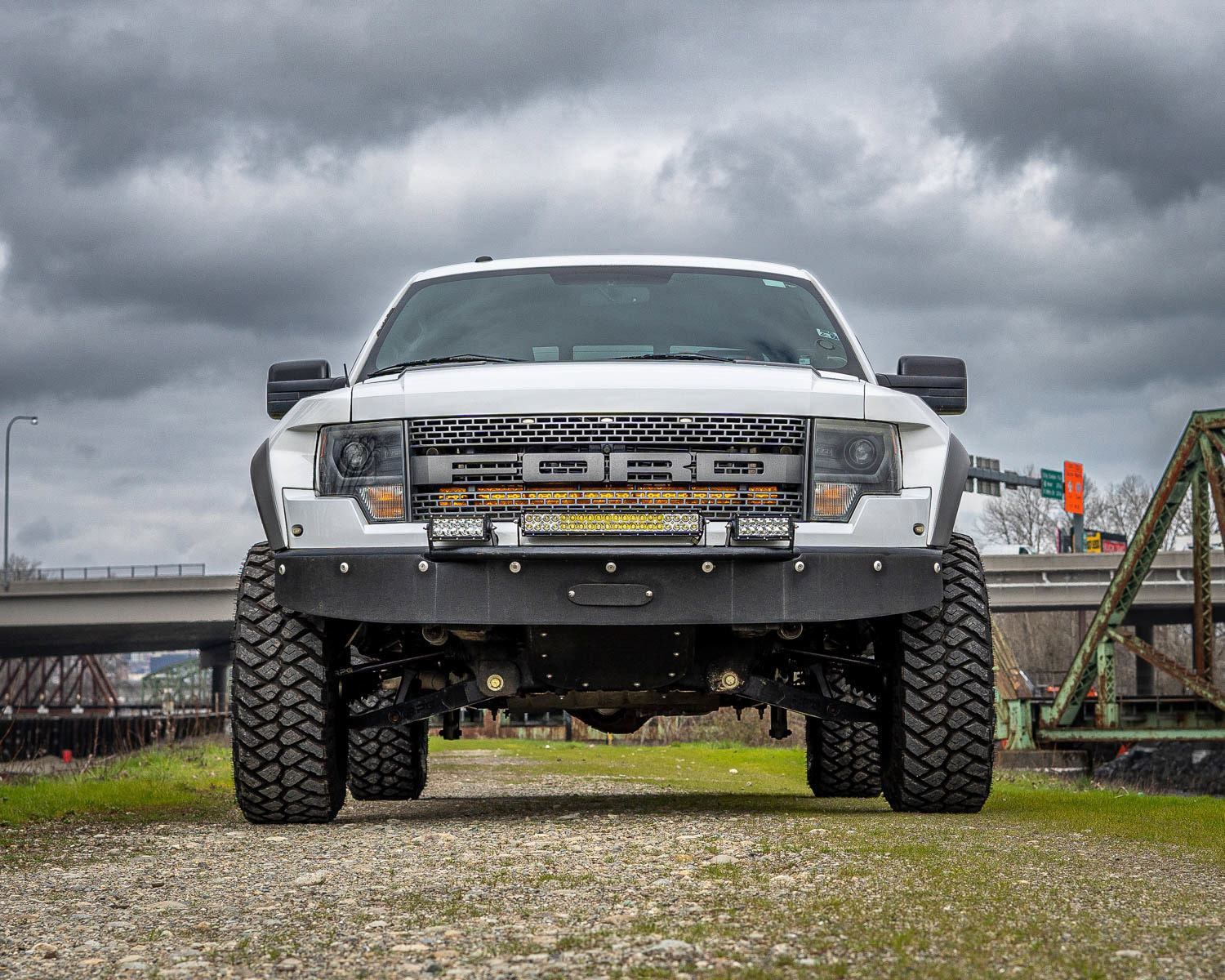
That's when the tow rig becomes part of the race team.
For someone attending their first track day in a street-driven Mustang, Corvette, Miata, Porsche, BMW or GR86, a dedicated truck and trailer might be unnecessary.
Keep modifying the car, though, and the equation starts to change.
Track tires replace street tires.
A roll cage goes in.
The suspension gets more aggressive.
You start carrying tools and spare parts.
Eventually the car becomes uncomfortable on the street—or no longer belongs there at all.
Then comes the trailer.
And once you start trailering a race car, choosing the right truck becomes almost as important as choosing the trailer itself.
From half-ton pickups pulling open car haulers to heavy-duty diesels towing enclosed mobile garages, here's how to choose the right truck for your track-day or racing operation.
Do You Actually Need a Tow Rig Yet?
Not necessarily.
There's a natural progression in track-day driving.
Stage One: Drive to the Track
Many enthusiasts start by driving their performance car directly to the circuit.
Throw a helmet, tire gauge and basic tools in the trunk and go.
For a relatively stock street car attending occasional track days, this can make perfect sense.
But there's an obvious downside.
If something breaks, you still need to get home.
A failed transmission, damaged suspension component, overheating problem or contact with a barrier can turn a fun weekend into a complicated transportation problem.
That's one of the reasons serious enthusiasts eventually start trailering.
Stage Two: Open Trailer
An open car trailer is often the next step.
Now the race car doesn't need to survive the drive home.
You can bring more tools, tires and equipment.
And because open trailers can be relatively light compared with large enclosed trailers, some setups can pair well with properly configured half-ton trucks.
Stage Three: Enclosed Trailer
Eventually, the trailer becomes more than transportation.
An enclosed trailer protects the car from weather and road debris.
It provides secure storage.
Then come cabinets.
Tire racks.
Workbench.
Lighting.
Power.
Tools.
Spare parts.
Suddenly you don't own a trailer.
You own a mobile garage.
And that's where truck requirements can change dramatically.
Start With the Entire Race Weekend
One of the biggest mistakes racers can make is calculating only the weight of the car.
Suppose your track car weighs around 3,000 to 4,000 pounds.
That doesn't mean you're towing only 3,000 to 4,000 pounds.
You may also have:
-
The trailer itself.
-
Four or more spare wheels and tires.
-
Floor jack.
-
Jack stands.
-
Toolboxes.
-
Fuel.
-
Generator.
-
Air compressor.
-
Spare brake components.
-
Fluids.
-
Replacement parts.
-
Canopy.
-
Coolers.
-
Camping equipment.
-
Luggage.
-
And potentially several passengers.
The truck has to handle the complete operation.
That's why the right tow vehicle should be chosen around loaded trailer weight, payload and real-world use, not simply the curb weight of the race car.
Open vs. Enclosed Car Trailer
Trailer selection has an enormous impact on truck selection.
Open Car Trailer
For the weekend enthusiast, an open trailer has several advantages.
It's generally lighter.
There's less frontal area pushing through the air.
Loading and inspecting the car is simple.
And depending on the complete combination, it may allow you to remain comfortably within half-ton territory.
The downside is exposure.
The car is exposed to weather, road debris and public view.
Your tools and equipment also need somewhere else to go.
That often means the truck bed becomes your pit area.
Enclosed Race Trailer
An enclosed trailer solves many of those problems.
The race car stays protected.
Tools remain secure.
Spare wheels have somewhere to live.
You can build dedicated storage.
And the trailer can become a workspace between sessions.
But there's a price beyond the purchase cost.
Weight increases.
And so does aerodynamic drag.
A large enclosed trailer essentially presents a wall to the air at highway speeds.
That can make towing substantially more demanding than pulling an open trailer—even when the difference in actual weight doesn't initially look enormous.
As the enclosed trailer grows, an HD truck becomes increasingly attractive.
Ford F-150: A Strong Weekend-Warrior Tow Rig
For someone towing a relatively lightweight track car on an appropriately matched open trailer, a properly configured Ford F-150 can make a lot of sense.
You get full-size pickup utility without committing to the size and weight of a heavy-duty truck.
The bed becomes equipment storage.
A crew cab provides room for passengers and expensive gear.
And when the trailer isn't attached, the truck remains comfortable as an everyday vehicle.
For many weekend track enthusiasts, that's exactly the balance they need.
Chevrolet Silverado 1500 and GMC Sierra 1500
The Silverado 1500 and Sierra 1500 fit the same general mission.
Properly configured versions can provide the capability required for many recreational car-trailer combinations while remaining practical daily drivers.
The full-size bed is particularly valuable for open-trailer racers.
Tools, tires, jacks, coolers and equipment all need somewhere to go.
A lockable bed configuration can effectively turn the back of the truck into part of your pit setup.
Ram 1500: Road Comfort Matters
Track weekends often involve substantial highway mileage.
The circuit may be two hours away.
Or six.
And after spending all day driving at speed, loading the car and packing equipment, you still have to drive home.
That's where truck comfort matters.
A Ram 1500 can provide the full-size utility needed for many lighter recreational towing setups while remaining comfortable on long road trips.
For someone who uses the truck every day and trailers a track car occasionally, that's a compelling combination.
Toyota Tundra: A Versatile Performance Support Vehicle
The Toyota Tundra is another full-size option for enthusiasts whose trailer combination falls within the ratings of the specific truck.
Like the other half-tons, its appeal comes from versatility.
Tow the car on Saturday.
Daily-drive the truck Monday.
Use the bed for tools, wheels, tires and equipment.
Take friends or family in the crew cab.
The truck doesn't have to become a dedicated tow vehicle just because the race car becomes dedicated to the track.
When Does a Half-Ton Stop Making Sense?
There's no universal trailer weight where every racer should immediately switch to HD.
Truck configurations vary too much for that.
Instead, look at the complete situation.
How heavy is the loaded trailer?
How much tongue weight is being transferred to the truck?
How much equipment is in the bed?
How many passengers are inside?
How often are you towing?
How far?
Through what terrain?
And how much capacity remains once everything is loaded?
As those demands increase, an HD truck begins making more sense.
HD Gas Trucks: The Underrated Race-Car Tow Rig
There's a common assumption among enthusiasts:
Serious tow vehicle equals diesel.
Not necessarily.
Modern gas-powered HD trucks can make excellent race-car tow rigs.
Think about platforms such as an F-250 Super Duty with a large-displacement gasoline engine or gas-powered Silverado 2500HD, Sierra 2500HD and Ram HD configurations.
The major advantage is that you're stepping into an HD platform.
That can provide increased available payload and towing capability along with heavy-duty chassis, axle, suspension, cooling and braking hardware depending on configuration.
For an enthusiast who tows a race car periodically rather than constantly, HD gas can occupy a very attractive middle ground.
You get the truck.
You don't necessarily need the diesel.
When Diesel Starts Making Sense
Increase the workload and diesel becomes much more compelling.
Imagine towing a large enclosed race trailer several hundred miles at a time.
Now add substantial equipment.
Then start traveling through mountainous terrain.
This is where an HD diesel can shine.
-
Ford Super Duty Power Stroke.
-
Chevrolet Silverado HD Duramax.
-
GMC Sierra HD Duramax.
-
Ram Heavy Duty Cummins.
These powertrains are designed around serious work, and their low-rpm torque is particularly useful for moving substantial trailers.
Diesel exhaust braking can also be valuable when controlling heavy combinations on long downhill grades.
The more frequently and heavily you tow, the easier diesel becomes to justify.
When Does a One-Ton Make Sense?
Most casual track-day enthusiasts don't need an F-350, Silverado 3500HD, Sierra 3500HD or Ram 3500.
But racing has a habit of escalating.
A modest enclosed trailer gets replaced by a larger one.
Then you add more tools.
More tires.
More parts.
Maybe a golf cart, pit bike or additional support equipment.
At the upper end of recreational motorsports, you're no longer transporting a car.
You're transporting an operation.
That's where one-ton trucks can become appropriate depending on the trailer and load.
Do You Need a Dually for a Race Trailer?
Usually not.
But very large enclosed trailers can eventually enter territory where a dual-rear-wheel truck deserves consideration.
The reason isn't appearance.
It's capability.
Depending on configuration, a dually can offer greater rear-axle and payload capability along with a wider rear footprint.
For substantial race operations towing large trailers over long distances, those characteristics can become valuable.
For someone hauling a lightweight Miata on an open trailer?
It's probably far more truck than the job requires.
Match the truck to the operation.
Payload Matters Just as Much as Towing Capacity
This is one of the most important concepts for any racer buying a tow vehicle.
Maximum advertised towing capacity gets attention.
Payload can quietly become the limiting factor.
The truck is carrying:
-
Passengers.
-
Tools.
-
Cargo.
-
Spare parts.
-
Anything in the bed.
-
And the trailer's tongue weight.
All of that counts.
A truck may have a headline towing number that appears sufficient while the specific configuration's available payload tells a different story.
Always check the ratings for the actual truck.
Maximum Tow Ratings Aren't Universal
Not every F-150 has the same ratings.
Not every F-250 does either.
The same applies to Silverado, Sierra, Ram and Tundra.
Capability can change with:
-
Engine.
-
Drivetrain.
-
Axle ratio.
-
Cab.
-
Bed length.
-
Trim.
-
Options.
-
Wheel and tire configuration.
-
Tow package.
That's why buying a truck based purely on a manufacturer's highest advertised towing figure can be misleading.
The specification that matters is the one attached to the truck you're actually buying.
Wheelbase Deserves Attention
Race trailers can be long.
Tow-vehicle dimensions therefore deserve consideration beyond simply whether the truck fits in your garage.
Longer-wheelbase trucks can offer useful characteristics for serious towing, while shorter trucks can be easier to maneuver and live with every day.
This creates an interesting decision between configurations such as:
-
Crew cab short bed.
-
Crew cab standard bed.
-
Crew cab long bed.
A longer bed also gives racers something they almost always need:
More equipment space.
The right choice depends on whether the truck spends most of its life commuting or most of its weekends attached to a trailer.
The Truck Bed Becomes Part of the Pit
This is where pickup trucks have a massive advantage.
For an open-trailer racer, the truck bed may essentially become the support trailer.
Think about what can live back there:
-
Spare wheels.
-
Tires.
-
Floor jack.
-
Jack stands.
-
Toolboxes.
-
Fluids.
-
Coolers.
-
Canopy.
-
Portable air.
-
Parts.
-
Cleaning supplies.
-
Fuel containers designed for appropriate transportation.
A good bedliner makes cleanup easier.
Lockable storage protects expensive equipment.
A tonneau cover can provide additional weather protection and security.
Bed lighting becomes surprisingly valuable when you're packing after the final session.
Build the truck bed correctly and it becomes part of your pit.
The Enclosed Trailer Becomes Your Mobile Garage
Move into an enclosed trailer and the possibilities expand dramatically.
Now you can start building an actual workspace.
-
Cabinets.
-
Workbench.
-
Tool storage.
-
Tire racks.
-
LED lighting.
-
Electrical system.
-
Battery chargers.
-
Portable or onboard power.
-
Air compressor.
-
Parts bins.
-
Laptop or telemetry station.
-
Even basic sleeping accommodations in larger configurations.
For serious racers, the trailer can eventually become almost as carefully engineered as the car.
And as that trailer becomes more capable, the tow vehicle needs to keep up.
Why Trailering a Race Car Changes Track Days
There's another advantage that has nothing to do with convenience.
Mechanical freedom.
When you drive your track car to the circuit, part of your brain knows:
I still have to drive this thing home.
Once you trailer it, that changes.
A mechanical failure can end your weekend without stranding you.
Transmission problem?
Load it.
Broken suspension component?
Load it.
Overheating issue?
Load it.
Minor track damage?
Assuming the car can be safely loaded, you still have transportation home.
That doesn't mean you become careless.
It means the race car no longer has to serve simultaneously as competition equipment and transportation.
For a serious enthusiast, that's a major step.
Low Race Cars Create a Unique Trailer Problem
Race cars tend to sit low.
Sometimes extremely low.
That creates an issue many truck buyers don't initially consider:
Loading angle.
The transition between the ground, trailer ramp and trailer deck can cause low splitters, exhaust systems, rocker panels and underbody components to scrape.
Trailer design matters.
Longer ramps can reduce the approach angle.
Dovetail trailers can help.
Race ramps and other purpose-built loading solutions can create a more gradual transition.
Some trailers use tilt-deck designs to address the same problem.
This is one area where selecting the right trailer is just as important as selecting the truck.
What About Towing a Race Car With a Lifted Truck?
A properly configured lifted truck can absolutely serve as a race-car tow vehicle.
But the modifications need to respect the truck's towing responsibilities.
Lifting a truck changes receiver height.
That means you may need a properly rated drop hitch to maintain appropriate trailer geometry.
Larger tires can change effective gearing and vehicle behavior.
Aftermarket wheels and tires need load ratings appropriate for the intended workload.
Suspension modifications should complement the truck's towing mission.
And remember the unusual combination you're creating:
A tall tow vehicle pulling a trailer carrying an extremely low car.
That makes proper hitch setup and trailer geometry particularly important.
The goal isn't simply to make the tow rig look impressive in the paddock.
It still has to work.
Four-Wheel Drive or Two-Wheel Drive?
Unlike UTV or off-road enthusiasts, most track-day drivers spend the majority of their towing time on pavement.
That means four-wheel drive isn't automatically necessary purely because you're towing a race car.
But it can still provide useful versatility.
-
Rain.
-
Snow.
-
Wet grass paddocks.
-
Gravel parking areas.
-
Soft ground.
-
Unpaved access roads.
If the truck is also your daily driver, four-wheel drive may make sense beyond racing altogether.
As always, choose based on the entire way you use the truck.
Tow Mirrors Matter
A race trailer can dramatically reduce rearward visibility.
Proper mirrors make highway driving, lane changes and backing substantially easier.
This becomes particularly important with enclosed trailers.
Factory towing mirrors can be extremely useful, and many modern HD trucks offer camera systems designed to improve visibility around trailers.
When you're spending hours towing to an event, those features aren't gimmicks.
They're tools.
Trailer Brakes Matter Too
As trailer weight increases, proper braking becomes critical.
Many car trailers use electric trailer brakes, and appropriately equipped trucks may include integrated trailer brake controllers.
The truck and trailer need to function together as a complete system.
Stopping matters every bit as much as pulling.
Probably more.
The Ultimate Track-Day Truck Setup
If we were building a serious multipurpose track-day truck, we'd focus on function first.
A strong foundation could include:
-
Crew cab for passengers and secure equipment storage.
-
Appropriate engine and tow package for the actual trailer.
-
Useful bed length for tires, tools and equipment.
-
Integrated trailer brake controller where appropriate.
-
Tow mirrors for visibility.
-
Properly rated hitch equipment matched to the trailer.
-
Bedliner for durability.
-
Lockable storage for tools and parts.
-
Quality bed lighting for late-night loading.
-
Portable or onboard air for tires and equipment.
-
Portable power for chargers and tools.
-
Fire extinguisher for track and roadside emergencies.
-
First-aid kit for the paddock and travel.
-
Recovery equipment for unexpected situations.
And depending on the trailer, modern camera and trailer-monitoring technology can make the entire setup easier to manage.
The best race tow rig isn't the one with the longest modification list.
It's the one where every component solves a problem.
Match the Truck to the Racer
Different racers need different trucks.
Occasional Track-Day Driver
If your performance car remains street legal and reliable, you may not need a dedicated tow vehicle at all.
Drive it.
Learn.
Have fun.
Upgrade the transportation setup when the hobby demands it.
Weekend Warrior With an Open Trailer
This is prime half-ton territory depending on the loaded combination.
A properly configured F-150, Silverado 1500, Sierra 1500, Ram 1500 or Tundra may provide an excellent combination of towing capability and everyday drivability.
Dedicated Race Car With an Enclosed Trailer
Now HD becomes increasingly attractive.
A gas F-250, Silverado 2500HD, Sierra 2500HD or Ram 2500 may provide an excellent solution.
Increase trailer size, towing frequency, mileage or terrain and diesel becomes more compelling.
Serious Multi-State Race Operation
Large enclosed trailer.
Heavy equipment load.
Long distances.
Frequent towing.
Potentially multiple vehicles or substantial support equipment.
This is where HD diesel and, depending on the actual combination, one-ton trucks can become appropriate.
Don't Buy the Truck Before You Understand the Trailer
This might be the most important advice in the entire discussion.
Determine what you're actually going to tow.
Know the car's weight.
Know the trailer's weight.
Estimate—or better yet, measure—the complete loaded combination.
Understand tongue weight.
Calculate truck payload.
Account for passengers and cargo.
Then choose the truck.
Don't start with:
"I want an F-150."
Or:
"I need a diesel F-350."
Start with:
"This is what I need to move."
Then build the transportation system around it.
The Tow Rig Is Part of the Build
Car enthusiasts obsess over details.
-
Tire pressures.
-
Brake temperatures.
-
Alignment.
-
Suspension geometry.
-
Lap times.
-
Weight.
-
Cooling.
-
Data.
The tow rig deserves some of that same attention.
Because once you start trailering your race car, the truck becomes part of every event.
It gets the car there.
Carries the equipment.
Supports the pit.
Protects the crew.
And when the checkered flag drops—or something breaks—it gets everything home.
The race car may be the reason you're going.
But the truck is what makes the entire operation possible.
Find Your Track-Day Tow Rig at Lifted Trucks
Whether you're towing a lightweight track car on an open trailer, building an enclosed mobile garage or stepping into a heavy-duty diesel for a serious racing operation, Lifted Trucks can help you find a truck built around the job.
Explore professionally built Ford, Chevrolet, GMC, Ram, Toyota and other custom trucks ranging from versatile half-ton pickups to serious heavy-duty tow rigs.
The right truck gives you room for the car, trailer, tools, tires, crew and everything else that turns a track day into a race weekend.
And your search doesn't have to stop at your local market. Lifted Trucks offers nationwide shipping, helping motorsports enthusiasts across the country find the right truck for their towing needs.
Explore Lifted Trucks and find the tow rig ready to take your race program to the next level.