

Why Tire Size Matters More Than Most People Think
Tires are the single biggest change you can make to the personality of a truck. They affect everything: ride quality, steering feel, braking, acceleration, fuel economy, and even how the truck looks sitting still. The difference between a truck on stock tires and a truck on 35s is night and day.
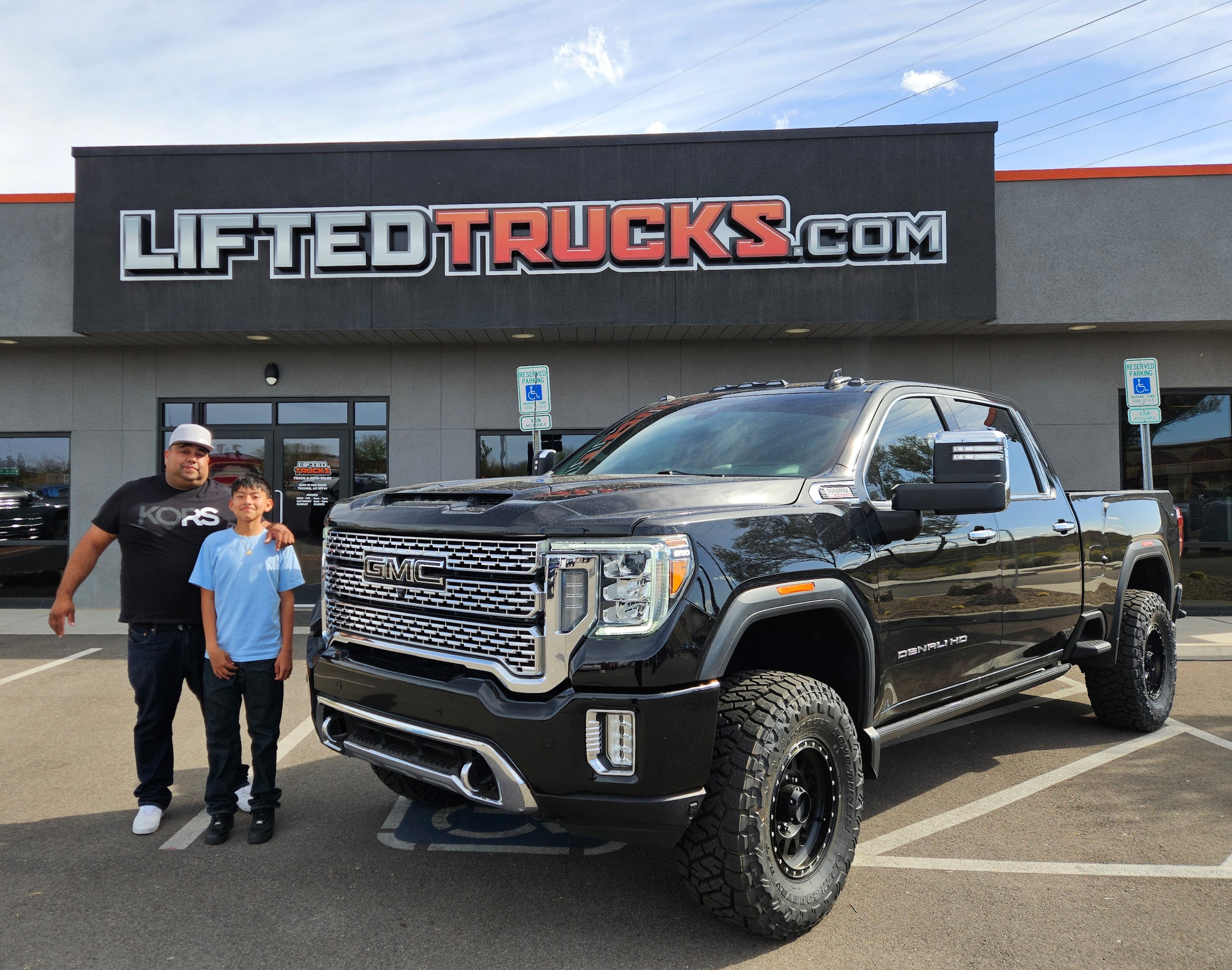
But tire size is not just a style decision. It’s a mechanical decision. Bigger tires are heavier. They change gearing. They increase leverage on suspension components. They change the way the truck handles and stops. That’s why the “right” tire size isn’t always the biggest one. It’s the one that fits your lifestyle and the way you actually use the truck.
Why 35-Inch Tires Are the Sweet Spot
35s have become the standard because they deliver the most benefits with the fewest compromises. They look aggressive without being ridiculous. They provide real clearance improvements off-road. They fill the wheel wells the way most people want a lifted truck to look. And they can be run on many modern trucks with the right suspension setup without turning the truck into a headache. Here are the biggest reasons 35s have taken over.
-
35s Look “Built” Without Going Overboard
Let’s be honest. A big part of the appeal is the look. 35s give you that unmistakable built stance. They make the truck look taller, tougher, and more capable. They’re big enough to turn heads but still proportional on most full-size trucks. This is why you’ll see 35s on everything from lifted half-tons to high-end luxury off-road builds. They hit the perfect visual balance between clean and aggressive. -
35s Improve Ground Clearance Where It Matters
When you move up to 35-inch tires, you gain clearance under the truck, especially at the differential and undercarriage. That extra clearance makes a noticeable difference off-road, in deep ruts, on uneven terrain, and when you’re climbing over obstacles. You don’t have to be a hardcore rock crawler to appreciate the benefit. Even mild off-road trails, dirt roads, ranch property, and backcountry routes feel easier with the extra clearance. -
35s Keep the Truck More Daily-Drivable Than 37s
This is where 35s really win. They give you a major upgrade without forcing you into the bigger compromises that come with 37s. In most cases, 35s allow you to keep the truck feeling stable, comfortable, and predictable on the highway with fewer additional modifications. For a lot of people, that’s the entire point. They want a lifted truck they can actually drive every day without constantly dealing with steering issues, tire rub, or a truck that feels sluggish. -
35s Are Easier on the Drivetrain Than 37s
Tire weight matters. Rotational mass matters. Bigger tires put more stress on the drivetrain, especially when you accelerate, brake, or tow. 35s do increase load compared to stock, but they’re typically much easier on the truck than 37s. That means better long-term reliability and fewer surprises. For daily drivers and family trucks, that’s a big deal. -
35s Offer Better Tire Options and Versatility
The 35-inch tire market is massive. You have more options across different tread types, load ratings, and price points. Whether you want a quiet all-terrain for commuting or a more aggressive mud-terrain for weekend fun, there are excellent options. You also have more flexibility in balancing performance and comfort.
What Changes When You Move to 35-Inch Tires?
Even though 35s are the sweet spot, they still change the truck. Here’s what you should expect when you step up to 35-inch tires.
Acceleration and Power Feel
Bigger tires effectively change your gearing. Your truck may feel slightly slower off the line, especially if it’s geared for stock tire size. This doesn’t mean the truck is weak. It just means the tires require more effort to spin. Many modern trucks handle 35s well, but if you’re coming from stock tires, you’ll feel the difference.
Fuel Economy
35s usually reduce MPG. How much depends on your driving style, the tire type, and the weight of the wheel and tire combo. A heavy mud-terrain on a heavy wheel will cost more MPG than a lighter all-terrain setup. The good news is most people accept the trade because the look and capability are worth it.
Steering Feel
35s can slightly change steering feel, especially with aggressive tread patterns or heavy wheels. A properly built lifted truck should still feel stable and confident. If the truck wanders or feels sloppy, it’s usually a build quality issue, alignment issue, or wheel offset issue, not the tire size itself.
Braking Distance
Bigger tires mean more rotating mass, and that can increase braking distance. Again, the difference is manageable in a properly built setup, but it’s something to respect. A lifted truck on 35s should still stop confidently, but you should drive like you understand you’re moving more weight.
Fitment and Rubbing
This is the number one question: will 35s rub? The answer depends on the truck, the suspension setup, wheel offset, and tire width. Some trucks can run 35s with minimal changes. Others require proper lift height, correct wheel specs, and sometimes minor trimming. The key is doing it the right way. When 35s are installed correctly, they look clean and drive great. When they’re forced onto the truck with the wrong setup, they rub, wear poorly, and become annoying fast.
So When Do 37s Actually Make Sense?
37s are incredible, but they’re not for everyone. They make the truck look like a monster, and they do offer additional clearance and capability. But they usually require more supporting modifications and come with more compromises. Here’s when 37s make sense.
-
You Want Maximum Off-Road Capability
If you’re serious about off-roading, rock crawling, deep sand, or technical terrain, 37s can be worth it. The added clearance and traction can be a real advantage. -
You Want a Show-Stopping Look
Some people want the biggest, baddest stance possible. If your goal is maximum presence, 37s deliver that. They take the truck from “built” to “unstoppable.” -
You’re Willing to Do the Supporting Mods
37s often require more lift height, more trimming, and more supporting suspension components. They may require different wheel fitment, steering upgrades, and in some cases gearing changes to keep the truck feeling strong and responsive. If you’re willing to do it right, 37s can be amazing. If you’re trying to cut corners, 37s are where problems show up fast. -
You Don’t Mind the Extra Cost
37s cost more. They weigh more. They often require more work to fit properly. And they can accelerate wear on certain components. If you want the best results, you should expect to invest more.
35s vs 37s: The Real-World Comparison
Here’s the simplest way to think about it.
35s are the best balance for most people. They give you the look, the capability, and the daily drivability.
37s are the move for people who want maximum aggression and maximum off-road presence and are willing to accept the cost and complexity that comes with it.
If you’re using your truck as a daily driver, a family vehicle, a commuter, or a multi-purpose lifestyle truck, 35s are almost always the smarter choice. If you’re building a dedicated off-road machine or you want the biggest setup possible, 37s can be worth it.
Why Lifted Trucks Builds the Sweet Spot the Right Way
At Lifted Trucks, we build turnkey lifted trucks and SUVs that are designed to look aggressive and drive confidently. Tire size is not a guessing game. We focus on proper fitment, correct suspension geometry, and a build quality standard that protects long-term reliability. Whether you’re running 35s for daily driving or stepping up to 37s for maximum presence, the goal is the same: a truck that feels right, drives right, and makes you proud every time you walk up to it.
The Bottom Line: 35s Are the New Standard for a Reason
35-inch tires have become the new standard because they offer the best combination of style, capability, and real-world drivability. They look aggressive without being extreme, they improve off-road clearance, and they keep your truck feeling stable and practical enough for daily life. And for most buyers, that’s exactly the point.
If you’re ready to find a lifted truck that’s already built the right way with the right tire setup, explore our nationwide inventory today. Whether you want a clean daily driver on 35s or a full-send build on 37s, Lifted Trucks makes it easy to shop, buy, and ship your next dream truck with confidence.
