

What Is an Upper Control Arm and Why Does It Matter?
On most modern trucks and SUVs with independent front suspension, your front suspension uses control arms to guide the movement of the front wheels through travel. The upper control arm plays a major role in maintaining proper alignment geometry as the suspension compresses and rebounds. It helps manage how the wheel angles behave, especially when the truck hits bumps, turns hard, brakes, or carries weight.
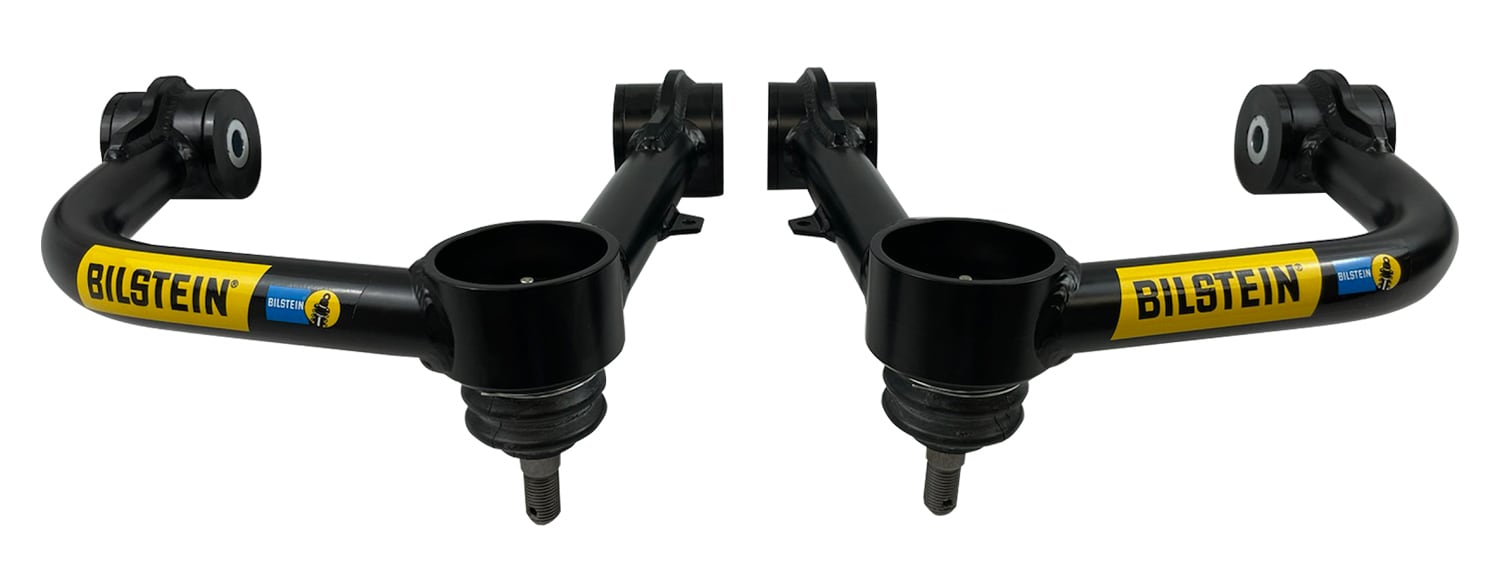
When a truck is stock, the factory upper control arms are designed to operate within a specific range of suspension travel and ride height. When you lift the truck, you change that range. That change affects alignment, ball joint angles, and how the suspension moves through its travel. In other words, lifting your truck changes the rules.
The Biggest Misconception: “My Truck Is Lifted, So It Must Be Fine”
One of the most common mistakes buyers make is assuming that because a truck has a lift kit installed, everything must be correct. But many lifts are installed with minimal supporting components. That can lead to trucks that look aggressive but drive poorly, eat tires, or develop front-end issues over time. UCAs are often the missing piece. Some trucks can get away without them at mild lift heights, but many cannot once you push beyond a leveling kit or you start running larger tires with more aggressive wheel fitment.
When Do Upper Control Arms Become Mandatory?
There isn’t one universal number that applies to every truck, but there are clear patterns. In general, UCAs become mandatory when you lift a truck enough that the factory control arm can no longer provide proper alignment adjustment, or when the suspension geometry creates unsafe or premature wear conditions. Here are the most common situations where UCAs move from optional to required.
-
When You Can’t Achieve Proper Alignment Specs
This is the number one reason. A lifted truck needs proper alignment, and the most important alignment spec for a lifted truck’s highway stability is usually caster. Caster helps the truck track straight, return to center after turns, and feel stable at speed. When you lift the front end, you often lose caster. Factory UCAs may not allow enough adjustment range to get caster back into a safe, stable zone. If a shop tells you they “can’t get it into spec,” or they give you alignment numbers that are technically within a wide factory range but still drive poorly, it’s a strong sign you need UCAs. A properly built lifted truck should not feel twitchy or unstable at highway speeds. -
When Ball Joint Angles Become Too Extreme
Stock UCAs were designed for stock ride height. When you lift the truck, the angle of the upper ball joint changes. At certain lift heights, the ball joint can be forced into a range it was never intended to operate in. That can cause binding, accelerated wear, squeaking, clunking, and eventual failure. Aftermarket UCAs are often engineered with corrected ball joint or uniball positioning to restore proper operating angles. This improves reliability and safety, especially if you actually use your truck like a truck. -
When Your Lift Increases Suspension Travel
Not all lifts are equal. Some lifts simply raise the ride height without increasing travel. Others are designed to improve off-road capability by increasing usable suspension travel. If your lift setup increases travel, the upper control arm becomes even more important because it must allow proper articulation without binding or contacting other components. This is where high-quality UCAs make a huge difference in real-world performance. -
When You’re Running Larger Tires and More Aggressive Fitment
If you’re stepping up to 35s or 37s, your suspension and steering are under more load. Add wheels with aggressive offset and you increase leverage on suspension components. This can expose weaknesses fast. Even if the truck aligns “okay,” it may still feel vague, wander, or wear tires unevenly. UCAs help correct geometry and improve stability, which becomes more important as you increase tire size and overall unsprung weight. -
When You Want a Lifted Truck That Drives Like It Should
A lot of lifted truck owners accept bad driving manners as normal. It’s not. A properly built lifted truck should feel stable, predictable, and confident. If your lifted truck feels floaty, bouncy, or nervous at speed, UCAs are one of the most common upgrades that immediately improve how the truck feels. It’s one of the smartest upgrades you can make if you care about daily drivability.
What Problems Do Upper Control Arms Prevent?
UCAs are not just about off-road performance. They protect you from expensive long-term problems and improve the driving experience. Here are the biggest problems they help prevent.
Uneven Tire Wear
If alignment specs can’t be dialed in properly, you’ll burn through tires fast. And tires for lifted trucks are not cheap. A UCA upgrade can pay for itself by protecting tire life.
Wandering and Poor Highway Tracking
Low caster and poor geometry lead to wandering. This is the feeling that you’re constantly correcting the steering wheel on the highway. UCAs can restore the alignment range needed to make the truck track straight and feel planted.
Premature Ball Joint Failure
Bad angles lead to premature wear. Aftermarket UCAs are designed to work correctly at lifted heights, reducing stress and improving longevity.
Binding and Suspension Limitations
When suspension travel increases, stock arms can bind or contact other components. A proper UCA helps the suspension cycle smoothly.
Steering Instability Under Load
Larger tires, heavy wheels, and more aggressive stance create more forces on the steering system. Better geometry helps the truck stay stable and predictable.
UCA Options: Ball Joint vs Uniball
There are two common styles of aftermarket upper control arms: ball joint and uniball. Both can be excellent depending on your use case. Ball joint UCAs tend to be quieter and more maintenance-friendly for daily driving. Uniball UCAs can offer more articulation and are popular for off-road performance, but may require more maintenance and can be noisier depending on the design. The right choice depends on your priorities: daily comfort, off-road use, or a balance of both. The key is not the trend. The key is the quality of the part and the correctness of the setup.
Why Cheap UCAs Are a Bad Idea
Not all aftermarket UCAs are created equal. Cheap control arms may use lower-grade bushings, weak welds, poor ball joints, or questionable hardware. A control arm is not a cosmetic part. It’s a critical suspension component that affects steering and safety. If you’re going to upgrade UCAs, do it right. This is not the place to gamble.
How Lifted Trucks Approaches Proper Suspension Geometry
At Lifted Trucks, we build turnkey lifted trucks and SUVs with the right supporting components, not just the parts that look good in photos. We focus on the full driving experience: highway stability, ride quality, alignment specs, and long-term reliability. When a lift setup requires UCAs to drive correctly and wear tires properly, we treat that as part of the build standard, not an optional add-on. That’s what separates a professionally built lifted truck from a random modified truck you find online. It’s also why customers love the confidence of buying from a trusted upfitter rather than inheriting someone else’s shortcuts.
The Bottom Line: UCAs Are One of the Smartest Lifted Truck Upgrades
If you want your lifted truck to look right, drive right, and last, upper control arms are one of the most important supporting upgrades you can make. They restore alignment adjustability, improve highway stability, reduce tire wear, and protect key suspension components from unnecessary stress. For many lifted setups, they’re not optional. They’re mandatory. And if you’re shopping for a lifted truck, knowing whether the truck has the right UCAs installed is one of the fastest ways to separate a quality build from a future headache.
If you’re ready to own a lifted truck that’s built the right way from day one, explore our nationwide inventory of professionally built lifted trucks and SUVs at LiftedTrucks.com. We make it easy to shop, buy, and ship a truck you’ll be proud to drive for years.
