
Horse people don’t “kind of” tow. You’re hauling living, breathing athletes in a rolling barn, often at odd hours, in bad weather, with schedules that don’t care about traffic or your truck’s feelings. The best truck for a horse owner is the one that tows confidently every single time, stops straight, stays stable in crosswinds, and still has enough payload left for tack, feed, water, passengers, and all the real-world stuff that never shows up in brochure math.
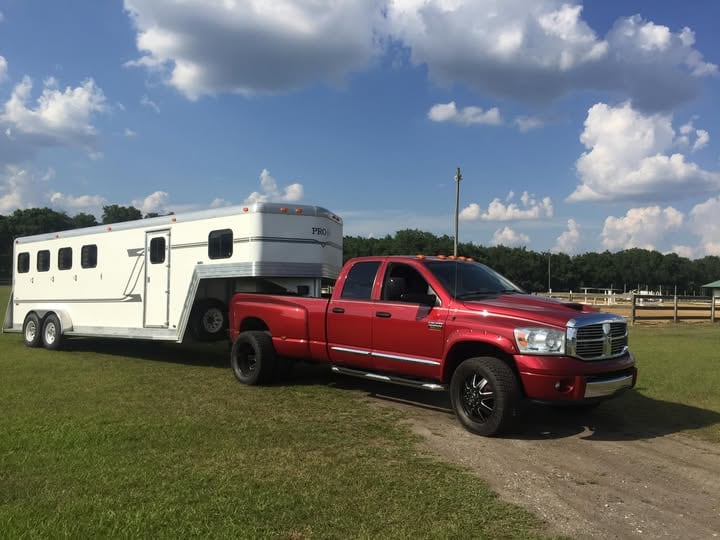
This guide breaks it down by the two biggest realities in the horse world: owners hauling 1–2 horses and owners hauling 3+ horses (or heavier, longer trailers), plus what to prioritize so you buy once and buy right.
Why towing horses is different than towing “weight”
A utility trailer is dead weight. A horse trailer is dynamic weight. Horses shift, brace, and move. Even the calmest horse changes the trailer’s center of mass, especially during braking, turns, lane changes, and uneven pavement. That means stability is not optional. You want a truck that feels planted and predictable, not a setup that’s “within tow rating” but white-knuckle at 55 mph with a gusty sidewind and a semi passing you. When horse owners say a truck “tows nice,” they’re describing stability, braking confidence, and control, not just horsepower.
The 5 numbers horse owners should care about more than tow rating
Tow rating gets the headlines, but horse owners live in payload, tongue weight, and control. Here’s what matters most: Payload (on the door sticker): This is the truck’s real limiting factor for many horse owners. Payload includes passengers, fuel, gear, and the trailer’s tongue weight (or pin weight for goosenecks). Tongue weight or pin weight: A bumper-pull horse trailer commonly puts roughly 10–15% of trailer weight on the hitch. Goosenecks typically put a larger share in the bed. That weight comes straight out of payload. Axle ratio and gearing: Bigger tires and added lift change effective gearing. For towing, you want gearing that keeps the truck in the powerband without hunting gears on grades. Wheelbase and track width: Longer wheelbase and wider stance generally improve stability. This is a big reason heavy-duty trucks feel calmer with horse trailers. Brakes and thermal capacity: Horse trailers mean stop-and-go, hills, and long distance. A heavier-duty truck typically brings bigger brakes, stronger cooling, and higher sustained load capacity.
Bumper pull vs gooseneck for horse owners
If you haul 1–2 horses, bumper pull is common and totally workable with the right truck and hitch setup. If you haul 3+ horses, or you’re regularly doing longer distances, hills, or windy open highways, gooseneck becomes the stability upgrade that many owners never want to give up once they’ve experienced it. Goosenecks generally reduce sway and shift weight into the bed more predictably, but they demand payload and a truck built for the job. Either way, the truck needs to be matched to the trailer you actually use, not the trailer you wish you had.
Best trucks for horse owners hauling 1–2 horses
For most 1–2 horse owners, the sweet spot is a properly equipped half-ton truck for lighter trailers and a three-quarter-ton truck for heavier trailers, more gear, more passengers, or more frequent highway and hill driving. The honest difference is not “can it tow,” it’s “how relaxed and stable does it feel while towing.”
-
The best “daily driver that also tows” choice: modern half-ton trucks Half-ton trucks can be excellent for 1–2 horse owners if the trailer is modest, your setup is dialed, and you’re not pushing payload limits with a full cab of people and a bed full of tack. The strongest half-ton choices for horse owners usually include the Ford F-150, Chevrolet Silverado 1500/GMC Sierra 1500, and Ram 1500 when properly equipped for towing. What to look for in a half-ton tow setup: Factory tow package with integrated trailer brake controller (or add a high-quality controller if not equipped), a weight-distributing hitch for bumper pulls (when appropriate for your trailer), tow mirrors (factory or upgraded), higher payload configurations (some trims and options reduce payload), and a powertrain known for torque and stability under load. Half-ton wins for: the owner who hauls a couple horses on weekends, wants a comfortable daily driver, and keeps the trailer size/weight sensible. Half-ton watch-outs: payload disappears fast. Two adults, two kids, full fuel, hay bales, tack trunks, water, and the tongue weight can put you at the limit sooner than you’d think.
-
The best “I want it to feel easy” choice for 1–2 horses: 3/4-ton trucks If you want towing to feel boring in the best way, a three-quarter-ton is where horse owners start smiling. Trucks like the Ford Super Duty F-250, Ram 2500, and Silverado/Sierra 2500HD bring stouter frames, bigger brakes, more payload, and a calmer stance. You get less squat, less sway sensitivity, and more confidence when something unexpected happens, like a sudden stop or a gust on an open highway. 3/4-ton wins for: bigger 2-horse trailers, warmbloods, loaded tack rooms, longer distances, hilly terrain, and owners who haul frequently. 3/4-ton watch-outs: stiffer ride empty, higher operating costs, and you’ll want to be mindful of bed cargo and passenger load to protect payload headroom.
-
Diesel or gas for 1–2 horses? Most 1–2 horse owners do great with gas if the truck is properly optioned. Diesel can be a towing dream, especially for frequent hauling and mountainous regions, but it’s not automatically required at the 1–2 horse level unless your trailer is heavy, you’re in steep terrain, or you want maximum torque and engine braking confidence. Decide based on how often you tow, how far, and where you live.
Best trucks for horse owners hauling 3 or more horses
When you move into 3+ horses, you’re often stepping into longer trailers, heavier loads, and more gear. This is where you stop shopping “tow rating” and start shopping “control, payload, and stability.” For many 3+ horse owners, a one-ton truck is the correct answer, and for larger goosenecks, a dually can be the best tool in the toolbox.
-
The best all-around choice for 3+ horses: 1-ton single rear wheel trucks Ford F-350, Ram 3500, and Silverado/Sierra 3500HD single rear wheel configurations are popular because they balance daily usability with serious towing muscle. Properly equipped, these trucks handle larger bumper pulls and moderate goosenecks with far more payload and stability than a half-ton or many three-quarter-ton setups. 1-ton SRW wins for: 3-horse bumper pulls, smaller 3–4 horse goosenecks (depending on build and load), frequent hauling, and owners who want a serious tow rig without going full dually.
-
The best stability choice for bigger 3+ horse goosenecks: 1-ton dually trucks If you’re hauling a larger gooseneck, hauling long distances, or you simply want maximum stability, a dually is often the “never going back” decision. Dual rear wheels improve lateral stability, reduce rear-end wiggle, and better support high pin weights. In crosswinds and during sudden maneuvers, the confidence difference is real. Dually wins for: larger 4–6 horse goosenecks, heavy living quarters, long highway runs, and high-wind regions. Dually watch-outs: wider footprint, parking and drive-through life changes, and some owners don’t want the daily-driver compromises. But if towing is the mission, a dually is an elite choice.
-
Do you need a diesel for 3+ horses? Often, yes, especially with goosenecks or living quarters. Diesel’s torque delivery, engine braking, and sustained pulling power on grades can turn stressful towing into controlled towing. That said, there are owners who do it with modern gas HD trucks successfully. The deciding factors are trailer weight, terrain, distance, frequency, and how much you value effortless climbs and downhill control.
Features horse owners should prioritize, regardless of truck class
Integrated trailer brake controller: This is non-negotiable for horse trailers. Properly set trailer brakes reduce stopping distance, improve stability, and protect the horses from harsh, jerky stops. Tow mirrors: Visibility is safety. You need to see down the trailer and behind it in all lighting conditions. Cooling and tow package upgrades: Towing stresses powertrain and cooling systems. Tow packages exist for a reason. Rear suspension support done the right way: If you’re regularly towing, consider solutions that maintain level stance under load without creating harshness. The goal is stability, not just appearance. Tires that match your mission: Aggressive tires can look great, but load rating and sidewall stability matter when towing. The wrong tire choice can make towing feel loose and unpredictable. Trailer sway management: For bumper pulls, correct hitching, proper tongue weight, and appropriate sway control matter. For goosenecks, proper loading and pin weight matter. Your truck can only do so much if the trailer is loaded poorly. Smart driver assistance tech: Modern tow modes, integrated camera systems, and blind spot monitoring designed for towing can add real confidence, especially on long trips.
How Lifted Trucks fits into the horse owner equation
Horse owners need more than a pretty build. You need a truck that’s correctly set up, correctly matched, and professionally dialed so it performs when it matters. A lifted truck can absolutely tow well when built intelligently, but the details are everything: suspension geometry, steering stability, tire selection, gearing considerations with larger tires, braking confidence, and ensuring your towing accessories are integrated the right way. The right build feels planted. The wrong build feels like a fight. Our approach is about turnkey capability and peace of mind. You get the stance and presence you want, plus a towing setup designed to stay stable, predictable, and safe, whether you’re hauling a simple 2-horse bumper pull to a local arena or pulling a larger gooseneck across state lines.
Practical “buy once” recommendations by horse owner profile
The weekend rider with 1–2 horses, light-to-moderate trailer, mostly local hauling: A well-equipped half-ton can work great, especially with the right tow package, brake controller, mirrors, and hitch setup. The frequent hauler with 1–2 horses, heavier trailer, hills, or long highway stretches: Step into a three-quarter-ton for stability and payload headroom. You’ll feel the difference immediately. The competitive rider hauling 3+ horses, lots of gear, longer distances, and consistent trailering: A one-ton single rear wheel is often the most balanced workhorse. The living quarters, bigger gooseneck, long-distance, crosswind, and mountain-grade hauler: A one-ton dually is the stability king. If towing is the mission, it’s hard to beat.
The “hidden” mistakes that make towing harder than it needs to be Underestimating payload: People buy enough tow rating but not enough payload. Horse owners carry more gear than they think, and tongue/pin weight adds up fast. Choosing a truck by trim instead of capability: Some luxury trims reduce payload. It’s not about price, it’s about the door sticker and the build. Ignoring gearing when changing tire size: Bigger tires can make the truck feel lazier and cause gear hunting under load. A towing build needs to respect drivetrain math. Skipping brake and hitch setup quality: The hitch and brake system are what keep a horse trailer controlled. Cheap components or poor setup turn towing into stress.
The bottom line
The best truck for horse owners is the one that makes hauling feel controlled and confident, not barely acceptable. For 1–2 horses, the right half-ton can work, but a three-quarter-ton often feels like the smarter long-term move if you haul regularly or carry a lot of gear. For 3+ horses, one-ton trucks are commonly the correct foundation, and dually setups shine when goosenecks, living quarters, and long-distance stability enter the picture. If you want a truck that looks the part and performs like a purpose-built tow rig, you don’t need to gamble on someone else’s project or compromise with an under-trucked setup.
If you’re ready to upgrade into a truck that tows your horses with confidence, comfort, and real control, check out our inventory and let our team match you to the right platform and the right build. You’ve got enough to think about with horses, schedules, weather, and shows. Your truck should be the calm part of the equation, every time you turn the key.
Photo credit: Ocala Equestrian
