
Crossovers dominate modern driveways, and on the surface, it’s easy to understand why. They’re marketed as efficient, comfortable, safe, and practical. For many shoppers in the research phase, crossovers appear to be the logical middle ground between sedans and larger SUVs or trucks.
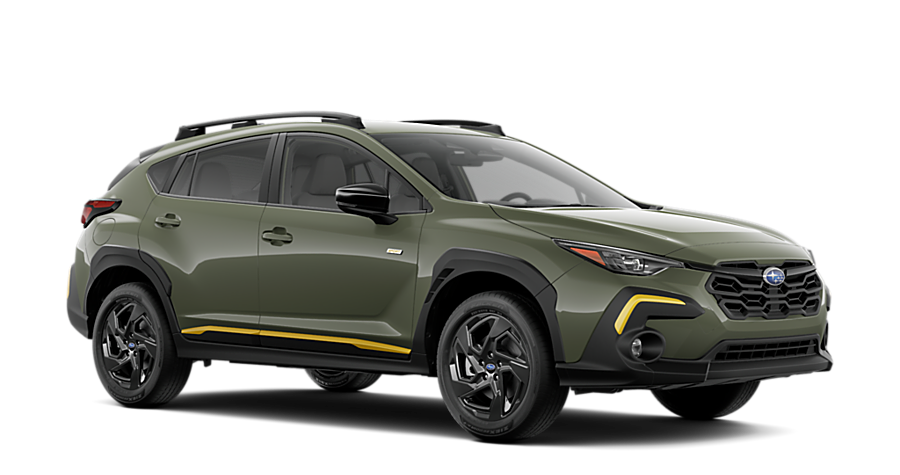
But what often gets lost in the comparison is not what crossovers do well, but where they quietly fall short over time. Those limitations usually don’t show up on a test drive or a spec sheet. They reveal themselves later, once life starts asking more from the vehicle than originally planned.
The first limitation is structural, and it’s rarely explained clearly. Most crossovers are built on unibody car platforms rather than true truck-based frames. That design choice improves ride comfort and fuel efficiency, but it also limits how much stress the vehicle can comfortably handle over the long term. Payload, towing, suspension durability, and chassis rigidity are all constrained by that foundation. For the average commute, that’s fine. For evolving real-world use, it becomes noticeable. As demands increase, crossovers tend to operate closer to their engineering limits, which affects longevity, ride quality, and confidence.
Another overlooked issue is how crossovers handle weight, both visible and invisible. Families grow. Gear accumulates. Roof racks get added. Trailers get considered. What feels adequate at purchase often becomes marginal a few years later. Many crossover owners discover that staying within payload limits requires constant mental math. Add passengers, luggage, pets, and accessories, and suddenly the vehicle feels strained. Braking distances increase, suspension squat becomes obvious, and ride quality degrades. These aren’t dramatic failures, they’re subtle erosions of confidence that compound over time.
Capability is another area where crossovers quietly disappoint. All-wheel drive is often marketed as a substitute for true capability, but AWD is primarily a traction aid, not a strength upgrade. It helps with light weather conditions, but it doesn’t change ground clearance, suspension travel, cooling capacity, or drivetrain robustness. In poor weather, uneven terrain, or towing scenarios, many crossovers feel overwhelmed quickly. Owners often don’t realize how much margin they’re missing until they experience a situation where margin matters.
Interior space is also more limited than it appears. Crossovers are efficient with packaging, but efficiency is not the same as flexibility. Cargo areas fill up faster than expected, rear seating becomes cramped with car seats or adult passengers, and interior layouts often lack the adaptability needed for mixed-use days. Groceries, sports gear, strollers, tools, and luggage all compete for the same finite space. Over time, owners find themselves reorganizing constantly or leaving things behind. That friction becomes part of daily life.
Longevity is another hidden trade-off. Because many crossovers are optimized for light-duty use and lease cycles, they’re not always engineered with long-term, high-mileage ownership as the priority. Components like transmissions, cooling systems, and suspension parts are designed for efficiency and cost, not heavy or sustained loads. As mileage climbs and use cases expand, maintenance costs can rise faster than expected, especially when the vehicle is consistently pushed beyond its comfort zone.
Resale value is also impacted by these limitations. Crossovers flood the market, which makes them competitive on price but less resilient on value. Highly specific trims, drivetrains, and color combinations can narrow the pool of future buyers. By contrast, vehicles with broader capability and more flexible configurations tend to remain desirable longer because they appeal to a wider range of second and third owners.
Perhaps the most important limitation is psychological. Crossovers often encourage buyers to plan around the vehicle instead of letting the vehicle support the plan. Owners start asking questions like “Will this fit?” or “Can this handle it?” instead of simply doing what needs to be done. That hesitation shapes behavior. Over time, people take fewer spontaneous trips, avoid certain activities, and outsource tasks that could have been handled independently. The vehicle becomes a constraint instead of an enabler.
This is where trucks and true SUVs diverge meaningfully. They’re designed with margin, not minimums. That margin shows up as confidence, durability, and adaptability. Even if the full capability isn’t used daily, it’s there when life changes, weather worsens, or opportunities arise. The vehicle works around the owner, not the other way around.
None of this means crossovers are bad vehicles. They’re excellent at what they’re designed to do. The issue is that many buyers expect them to grow with changing needs in ways they simply weren’t built to accommodate. The regret doesn’t come from what crossovers lack on day one. It comes from what they lack on year three, year five, or year seven.
For shoppers currently weighing sedans, crossovers, SUVs, and trucks, the most important question isn’t what fits your life today. It’s what will still fit when life expands. Vehicles that remove limitations early tend to deliver satisfaction later. Vehicles that rely on compromises tend to reveal them slowly.
At Lifted Trucks, we see many customers who start their journey in a crossover and end it in a truck or SUV after realizing they’ve outgrown the middle ground. The transition usually isn’t about style or image. It’s about capability, confidence, and ease. Once those boxes are checked, most owners don’t look back.
If you’re questioning whether a crossover will truly keep up with your life long-term, explore the Lifted Trucks inventory. The right truck or SUV doesn’t just solve today’s needs, it removes tomorrow’s limitations.
Categories:
News
